
Part 1 of a serialisation by Ness Bosch
These Pagan Portals are all current works in progress, serialised here on the Pagan Collective blog with each chapter being open for comment. In due course the entire script will be published as a Pagan Portal book.
Introduction:
The protohistoric cults of the Iberian Peninsula remain largely unknown to scholars and practitioners outside the borders of Iberia, and in general to those who research pre-Roman spiritualities in Europe. The language barrier has been a major obstacle for years, although it is a joy to see how some specialized articles are gradually reaching international publications, and the work of Iberian scholars, both Spanish and Portuguese, brings to light the archaeological treasures of Iberia. The importance of the Iberian Peninsula predates what we call antiquity. The studies of primitive human remains from places such as Orce, Atapuerca or Las Eretas make it very clear that my land was not only a bridge between the African continent and Europe for our oldest ancestors, but it was also the cradle of civilizations and peoples and key to the story of human evolution and expansion into the continent, as the ice melted away. Our primitive predecessors moved into the central forests and made their way to the North. Later on, Iberia would see the emergence of the Argaric Civilization, the Iberians, when Nomadic peoples from the eastern steppes arrived on the peninsula after crossing Europe, mixing with the scarce local population. Of course, we must remember the mythical Tartessos.
In ancient times, Iberia was the last frontier of the Mediterranean, as a transit area for the first explorers of the Mediterranean, Minoans, and later Phoenicians, Greeks, Gaels, and Romans. Many of those who arrived ended up settling down, and various tribes were born from the cultural exchanges, a fact reflected in the richness of Iberian DNA. These exchanges were also religious. Iberia became a spiritual crucible, a crossroads of peoples and cultures. Also, it was a crucible of religions and deities, and the ones who arrived from distant lands merged with local ones. These deities would diffuse, giving rise to new deities, other times they are assimilated to the local deities by affinity. We find deities that are a complex composite difficult to analyze. Where does the local deity end and where does the deity from outside begin? But among this wealth of cults in Iberia and its many gods, one Goddess stands out: Ataegina.
The Goddess-Dea Ataegina, Ataecina in Spanish, Ategina in Portuguese, is perhaps one of the most important Iberian deities, along with God Endovelico, who sometimes pairs with her. Ataegina is the only Iberian deity who crossed the sea with her cult. She is a complex goddess, heir to ancient cults of the Iberian Peninsula, which are synthesized in her persona. I can say that she has this ancient energy that makes her feel extremely old. Yet, she does not appear as an old Goddess or a Hag. When I connect to her, she comes under the form of a young Goddess still, perhaps in her early 30s, but behind her Koré appearance is this ancient energy. I know it sounds weird, but that is precisely how I feel about her. Dea Ataegina was revered by the tribes of Iberia in the West (I got a very personal feeling about her. I think that she traveled to the East also, crossing Andalucia towards Albacete, because I have felt her there too, as well as in Granada and Jaen).
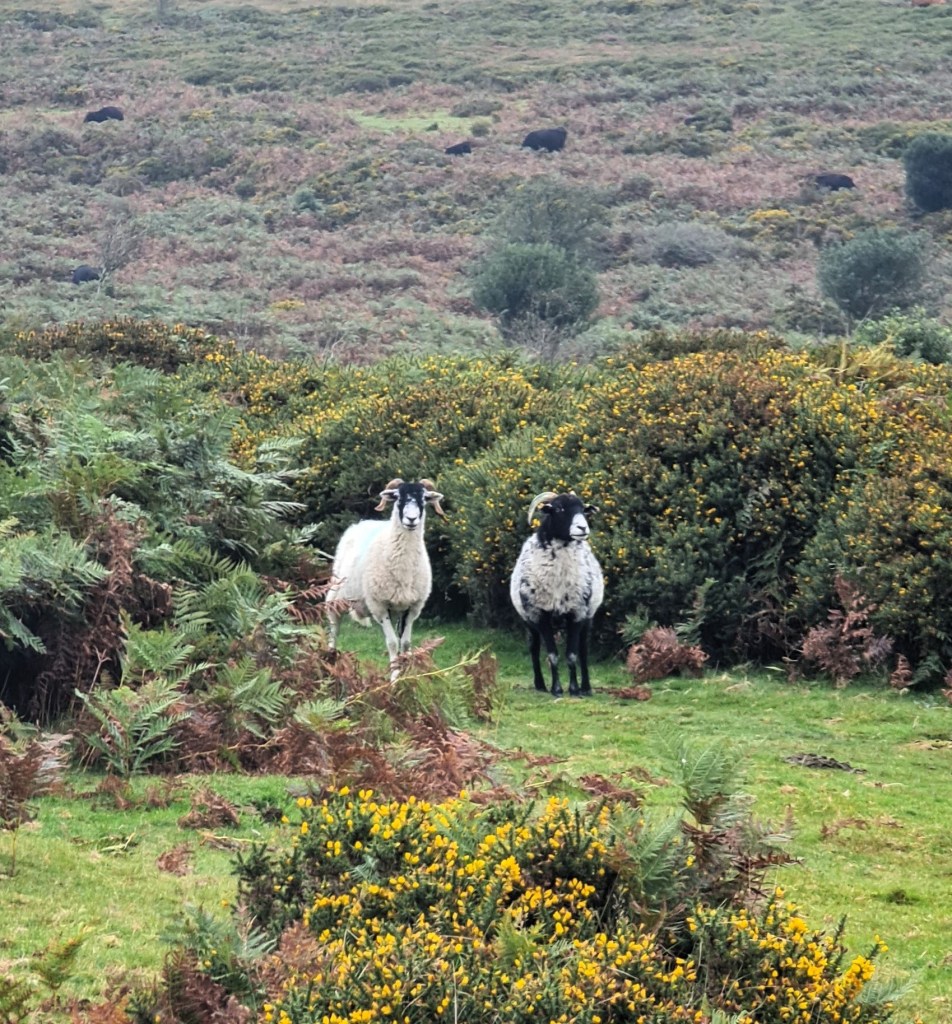
As she comes to me, she lives in the pastures, the sheepfolds, on the transhumance routes, and she inhabits the mountains, where shepherds gather with their goats in the South of Iberia. I do not doubt that I came to her through her animal, the goat. Being the granddaughter of a goat shepherd from Granada. I grew up spending weekends in the mountains, running after my grandfather and uncle and their goats or playing with the little ones on the farm. That is why it is easy for me to understand her cult in the mountains and gorges, perhaps in places where shepherds met or stopped to rest. I remember times when shepherds would gather in the middle of nowhere and lit a fire. Several families that lived in the mountains and that herd goats for a living would come together and share a feast and drink. The children would play and run around, free in the wild. We ate and drank (we kids were happy enough with our Fanta) and celebrated the abundance of the summer. Adults would talk, sing, and continue drinking till late, under the moon and stars, while the kids slept by what remained of the fire. The memory of those celebrations is still fresh in my head. Although, to date, there are no known epigraphic mentions of Ataegina in Eastern Andalusia or La Mancha, figures accompanied by goats or figures of goats have come to light from different archeological sites.
It makes sense that such an important deity would travel with the goat herders beyond the West. Upon arriving in Iberian lands (which they would name Hispania), the Roman invaders would adopt her cult and embrace her as a goddess. Ataegina is, as I already mentioned, highly complex. She is life and death, she is magic, she is abundance, Sancta, and she is also an aquatic nymph. In this Pagan Portals, I present you Ataegina, Queen of the Iberian underworld, in an introductory exploration of her cult. Rooted in antiquity, but also with one foot in the present of her cult, claimed by the children of the lands of Iberia in Spain and Portugal. This book also aims to open the door to the spiritualities of Iberia to the general public, of course, for anyone interested in antiquity, tribal and pre-Roman Europe. Ataegina is a deity of such importance on the Iberian Peninsula, so I had to start with her.
May the Goddess Ataegina guide you through her realms, and may this pages bring you closer to her.
For more details: https://www.collectiveinkbooks.com/moon-books/authors/ness-bosch
 The Pagan Collective
Leave a comment