

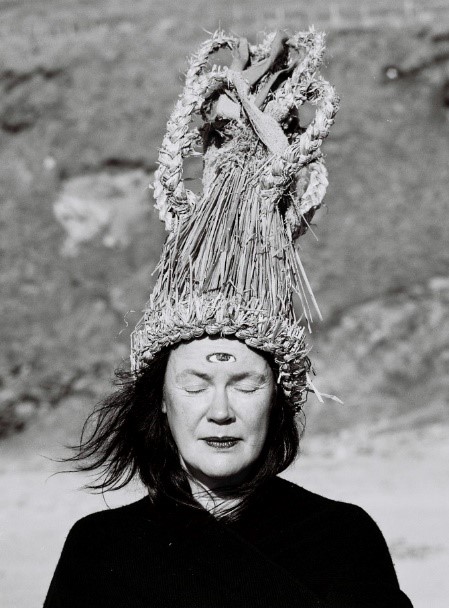
I first came across the term Skekler at an event at the Scottish Storytelling Centre in Edinburgh held by the brilliant Taibhsear Collective in 2019. On stage behind the speakers during the day were the imposing and incredibly intricate straw costumes used in Shetland at Halloween and New Year and occasionally at weddings. The tradition of Skekling was observed in Shetland for hundreds of years and has its roots in the Norse history of the islands, which only became part of Scotland in the fifteenth century. Skeklers don the distinctive straw costumes, “The maskers go from house to house….accompanied by a fiddler, performing the most grotesque dances…” (County Folklore of Orkney & Shetland. G.F. Black. P.205.) They received food and drink in return for performing, which also included banging a wooden stave on the floor. Unfortunately, Skekling as a folk tradition had all but died out in Shetland until in 2013 film maker and photographer Gemma Daggers recreated scenes, with the help of Shetland locals, and photographed them. Gemma’s photographs brought this old tradition back into the public eye and since then there has been an enthusiastic revival.
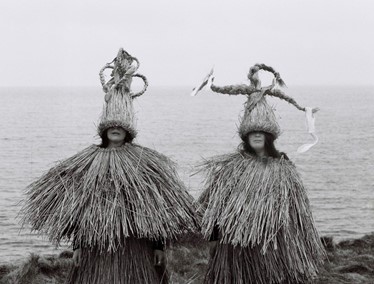
Skekling at New year was a ritual in the darkest times to bring the sun back, and along with it, good crops the following year. The tradition is very similar to one that takes place in the Faroe Islands; the main difference being that Shetlanders use straw whereas the Faroese create their costumes from seaweed. The face of the wearer, in both cases was hidden. The idea behind this is to suspend disbelief in the supernatural. One of the most ominous of the Skekler group was known as the grølek, a fierce bogeyman-like character. The rapping on the floor with a wooden stick or stave is very ritualised and definitely harks back to Norse traditions before Christianity. Each Skekler would disguise their voices adding to the supernatural appearance.
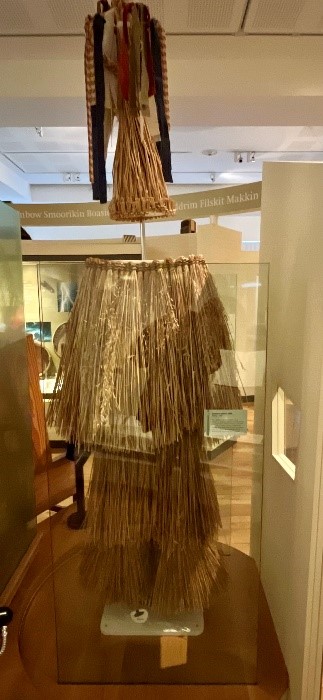
When I recently visited The Shetland Museum in Lerwick I was fortunate to view these impressive folk costumes in person. The height of the helmet or hat makes the wearer appear much taller than they are, and I could imagine how imposing and otherworldly it would have been to take part or observe at the new year.
In some islands of Shetland, such as Foula and north Unst, the new year is celebrated as it was in the old calendar, which is not until around the 12th of January. During January and up until March, there are many fire festivals and processions throughout the northern islands, starting with Scalloway’s (mainland Shetland,) around the 10th of January.
The most famous of these is Up Helly Aa which takes place in Lerwick on the last Tuesday of January. The processions include the Jarl squad who wear Viking style-costumes, with their leader who is inside the galley ship (a full-sized replica of a Viking Long ship,) which is dragged to the harbour and set light to in a spectacular blaze of arrows at the end. Up Helly Aa is described as “A Thing of splendour and beauty.” by A. T. Clunes in his 1951 guide to the Shetland Isles. The festival was largely revived in the 1800s during the Viking Revival romantic notions of heroism and remains popular today with locals and tourists alike.
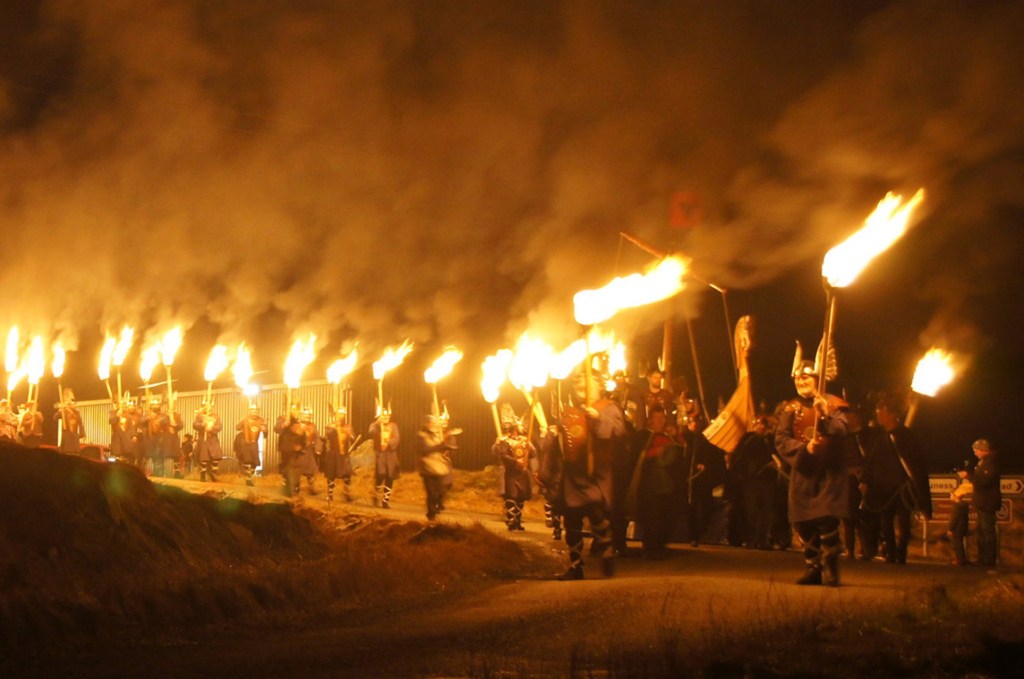
Similarly in the Faroes, New Year’s eve itself is celebrated in much the same way, with a torchlit parade followed by the torches being thrown into a wooden ship to in Vágur on the island Suðuroy on the stroke of midnight.
In these Northen traditions, light is a symbol of the returning sun, in which the new year is heralded. The burning of an old ship represents a ridding of the previous year to welcome in the new one.
Thea is a Heathen and a pilgrim. She likes to think of herself as a Nemophilist, which means a ‘haunter of woods’. She spends most of her free time walking in the wildest remotest lands, places that still make the gods tremble, and she loves the challenge of finding connection through nature to the divine. She writes prolifically, read equally, has a passion for learning, taking photos, grow things, and spend time with her family. she works in education and lives in the south of the UK.
For more details: https://www.collectiveinkbooks.com/moon-books/authors/thea-prothero
Black and White Skekler images are © Gemma Daggers, reproduced with kind permission.
 The Pagan Collective
Leave a comment