

These Pagan Portals are all current works in progress, serialised here on the Pagan Collective blog with each chapter being open for comment. In due course the entire script will be published as a Pagan Portal book.
Ataegina, Iberian Goddess of the Underworld by Ness Bosch
Chapter 3. Sacred Geography in Iberia.
From the forests of Celtic Iberia to the steppes, the mountain ranges, and its deserts, the Iberian peninsula is rich in landscapes and climates. There are more than 100 natural parks just in Spain alone, some of which are so important that they are World Heritage Sites and protected by UNESCO. These reserves not only hold protected species such as the Iberian Lynx, but many of these parks also hold native forests, so old that some of these tree species were around before the last Ice Age, such as the Abies Pinsapo, heavily protected in its home in Andalucia. As a person who grew up surrounded by natural landscapes, with a very animistic relationship with what surrounded me, I cannot but support the theory that nature, the wild, are great initiators for the human soul. If we think about it, each type of landscape has a different energy. The energy in a forest, or near a lake, or a river is not the same as in a desert. Each of these landscapes houses not only one energy but many. Our ancestors worshipped water sources, certain mountains, trees, and rocks. It is not difficult to realize how these cults were born when you spend time in nature, but our ancestors spent their whole lives in nature, sheltering in caves until they began to build their first primitive homes. We must remember that many of the deities that were worshipped in antiquity and that are now worshipped by modern pagans are linked to certain places, either by birth or because they spend time in a specific place in the myths. We also know that the origin of many deities is linked to natural phenomena like thunder, winds… The Celts worshipped rivers and water springs; there are deities linked to caves and swamps, there are giants who are mountains or hills, or deities who modify the landscape at their will, who create the landscape, as in the case of the Celtic Goddess Cailleach. Some faeries and elves live in a specific tree or flower, elves that live in underground caves, and trolls that roam the woods. How many of these gods and magical beings inhabit the landscape that surrounds us, only that we do not see or feel them? The landscape is important because of what we see and because it is the home of those inhabiting it. Furthermore, when the landscape has not been significantly altered and retains its original features, it is a way of connecting with the ancestors who also walked this land and saw the same thing that I see.
Iberia is not only abundant original forests and mountains, but also caves. Caves that have witnessed the evolution of the first hominids in Europe and that house on their walls some of the most impressive petroglyphs or cave paintings in all of Europe.This extract from my previous work, Sacred Bones Magic Bones gives an overview of the importance for the study of history of one of those caves, Atapuerca:
“There is a cave in Iberia that is of special importance to the scientific community, precisely because of the number of stories that have emerged from that cave in relation to us as a species. Atapuerca is a mine of information. The findings in that cave have rewritten what we once knew about the population of Europe. We used to believe our first European ancestors were here over 500,000 years ago. The findings at Atapuerca taught us a different story, as it gave us the bones of older Europeans, which dated back to 780,000 years ago. Plus more recently, a jaw has been found that dates back to 1.2 million ago at the same site. This leao sconnectss could be much older. In regards to what this teaches us: the bones speak. This can also be se discovery of the new species of, mountains, andr”, which was also found among the remains of other hominids in Atapuerca. Atapuerca is a mecca for those that study the evolution of man and of prehistoric remains. It is as if each cavity of the cave were an independent book full of stories that range from the dawn of humanity in the Iberian Peninsula and Europe, until Roman times. That’s a lot of stories in just one place.”
And despite all this, it may not be the most famous cave in Spain, although it may have now overtaken the Altamira Cave and its rock art. Caves are important, and I think even more so in the cult of Ataegina, which is why I emphasize them in such a way. Let us remember that the Goddess Ataegina is a goddess of the underworld, and caves have been considered entrances to other worlds since ancient times. Ataegina is the Goddess of shepherds, of goatherds, and I know first-hand how important caves are for a goatherd who spendwasys in tdatingns, being as I am the granddaughter of one. My grandfather, Jose el Lucio, had an exhaustive knowledge of the caves of the Sierra de Almijara and Tejeda, since he used them as a refuge more than once, and I know that my grandparents lived in a cave in the Sierra de Almijara when they were newly wedded, the Cueva of Colica (In Andalucia, many caves are luxurious Airbnb now, Specially in Granada in Guadix and Gorafe area). Caves are not only a refuge for the shepherd and his goats, but perhaps even a water source, since some of these caves could house springs with fresh water. We could theorize that during their stay in the caves, these shepherds from antiquity may have also engaged in devotional activities since there is evidence of Iberian sanctuaries in caves in Andalusia.
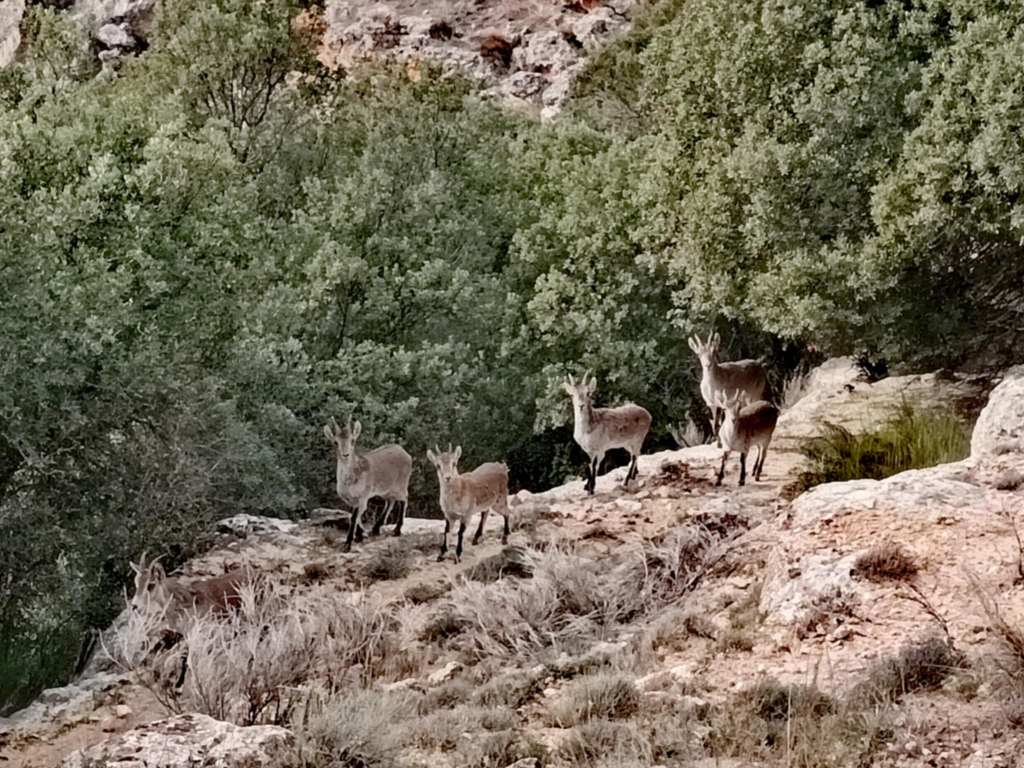
For example the Iberian Sanctuary Cueva de la Lobera, between the provinces of Albacete and Jaen, near the town of Castelar. Founded in the middle of the 4th century BC, and continued use until approximately the 2nd century AD, even after the Romanization of the same. We are talking about an important archaeological site, where a significant number of bronze votive offerings, offering figures and other anatomical remains were found that clearly show the religious use of the place. It is not a simple cave, it is a Sanctuary and also linked to a healing divinity, or at least that is what the anatomical votive offerings whisper to us. The cave would have been an important religious complex in its day, and it is not by chance that it is located on the path of the transhumant routes used by the shepherds.
It makes sense that some caves were places of healing. The shepherd stops to rest, but also to heal his wounded animals. My grandfather, as a good shepherd, was also his own veterinarian and healed his animals. Not only he could perform small operations for his goats, he knew the properties of plants from the mountains he travelled through and used them often and prepared remedies for his own use. Knowing this first hand, it is easy for me to picture how healing was practiced in caves and how the Sanctuary of the Lobera Cave could be linked to healing and Ataegina, as she is among other things, a healing Goddess.
The Lobera Cave is located just a day’s walk from the Cerrillo Blanco Necropolis, where archeologists found a figure of the supposed Goddess Ataegina holding rams andthat we can see is on display in the Iberian Museum of Jaen. Iberia is a land of sacred landscapes, sanctuaries in nature, of places that have continued to be sacred through the millennia, for people with different faiths but who have continued to honour them, showing the importance of those places and their continuity in time. I will be focussig on places of worship on my next chapter.
While some countries receive thousands of tourists to visit certain megalithic remains, sometimes having to pay their way in, Iberia hides hundreds of them that you can mostly visit for free, from impressive dolmens, stone circles, to henges. In the Northwest of the peninsula, between Spain and Portugal, you can visit original Celtic villages, Castros, built between the 6th and 8th centuries BC; there are estimated to be about 5,000 of these villages. And free to visit! Not digging into archaeological remains from multiple eras and cultures that coexisted in Iberia since ancient times. In the last few years, there has been much talking about Atlantis being also in Iberia. Due to its geographical location, it is a bridge between two continents, a gateway to the Atlantic, the last frontier of the Mediterranean in the West. Many explorers are looking for the entrance to the kingdom of Atlantis towards the mouth of the Guadalquivir River, in Doñana National Park which in ancient times was much more navigable. Not long ago, there was a social call to help preserve the remains of a Chalcolithic city inland, in present-day Jaen, where an ancient city with concentric walls like those spoken of by Plato about Atlantis was found, including a ceramic vessel with the supposedly Atlantean seal. Of course, Atlantis was not just one city; it was a whole territory, os it is plausible.
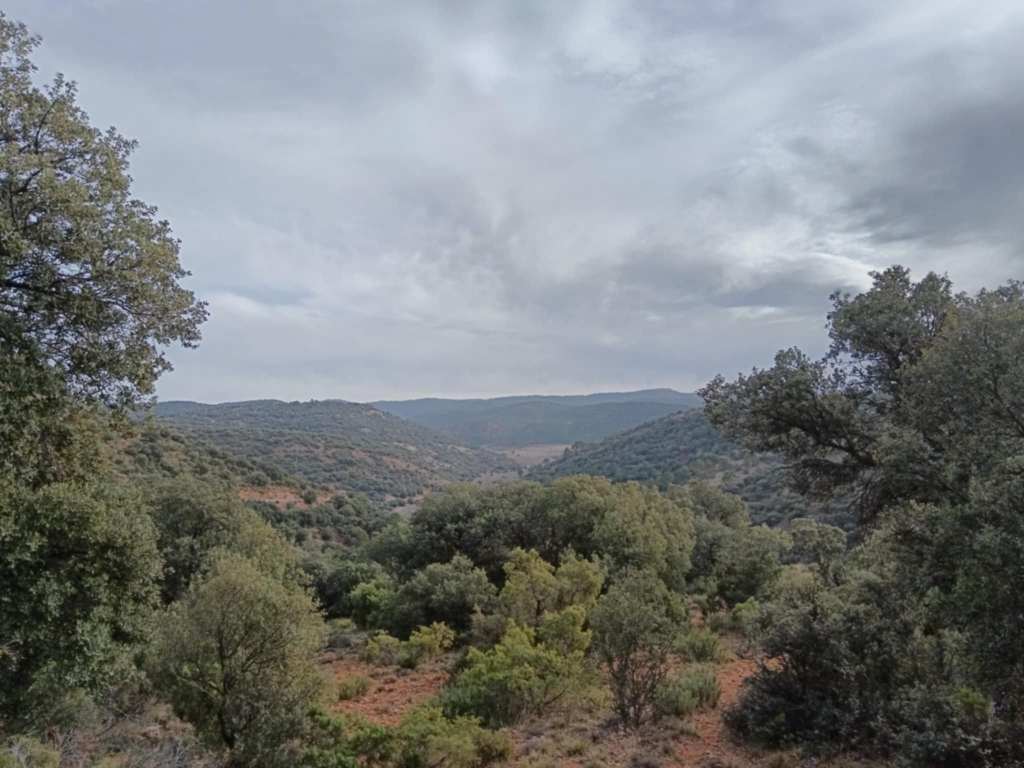
Leaving this possibility aside and focusing on natural parks, since we are talking about Sacred Landscape and ancient sites, there are so many relevant places to visit between Spain and Portugal. I think it is also essential to include information about caves with archaeological importance and places with megalithic remains since, for me, these represent a way of connecting with those older ancestors. Of course, there are so many remains belonging to other eras that it would be virtually impossible to include them all here. But I hope this is a good starting point. Please bear in mind I only include those within the peninsula, not the islands.
Spain is much more than a hotel resort on the beach; the best of the country has yet to be discovered by those interested in its natural wealth. In the portal, www.ecologiaverde.com, I found one of the best resources for information regarding natural reserves in Spain. Here is a list of some of the most popular National Parks on the country’s mainland:
- Fragas do Eume Natural Park – La Coruña
- Serra da Enciña da Lastra Natural Park – Ourense
- Baixa Limia-Serra do Xurés Natural Park – Ourense
- Monte Aloia Natural Park – Pontevedra
- Redes Natural Park – Asturias
- Somiedo Natural Park – Asturias
- Fuentes del Narcea, Degaña and Ibias Natural Park – Asturias
- Picos de Europa Natural Park – Cantabria
- Oyambre Natural Park – Cantabria
- Laguardia Natural Park – Álava
- Natural Park of Aizkorri Aratz – Guipúzcoa
- Natural Park of the Sierra de Gorbeia – Vizcaya
- Natural Park of the Sierra de Urkiola – Vizcaya
- Guara Mountains and Canyons Natural Park – Huesca
- Moncayo Natural Park – Zaragoza
- Alt Pirineu Natural Park – Lérida
- Serra del Cadí Moixaró Natural Park – Barcelona
- Cap de Creus Natural Park – Girona
- Aiguamolls de l’Empordá Natural Park – Girona
- Garrotxa Volcanic Zone Natural Park – Girona
- Montseny Natural Park – Girona
- Ebro Delta Natural Park – Tarragona
- Sierra del Montsant Natural Park – Tarragona
- Albufera Natural Park – Valencia
- Chera-Sot de la Sierra Natural Park Xera – Valencia
- Turia Natural Park and Protected Natural Area – Valencia
- Las Lagunas de la Mata Natural Park and Torrevieja – Alicante
- Mariola Mountain Range Natural Park – Alicante
- Natural Park Cabo de Gata-Níjar – Almeria
- Natural Park Sierras of Cazorla, Segura and Las Villas – Jaen
- Natural Park Sierra Nevada – Las Alpujarras – Granada and Almeria.
- Natural Park Sierra de Tejeda, Almijara and Alhama – Granada and Malaga
- Natural Park Sierra de Las Nieves and the Guadalorce Valley – Malaga
- Natural Park Serranía de Ronda – Malaga
- Natural Park of Doñana – Cadiz, Huelva and Seville
- Natural Park Sierra de Grazalema – Cadiz
- Natural Park Alcornocales – Cadiz
- Natural Park Sierra de Hornachuelos – Cordoba
- Natural Park Sierra Subbética – Cordoba
- Natural Park Lagunas de Ruidera – Ciudad Real and Albacete
- Natural Park Calares del Río Mundo and Sima – Albacete
- Río Lobos Canyon Natural Park – Burgos and Soria
- Natural Park Alto Tajo – Taravilla – Guadalajara
Natural Parks in Portugal:
- Peneda-Gerês National
- Park Alvão Natural Park
- Montesinho Natural Park
- Serra da Estrela Natural Park
- International Tagus Natural Park
- Serras de Aire and Candeeiros Natural Park
- Sintra-Cascais Natural Park
- Arrábida Natural Park
- Southwest Alentejo and Coast Vicentina Natural Park
- Ria Formosa Natural Park
I recommend you research further, although I have selected some essential Rock Art and Megalithic remains to visit:
Rock Art:
- Altamira Caves. Cantabria.
- Monte del Castillo Caves. Cantabria.
- Tito Bustillo Cave. Asturias.
- Santimañine Cave. Bizkaia.
- Candamo Cave, Asturias.
- Roca dels Moros de Cogul. Lleida.
- Valltorta Caballos Cave.
- Solana de las Covachas. Albacete.
- Ventanas Cave, Piñar. Granada.
- Letreros Cave. Almeria.
- Côa Valley. Portugal.
- Cave of Escoural. Portugal.
- Penascosa Rock Art Site. Portugal.
Dolmens:
- Gorafe Megalithic Park. Granada.
- Soto Dolmen. Huelva.
- Menga Dolmen. Antequera.
- Viera Dolmen. Antequera.
- Tella Dolmen. Huesca..
- Sorginetxe Dolmen. Alava.
- El Gemelo Dolmen. Valencia de Alcantara.
- Lacara Dolmen. Badajoz.
- Tremedal Dolmen. Caceres.
- Dombate Dolmen. Coruña.
- Axeitos Dolmen Coruña.
- Los Bermejales Dolmen. Granada.
- Castilleja de Guzman Dolmens.
- Zambujeiro Dolmen. Portugal.
- Arca Dolmen. Portugal.
- Matanza Dolmen. Portugal.
- Fonte Coberta Dolmen. Portugal.
- Malhada do Camino Dolmen. Portugal.
- Anta da Barrosa. Dolmen. Portugal.
- Orca au Lapa. Portugal.
Cromlech and Menhirs:
- Oianleku Cromlech. Guipuzcoa.
- Cabezo Menhir. Caceres.
- Megalithic Complex in La Torre-La Janera. Huelva.
- Almendres Cromlech and Menhir. Portugal.
- Xerez Megalithic Enclosure. Portugal.
- Vale Maria Do Meio Cromlech. Portugal.
For more details: https://www.collectiveinkbooks.com/moon-books/authors/ness-bosch

 The Pagan Collective
Leave a comment