
Can you tell us a little bit about yourself?
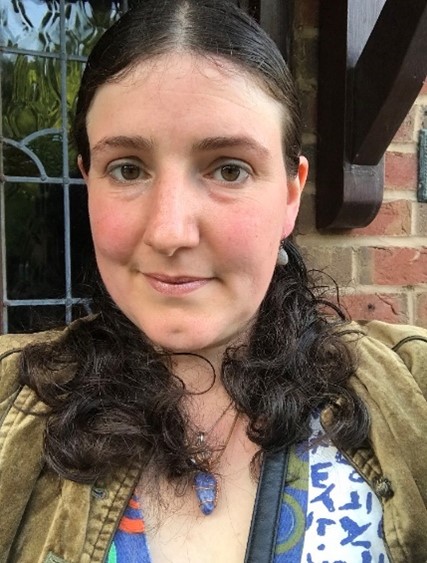
I was born in Cheshire but grew up in Cornwall. After finishing school, I went to art college as I wanted to become an art therapist. But my life path changed, and I later trained as a person-centred counsellor with the Counselling and Psychotherapeutic Central Awarding Body UK. I’m also a Spiritualist Healer with The Healing Trust UK, a trained Magdelene High Priestess with a wonderful teacher, Margaret Hunt, and I am currently in the Druid grade with the Order of Bards, Ovates, and Druids. I live in the beautiful South West peninsular of Cornwall, and I love visiting ancient sites, old churches, and holy wells around the British Isles.
How would you describe your spiritual pathway?
Over the years I’ve dived deep into the mystery schools. I visited North America and Egypt to briefly understand the spirituality and magic of the land there, but I knew I had to concentrate on the spirit of the British Isles, which is my home. So, I began a journey with Druidry 11 years ago which catapulted me to make many pilgrimages throughout Britain and Ireland, visiting their sacred sites and places where the land sang. Those pilgrimages birthed my book Ancient Fayerie. I am still on a neo-druid pathway, so would call myself a neo-druid and animist. I don’t over complicate ceremonies but like to keep things simple.
How and when did your spiritual journey begin?
My great aunt was a society medium, and my great-grandma read the tea leaves, so spirituality ran in my family lineage on my mum’s side. I believe it runs in most families, although few people talk about it. My dad and brother are scuba-divers, so as a child I spent a lot of time with them at the ocean side, learning about foraging. I’ve been interested in magic from a young age, and I purchased my first book on the subject aged 16 — Good Magic by Marina Medici. I was enchanted by what I read. But it wasn’t until I was 20 that I had what some people would term as an ‘awakening’, when my true spiritual journey began. It was challenging and transformative, but it led me on a journey to seek the truth about the paranormal world, spirits of the dead, the Genius Loci – the spirit of place — and all of the things that science cannot explain. I realised the great mystery is incomprehensible, yet I’ve arrived at a place of peace, of less searching, and where I enjoy the simple beauty of life.
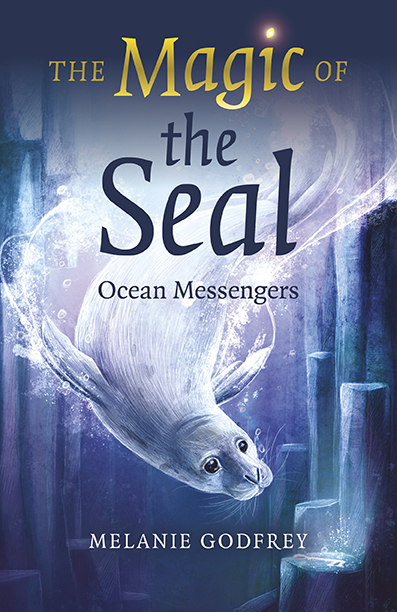
Let’s talk about The Magic of Seals, how did this book come about?
I saw a post on the Moon Books Author Facebook Group from Trevor Greenfield, calling on authors who might be interested in creating, ‘The Magic of’ series. Many writers replied with ideas of what they wished to write about – cats, snakes, butterflies, wolves, but no-one mentioned seals. Because of a recent encounter of saving a beautiful seal pup, I thought it would be a good idea to write The Magic of the Seal book, so that night I wrote an outline for a manuscript, asked for a few signs that I was doing the right thing, and began a journey of research. I also travelled to Scotland to gain an insight into the seal clan who once lived on North Uist in the Outer Hebrides. I never told Trevor about my idea at that stage, but a year later my manuscript was complete and I sent it to Moon Books. They accepted, and the rest is history.
Your book starts with tales of the selchies: who are they?
Selchies are one of the more mysterious sea fayeries… but not all seals are selchies. It is the larger of the grey seal species who are said to transform by an act of therianthropy (shapeshifting) into humans. Both the male and female of the larger grey seals can do this by removing their seal skin. The male selchie is said to be more alluring and beautiful than the female, who seems rather vulnerable. Contemporary stories of the selchies have been shared by John MacAulay in his book, Seal Folk and Ocean Paddlers. In the book he says they were Sea Sami folk who travelled across the Northern Sea to Scotland on their kayaks, and as they removed their waterlogged seal skin jackets and trousers, it looked like they were removing seal skins to become human.
There is a lot of speculation of where the story of the selchie began: some say it started in the Outer Hebrides; some say it began in Orkney. I spoke with Dr Andreas Hoffmann, Managing Director of Arctic Culture Lab, who lives in Greenland, and shared a story about the Kivuiq — an eternal Inuit wanderer who was once a handicapped boy, and was bullied by others. He took revenge on them by transforming into a seal, and lured his enemies out to stormy seas where they met a dreadful fate. This story found its way to Iceland, Orkney, and Shetland, and from then on the selkie story appears on these shores. It seemed that the earlier stories of shapeshifting humans into seal were particularly hostile, but recent stories share a more warm-hearted tale. Who knows where the original selchie stories began?
What is the connection with seals and the afterlife?
Our ancestors had a profound connection with seals, especially in Scotland where there were many storytellers, and folk tales. People had a deep belief that if one of their relatives died at sea, or if someone committed suicide, their spirit went to live with the seal people. And on certain days of the year, it was said that these spirits would return and shapeshift into humans to visit their loved ones for a while, before returning to the ocean.
William Sharp shares a story in The Works of Fiona Macleod about a Manus MacCodrum, who was known as one of these seal people. “It is I, Manus MacCodrum. I am telling you that, you, Anndra of my blood, And you, Neil my grandfather, and you, and you, and you! Ay, ay, Manus my name is, Manus MacManus! It is I myself, and no other, your brother, O Seals of the Sea!” You see, the seals on the Outer Hebrides and islands of Scotland were more than Otherworldly messengers, more than kin to the village folk; they were our aunts, grandmothers, sisters, brothers, and our ancestors. The seals are our family returned from the afterlife.
How can we apply the art of shapeshifting to our own lives?
The selchie transforms from seal to human form by the act of therianthropy, which is the art of metamorphosis by shapeshifting, showing us a paranormal power they bestow, and how they transform themselves through unnatural means. Transformational magic is of the old ways of the British Isles, and although it is scientifically impossible for a human to physically shapeshift, metaphorically you can witness the art of magical shapeshifting by witnessing the birth of a seed to a flower, or an acorn into a tree. In time, the seedling and acorn will transform and shapeshift into what they were meant to become. Method actors use the art of shapeshifting in their careers by pretending they are the character they are trying to play. It can run a little deeper still where medicine people can go into a trance-like state and merge with animals in the spirit world. And ancient warriors called upon the magic of shapeshifting by invoking the spiritual power of an animal before entering battle, to bestow extra strength and tenacity.
But returning to the wisdom of the selchie, they force us to work past our comfort zones and limiting belief systems. They embody the holy grail of returning after we surrender to the fact that we cannot escape our true selves but remember who we are. We shapeshift from what we are not into who we truly are.
Why do you think there are so many folk tales about seals?
I think there are so many folk tales about seals because they are close to people’s hearts. People find seals mysterious and enchanting as they are so different from us. I mean, how can they breathe underwater for so long? Science explains this today, how they pull blood from their periphery into their core and slow their heart rate down. This shuts down their circulation, allowing them to dive between 10 to 30 minutes with each breath-hold. If they get caught and are stuck for oxygen, they have emergency oxygen supplies in their spleen. Seals crush their own spleen to pump oxygen out, which in turn replenishes their supplies and allows them enough time to resurface, so their biology is fascinating. I imagine in the olden days folk spent time observing these peaceful souls, observing their magic and creating stories as they tried to understand the world around them, including the supernatural world, as most people had the second sight.
But it runs a little deeper than that. People in the past had more of a connection to the natural world than we do today. There were no TVs or internet, and people used to gather by the fire at night to share stories. Visiting each other’s homes and entertaining their small communities, these tales were sacred and special to the people telling them, and they belonged to the great mystery itself. People keep seal lore secret to be shared only within a family or village, but eventually these stories have been told to wider communities and the world, penned in books, and spoken about in the Tobar an Dualchais — the original sound archives of Scotland. The art of storytelling is becoming lost, so it’s important to keep these folktales alive by sharing seal lore stories as precisely as we can, and always with the permission of the original storyteller, or at least credit the person. It is important to respect seal lore, which was like a religion to its people.
What does the spirit of seal bring for us from a magical viewpoint?
Where do I begin! The seal is so magical on many levels. Besides them being naturally intuitive and sensitive, they literally live in two worlds and have no control over their environment. They cannot survive in one environment alone. They need land to rest and recover breathing patterns; they need the ocean to hunt for food and survive. As they transition between land and sea, they cross a liminal space, and they do this every single day of their lives. They constantly cross an invisible boundary of transformation from being land-based to sea-based. They are powerful in metaphorically teaching us about liminality, of how to embrace the threshold of time, as we transition through changing jobs, moving home, losing a loved one through divorce or death. And they teach us to accept the things we cannot change, to go with the flow as we await new beginnings, of holding that transitional space with grace, peace, and patience. Knowing all will be well, as it is in the seals’ world.
The seal skin is a metaphor for protection, as we wrap ourselves up in an imaginary silky pelt. And as the sea ebbs and flows, so too does the seal connect to the divine light of the moon; they behold the essence of the divine feminine. Seals are extremely peaceful beings, and as you begin to understand them more by observing them, you realise they embody peace and teach us to become more peaceful in our own lives. As symbols of the holy grail of returning to oneself, they represent creativity, curiosity, enchantment, freedom of spirit, gentleness, and most importantly peace. Confident, yet a little shy and aloof, these beautiful souls teach us so much more than I could convey here.
How would you recommend someone begin their seal journey?
If you have a love of seals or have been enchanted, you will always have an affection for them. There are many great books about the folklore of seals, and I cannot recommend Duncan Williamson’s stories enough. They will inspire anyone with a love of these soulful creatures and also give you insight into how the storytellers of old viewed their world, because these stories were spoken in truth. They share how our ancestors connected to the natural world on a more profound, deeper level than we do today. From an anthropological standpoint, they had an animistic connection with the animals, especially the seals, who were not only totems to the clans but more symbolic, sacred, and special. Maybe there is an aspect of the seal that resonates with you; they are sensitive, peaceful, playful, intelligent, a little aloof, and more. I suggest you take your journey with the seal gently and slowly. Visit the ocean side or harbours where seals are known to frequent; visit seal sanctuaries and watch how they play, and eat, and rest. Read books that enlighten you about seals and selchie – I highly recommend Tales of the Seal People: Scottish Folk Tales (Northampton, Ma: Interlink, 2019) and Land of the Seal People (Edinburgh: Birlinn, 2010), both by Duncan Williamson. Also, The People of the Sea (Edinburgh: Canongate Books, 2018, first published in 1954) by David Thompson is interesting.
You can create a seal altar with a photograph of a seal at its centre and add anything ocean-related, join a seal group, or adopt a seal at Cornwall Seal Group Research Trust, who have worldwide members.
Take time to think about how the selchie maiden story relates to you. What is transforming in your life? What makes you feel seals’ lessons are powerful, deep, and emotive? They show you what it means to reclaim your own seal skin – a skin that transforms you and brings ultimate freedom. Another way of connecting to seals is to simply light a candle and say prayers for all of the wild seals. This is especially relevant throughout the stormy winter months, when seals have a tough time.
What can we do to help protect seals?
I think the most important thing a person can do is to educate themselves about protecting seals. They are highly complex and sensitive beings who are frightened easily, and this causes them to stampede into the ocean, which can cause fatal injuries. Therefore, we must give seals space, to keep a safe distance — around 100 meters away — and the best thing we can do is let them be. No-one likes to be stared at, and seals don’t either. If one approaches you when you are diving or surfing, let it curiously approach you, but never approach it yourself as seals have bites as strong as bear bites and can cause serious damage. They are a mainly peaceful being, but there may be one or two who may be reactive, so we must always take care — however cute they look.
Another mistake people make is if they find a seal pup with white fur on the beach and think they are helping by encouraging it back into the ocean. But the wild grey Atlantic species of seals’ baby fur, when wet, gets saturated and could cause them to drown, so they need to be land-based for at least three weeks whilst they shed it and grow their waterproof fur. This is not the case with common seal pups who have waterproof hair from birth. It is also important to observe abandoned seal pups from a distance, in case their mother is nearby. We must never touch the pups, as that could put the mother off returning to them, and they will suffer. If a mother has abandoned them, it will be important to call a rescue centre who will help them and rehabilitate them to health until they are ready for release into the wild.
The main source of research I would point people to is the Cornwall Seal Group Research Trust created by Sue Sayer MBE. They have so much information to share: www.cornwallsealgroup.co.uk, and their fantastic photographs of seals which will have your heart melting. The British Divers Marine Life Rescue play an important role of rescuing abandoned seal pups from UK beaches and take them to safe place at a sanctuary. You can find them at British Divers Marine Life Rescue: www.bdmlr.org.uk. Another useful contact is Cornish Seal Sanctuary: www.sealsanctuary.sealifetrust.org who do the most wonderful job of rehabilitating seals, and you can visit and see their work.
Who is Elizabeth and why is she so important to you?
Ahh, Elizabeth! In 2017 I stayed in Boscastle for a few days away. On the last evening, whilst walking, I found a wild Atlantic seal pup struggling to swim in the stormy harbour water. I helped her out of the ocean and had to discourage her from falling back in. I contacted the rescue centres, and as we waited for them to arrive, I sat with her for a few hours in total darkness and I made a promise to take care of her. In those moments, a love awakened within me that lasts to this day. It’s a long story, but the Cornish Seal Sanctuary rehabilitated her, and I visited each week to see her progress. There was a Poldark theme at the sanctuary for the seals that autumn, so I called her Elizabeth – the regal lady of Trenwith House. And she lived up to that name, often being called beautiful and unusually diva-like. I began to feel like a seal mother, caring for this gentle soul who was timid and shy but bold when she needed to be.
The Magic of the Seal would not have been possible without my meeting Elizabeth, and it’s written in honour of her. She was released back into the ocean in the December of 2017, and was later sighted five times at a secret location on West Cornwall beaches. There have been no sightings of her since, but I trust she is okay – and I think of her often. If you have ever met a seal face-to-face or had the honour of helping one of these peaceful beings, you may understand how I became enchanted, as it might have happened to you, too.
For more details: https://www.collectiveinkbooks.com/moon-books/authors/melanie-godfrey
 The Pagan Collective
Leave a comment