
Despite being recognised as the Queens of Venus, Ishtar and Ereshkigal reflects the 4 main cycles of their father, the Moon God Sin. It is a fertility cycle of Ishtar as new growth, reproduction and maturity and Ereshkigal as the transformation of death into rebirth in the comfort of darkness. The waxing Moon represents growth, the modern pagan’s maiden, the full Moon is reproduction, the mother, the waning Moon is maturity and the crone, and the dark Moon is death, the void between life and rebirth.
At this time of year, the first phase of the cycle, the growth of the maiden represents the first quarter of the Moon, the spring queen of the resurrected Ishtar bathing in the increasing glow of her younger brother Shamash, the Sun God and divine judge of the Anunnaki and humanity. Shamash would enter a mountainside gate in the west at the end of the day to travel through the subterranean realm of Ereshkigal back to the east in time for the following morning back into the realm of Ishtar.

My garden at spring sees the blooming of snowdrops, daffodils, wild primroses, daisies, dandelions, primula, celandine, a pink begonia, and bizarrely, this year, hyacinths springing up in places. Aquileia’s, evening primrose, bluebells, herb Robert, nettles, arum lily, red valerian, lupins, roses, an easter bonnet/nemesisia, forget-me-nots and marigolds breaking through seeking the light and a host of wild plants that I have forgotten the names of. I really should get my wild plant book out and relearn. The vegetable plot is half-full of broccoli that I sowed last autumn after the last harvest that has survived the cold of winter and now thriving. The other half is prepared for the potatoes to go in next week.
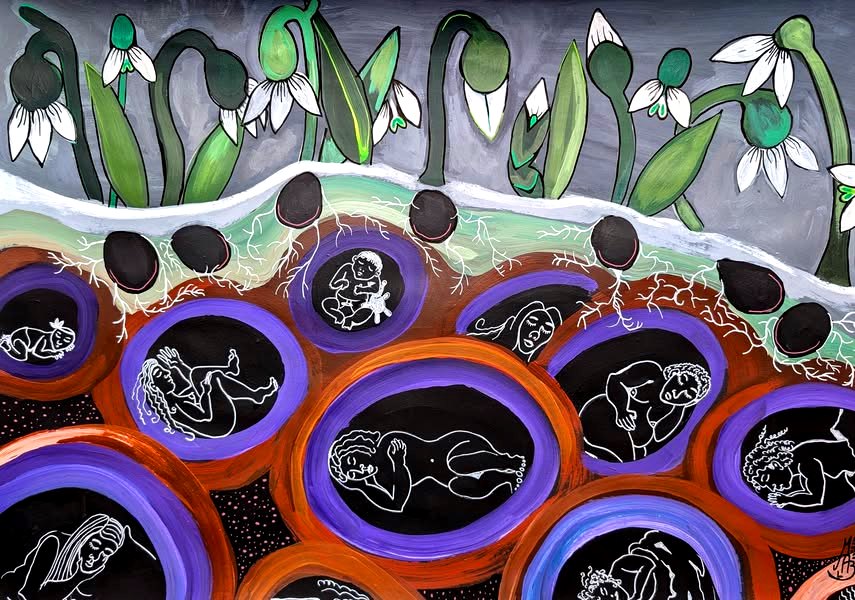
The doors/portals to the womb of Mother Earth are springing open allowing the awakening earth spirits, the fairies and serpent energies into the land of the living to help the garden flourish and the plants and shrubs to bloom. The spring equinox in the northern hemisphere generally signifies the beginning of spring, the midpoint between winter and summer, halfway point between Imbolc and Beltain.
It is the time when the Celtic Sun God Maponos, the Divine Son and husband of Bridget is resurrected. Maponos was born during the longest night and killed during the autumn wild boar hunt. He is based on the Babylonian fertility god Tammuz, resurrected each spring to bring growth to nature alongside his wife, the goddess of love, Ishtar. Tammuz returns to the underworld during the last harvest to honour a deal between Ereshkigal and the Anunnaki high council after being rescued by Ishtar descending through the 7 gates separating the worlds of the living and dead. Relinquishing a piece of earthly attire at each guarded gate into Hell, Ishtar arrives at the Halls of her sister completely naked and ready to fight for her beloved. She loses and needed to be saved by her father’s uncle, the wizard Enki and the high council. Tammuz is the Akkadian retelling of the Sumerian shepherd god Dumuzi who is rescued by his wife, the goddess of love, Inanna.
The spring equinox is the time for the spring-cleans, the spring greens and the spring queens.
Scott Irvine has followed the path of the goddess since exploring the many goddess temples on the small islands of Malta and Gozo off the Sicilian coast in the Mediterranean Sea, igniting her spark within him in the spring of 2010. He has contributed to a number of anthologies, including Paganism 101, Naming the Goddess, and Seven Ages of the Goddess, as well as publishing articles on the Moon Books blog.
For more details: https://www.collectiveinkbooks.com/moon-books/authors/scott-irvine
 The Pagan Collective
Leave a comment