
What is Reconstructionism?
Reconstruction is a methodology that uses a variety of sources including archaeology, anthropology, mythology, folklore, and historical texts to reconstruct what an ancient belief or practice most likely would have been like. Using this reconstruction of the old, the belief or practice can then be adapted for modern use. Or, as I like to say, reconstruction is understanding the old pagan religion so that we can envision what it would have been like if it had never been interrupted by foreign influences and had continued to exist until today.
Reconstructionism is most often applied to spirituality, but it can be used for a variety of related practices including traditional non-religious witchcraft. It can also be used for mystic practices used in conjunction with spiritual practices, such as the reconstruction of seership methods within Irish Reconstructionism, or of seidhr within Heathenry. Reconstruction is a method that is applied to a wide array of different ancient pagan faiths including Norse, Anglo-Saxon, Minoan, Egyptian, Irish, Gaulish, and Indo-European to name just a few. It is a method that is both sound and flexible, but which also requires personal engagement and imagination. Because of this, the end results of different people’s reconstruction of the same culture’s religion will not be identical, although they should be similar.
In this particular case, the methodology of reconstruction is being applied to Irish Polytheism, hence the name of this approach to Irish paganism. What this means in practical terms is that it is a spiritual structure based on studying archaeology, anthropology, mythology and so on, specifically of Ireland, focusing on the pagan period and any traces of pagan beliefs during the Christian period. Obviously there are certain challenges with this, including the fact that we have nothing written by the pagan Irish themselves, so we must not only reconstruct the old beliefs, but also seek to filter out any foreign influences. Academic material has two main approaches to the subject of pagan Irish beliefs, which are diametrically opposed and tend to be held strongly. The first is the nativist view, which says that Irish mythology and culture were influenced by pre-Christian pagan paradigms and reflect genuine ancient beliefs that were preserved as such by later scholars. The second view is the antinativist, which says that the preserved material we have in the mythology was preserved through Christian mediators who themselves were influenced by both Christian and Classical views and therefore it must be assumed that all preserved material reflects some degree of foreign influence and does not show us genuine pre-Christian beliefs. As an Irish Reconstructionist studying the source material you will encounter both approaches.
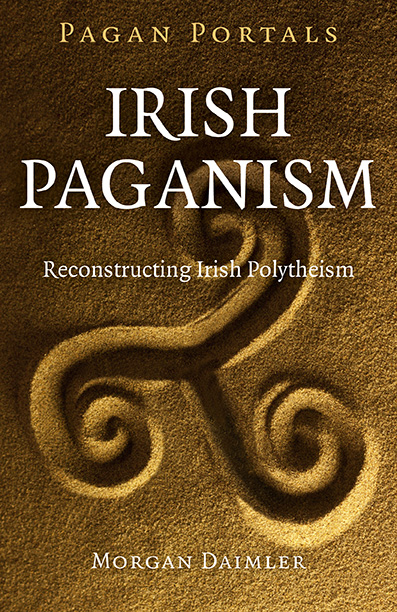
Aspects of Irish Reconstructionism:
- Study: Any form of reconstruction requires some level of study. It’s important to familiarize yourself with the ancient pagan culture in order to understand it well enough to create viable modern practices from it. There is a wide variety of books available on Iron Age Irish culture, pagan Irish culture, Irish folk beliefs, and archaeology in Ireland that can all be used as source material.
- Discernment: Speaking of source material, another important aspect of reconstruction is critical thinking. It’s important to be able to tell a good source from a bad one and judge the value of any material you are reading or hearing about. Commonsense is one aspect of discernment, but another is healthy skepticism; nothing should be accepted automatically as true just because it is in a book. Rather a reader should assess the value of the material based on how sound it is – how provably true the material is – how persuasive the evidence is, and whether the author backs up their idea with solid evidence.
- Language: There’s a saying in Irish: ‘Tir gan teanga, tir gan anam’ (A nation without a language, a nation without a soul). I think this reflects a core truth, that our language is not only a basic means of communication, but also an expression of how we relate to and perceive reality. In psychology we call this linguistic relativity, the idea that language affects how we think about the world. What this means in practical terms is that to truly understand a culture you must understand the language of that culture. As an Irish polytheist it is important to at least try to understand the language, for a variety of reasons. There is much insight and truth to be gained from reading the old myths, but there is a catch, because the translations that are available are written through a very specific lens that distorts and changes what it reflects in ways that we are often not aware of. Reading the original language gives us a more direct understanding of the story as it would have been understood originally. The Irish language is also part of the living Irish culture, and its preservation is a cultural issue, which we as polytheists following Irish Gods should care about. Finally, there is something visceral and primal about connecting to our Gods in the language of their own native culture.
- Practice: Research is the tool to build the structure of the religion being reconstructed, but the purpose of doing that is to then move forward into actual practice. This includes an array of things from celebrating holy days to offering rites. The ultimate point is to create something that is a completely viable in the modern world, but is based on the ancient beliefs and practices. Each Reconstructionist will create a slightly different vision of what this modern practice looks like and is, but they should all have similarities.
- The living culture: One final aspect of Irish Reconstructionism is interaction with the modern living culture, which in this case would be Irish culture. This can include appreciation of Irish music, art, literature, food, and current events.
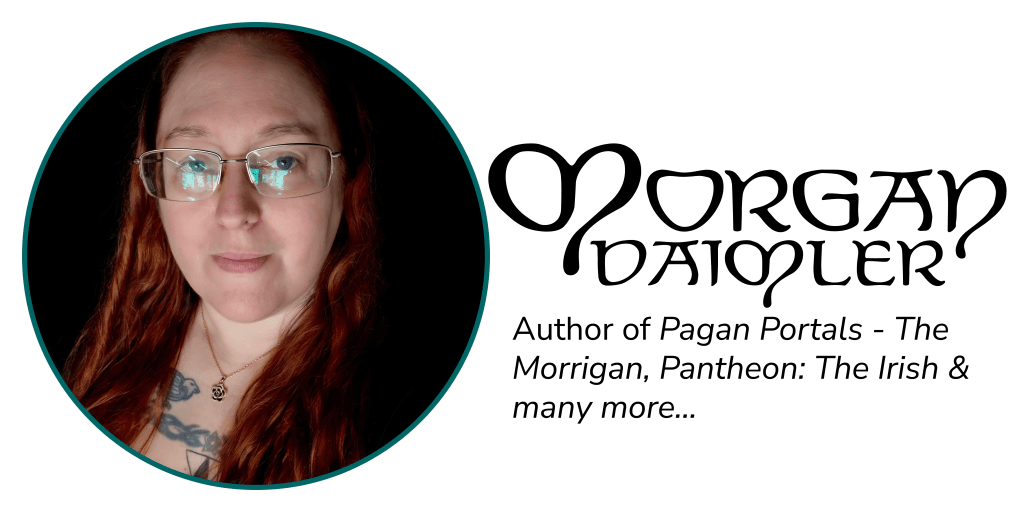
Morgan Daimler teaches classes on Irish myth and magical practices, fairies, and related subjects in the United States and internationally. She has been published in multiple anthologies as well as articles in various magazines, and she is one of the world’s foremost experts on all things Fairy. Besides the titles available through Moon Books Morgan has a high fantasy novel ‘Into Shadow’ through Cosmic Egg and has an urban fantasy/paranormal romance series called Between the Worlds. Morgan has also presented papers on fairies and on fairies and witches at several university conferences.
For more details: https://www.collectiveinkbooks.com/moon-books/authors/morgan-daimler
 The Pagan Collective
Leave a comment