

These Pagan Portals are all current works in progress, serialised here on the Pagan Collective blog with each chapter being open for comment. In due course the entire script will be published as a Pagan Portal book.
Chapter 5 – Macha of the Red Hair
“This Aedh left no children but one daughter, Macha Mong-Ruadh [that is, Redhaired Macha] was her name. She demanded her father’s turn of the sovereignty. Cimbaeth and Dithorba said that they would not give sovereignty to a woman.”
– O’Curry, 1861
The Story[1]
Once long ago Ireland was ruled by three kings, Dithorba, Aedh Rua[2], and Cimbaeth, who took turns sharing the kingship, with each ruling for seven years. This agreement had been reached with a great many sureties offered by each man, effectively hostages and treasure that would be forfeited is they failed to hold up their portion of the agreement. They went through this process three full times with each ruling three times for seven years until 63 years passed, and then Aedh drowned leaving only one child, Macha Mongruadh [Macha of the Red Hair]. When her father’s time to rule came again she demanded her father’s share of the sovereignty of Ireland but Dithorba and Cimbaeth said they wouldn’t let a woman rule.
Macha fought against the other two for rulership of Ireland and won, taking her place as queen. She ruled for seven years, during which Dithorba died leaving behind 5 sons: Baeth [fool], Bras [boastful], Betach [shameless], Uallach [arrogant], and Borbchas [rudeness]. When seven years had passed Cimbaeth and Dithorba’s sons expected her to step aside for them but she refused, saying that her reign wasn’t from an agreement, as her father’s had been, but from might of arms because she had won the crown through battle. When they tried to fight her she won again, driving the five sons into exile and finally taking Cimbaeth as her husband and giving him the responsibility of her soldiers.
The five sons fled into the wilderness and took to raiding and pillaging those around them, but no one was able to apprehend them. Macha left the kingdom in Cimbaeth’s hands and went to capture them and stop the trouble they were causing in the land. She took rye dough and rubbed it over herself, dressed in rags, and went in this disguise to Connacht to find the brothers. She came across them camping for the night, sitting around a fire, and told them she was a poor old woman cats out into the wilderness. They offered her food and then demanded that she sleep with each of them in payment for it. The eldest went with her into the woods where she quickly subdued and bound him before returning to the fire. The other brothers thought that the eldest hadn’t returned because he must be embarrassed about going with her and so they each go alone in turn and she ties them all up. Thus captured she leads them back to her royal palace where the people all demand the brothers be killed for their crimes. Macha however refuses to do this, saying that instead they will be held as prisoners until they build her a fort, and uses her brooch pin to outline the place she wants the boundary trench dug for this. In this way their lives were spared and Macha’s fort was built.
And so Emhain Macha is named from Eómain meaning a neck-brooch, hence Macha’s Brooch[3]
Gearóid Ó Crualaoich offers a metaphysical interpretation of Macha Mongruadh in The Book of the Cailleach, highlighting the meaning of her father’s name – Aedh the Red – her epithet of Mongruadh [red haired] and the place of her father’s death, a waterfall named Ess Ruad [red waterfall] and pointing out the connection between the color red[4] and the Otherworld. This implies that Macha Mongruadh, like Macha of the sidhe, had an Otherworldly origin. Similarly the site of her father’s death is the place where the salmon of knowledge[5] lived, connecting Aedh to both the Otherworld and great wisdom. Ó Crualaoich suggests that Macha represented divine and Otherworldly sovereignty and that her taking the crown after her father’s death was symbolic of the divine feminine controlling sovereignty across Irish stories. This is based on a wider pattern across Irish belief that it was a goddess who granted a king the right to rule, often depicted by his marriage to that goddess or to the land itself. Rosalind Clark shares this approach, describing Macha as a euhemerized goddess whose magical abilities have been converted in the tale to martial prowess.
This Macha is positioned in her story as a historical or pseudo-historical queen, a woman who ruled at a time when that was very uncommon. Pseudohistorical material is that which is framed as real history but which is likely to be myth instead, so that the mythic story is set in a very grounded real-world way. This approach grounds a story in the history of a place or people without being overtly magical or mythic in nature and presents the characters of the story as extraordinary humans. It is not uncommon to find deities appearing as humans in pseudohistory, usually through the process of euhemerization where an otherwise supernatural or divine character is explained as a human who has previously been misunderstood as supernatural. We see this with other stories of the Tuatha De Danann where they are explained away as humans from Scythia or similar. In this case Macha’s framing as a human queen shouldn’t be taken to mean that she wasn’t a goddess, at least originally, nor that the gods of Ireland were humans that later came to be thought of as gods – in fact the exact opposite is the case with euhemerization.
Although Macha of the red hair may seem like the least likely candidate of the various Machas for being understood as an aspect of the goddess scholars generally agree she is a connected to the others. As Mark Willimas points out in his book Ireland’s Immortals the idea of a deity being re-formed into a literary or mythic character that seems to contradict or differ from the original deity isn’t uncommon in Irish mythology. One hint of Macha’s divine nature may be found in an account of the naming of Emain Macha in Cormac’s Glossary, where Mach is aid to have drawn the boundary of her fort with her neck brooch while sitting down, a feat that would be impossible unless she was truly gigantic (Clark, 1991). Beyond that and the above discussed interpretations of the colour red in her story the idea is also supported through her eponymous connections to Ard Macha and Emhain Macha, illustrated here:
“Macha Red-mane, daughter of Aed, was nurse of Ugane of the combats, and wife of urbane Cimbaith son of Fintan: until death he never avoided a fight. It was for Emain and Ard Macha her perilous battles were fought, a rough exploit. She ruled uprightly for seven years”
– Banshenchus
These connections to place are shared by Macha of the Sidhe and Macha of the Nemedians, and indicate Macha’s role as a sovereignty goddess and as a creator deity, a being who both shaped the land and who gives sovereignty over it. That last can be seen with Macha of the Redhair because she was a queen who ruled after earning the title in combat and who chose the roles the other kings would have. The overturning of social norms and expectations would be strange for humans of the time but perfectly align with ideas about the divine Otherworldly woman judging the worthiness of potential kings and controlling who would come to the throne (Ó Crualaoich, 2003).
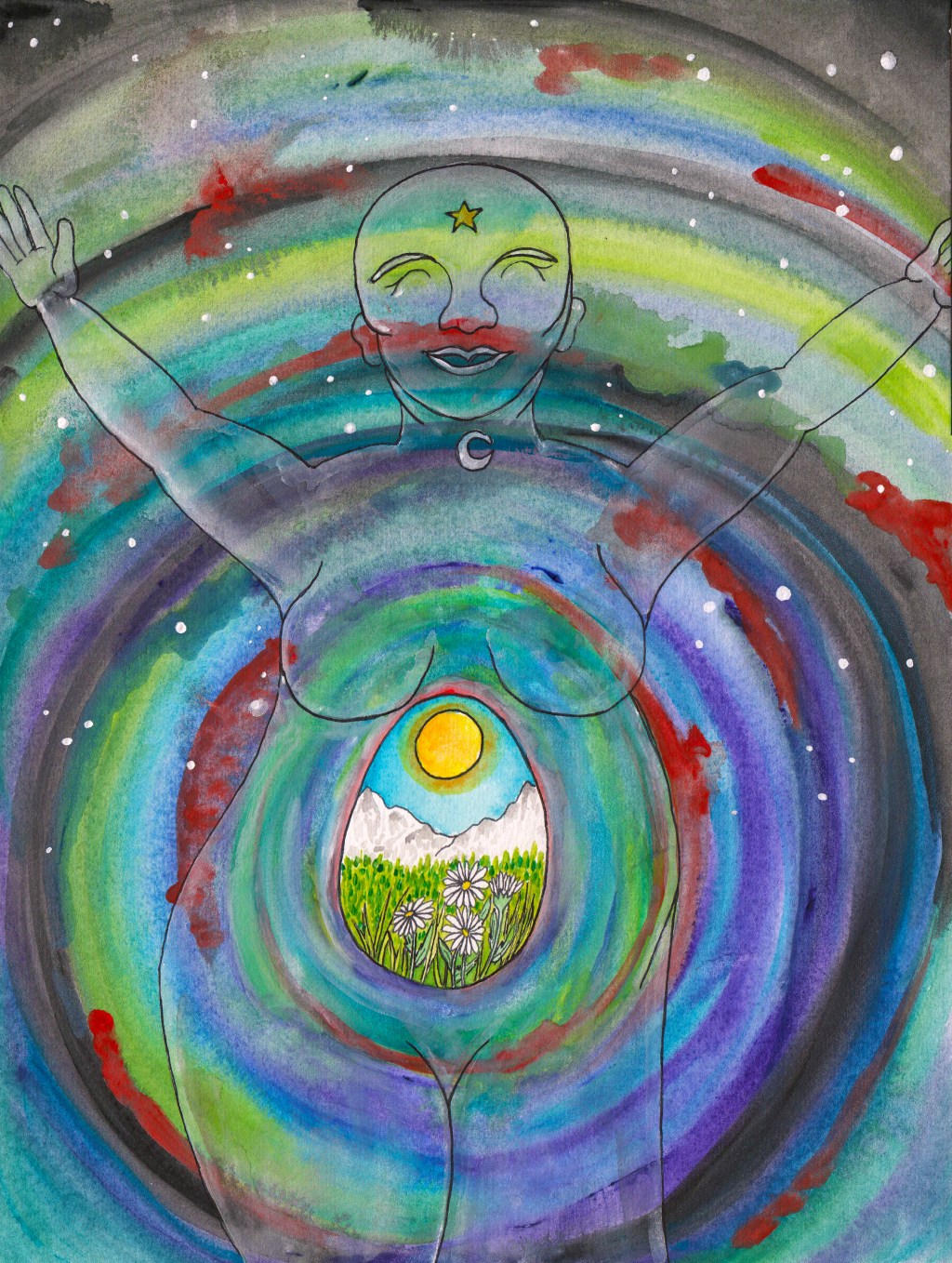
Sovereignty is a complex topic today, and one that is often interpreted in two very different, even opposing ways. Historically and by the dictionary sovereignty is supreme power of a government to rule itself and those within its control, while in modern contexts sovereignty is often used interchangeably with autonomy, the right of an individual to lead their own life. When we talk about Macha as a sovereignty goddess we are generally speaking of her power to grant or withhold a throne from a potential monarch, and to control the welfare, prosperity and luck of those within her domain (in this case Armagh). However many people today also see her as a goddess of personal sovereignty (i.e. autonomy) who helps individuals find the strength to enforce their own will and control their own life.
Neither of these views is wrong, and although they seem to be contradictory in nature they reflect the layered understanding we need around Macha and sovereignty. In her older stories she is a power behind the throne, or as with Macha Mongruadh sitting on it, and as such is supporting a monarchy and its related government. She is a goddess who looks to the wider view of what is best for an entire group or kingdom and then acts to either support the king who is nurturing that view or acts to undermine and take down a king that isn’t ruling well. In a modern context she is a force that supports people, especially women, who are seeking strength and control within their lives, and she is often called on or looked to by people who feel like they aren’t in control for her aid in returning that sense of personal sovereignty. An example of this in the 21st century can be seen with the House of Apples program Macha’s Justice, which offers support to survivors of domestic abuse.
While sovereignty is an important aspect of Macha of the Redhair, it isn’t the only thing that she is associated with; war and battle are also key aspects to this Macha, as they were with Macha of the Tuatha De Danann. She leads an army and wins, as well as later pursuing her enemies personally, displaying her ability on the battlefield as well as her leadership (Ó Crualaoich, 2003). Although she defeats the five sons of the rival king through cunning rather than violence, her willingness to seek them out alone and capture them shows her mettle as a warrior.
Macha of the Redhair is a powerful figure: as a human character she inspires women to fight for their rights and their autonomy; as a goddess she shapes the land and creates order within chaos, as well as granting rulership to the rightful king. She is a humanized version of the divine Macha, a relatable face of the Great Queen, and the fifth and final aspect of Macha found across Irish mythology. Understanding her in her story helps us better understand Macha in general, the figure who exists within and
Macha in My Life – Another Kind of Healing
My main deity of the three Morrigans, the one I was formally dedicated to for over a decade, is Macha. I find Her to be very much a Goddess of women’s rights and empowerment, themes which came up often during that period of dedication. In following Them, and Her, I have been led on many interesting adventures and met some wonderful people. They are not easy Goddesses though, although perhaps none of the Gods are, and the saying that you will sometimes hear that ‘with the Morrigan there is always a cost’ I believe is true. I have been very blessed by Them, but I have also paid for that blessing both in the things I have done for Them and in the standards that I know I am held to. There is something relentless in Them that I admire and it pushes me to do my best for Them.
I first began connecting to Macha, and the 3 Morrigans more generally, in 1999 when I had received a message during a group meditation/Journey where They, collectively, told me that what I was meant to do for Them was to be a healer. I was surprised and disappointed, to be honest. I’d always fancied myself quite the diviner and I’d spent many years learning a variety of divination methods to a point that I thought I was very good with them. I took pride in my skill, and while I had some small interest in healing it wasn’t anything I could picture myself really focusing on.
It’s dangerous to assume things. You see when I was told I needed to focus on healing I assumed that meant physical, practical healing. Like fix a broken arm healing or the more new age re-balance someone’s energy healing. And that was just about the last thing I wanted to dedicate my life to doing, even in service to a trio of Goddesses. I wasn’t even questioning why that particular grouping would want me, of all people, to be a healer – I was too busy making faces and groaning. In my defence I was 20 at the time, headstrong, and prone to melodramatic reactions.
I did start learning a wide array of healing methods though and started studying magical healing work from a traditional witchcraft perspective. I even briefly looked into massage therapy school before deciding it wasn’t a good fit for me. I started trying to do more magical healing, at least, and it wasn’t like it was horrible but it definitely wasn’t making my soul do cart wheels of satisfaction either. I felt frustrated, more than anything, but I was trying to trust that ultimately They were taking me where I needed to be.
But during this period an interesting thing was happening. Although very few people at that time knew I honored the Morrigans, I started running into Her followers on a very regular basis, even in the most unexpected of places. And the conversations often turned to ways these people had been hurt by life or other people, ways they’d been abused, ways they felt devalued, ways they were questioning their worth. And over and over I’d end up sharing my own story, my own struggle to recover a sense of sovereignty and self after victimization and over and over they’d tell me that I’d helped them feel more whole, more empowered. I found myself opening up to strangers about my own past, my own pain, and becoming an advocate for the beauty of brokenness and the potential to heal even when we have lost all sense of personal value. I found myself speaking out against the very idea of being ashamed for being a victim, and speaking instead about the power of the survivor. The strength of knowing exactly what you can endure. Then this started to happen more generally, a push to help people see their own power, their own value, their own worth, even when they had been broken. Especially when they had been broken.
And finally – not quickly – finally I realized that healing is a layered word, and that what They wanted from me, what They’d always wanted from me, wasn’t to physically heal people or magically heal people but to heal people’s sense of sovereignty. Sometimes this is through encouraging words, and sometimes this is through a challenge, because They can be hard even in healing, but the result is growth and strength. Even 26 years later I’m not sure I to do this well, but at least now I know what I’m supposed to be doing, and now it feels right and I enjoy doing it. I joke now that She sends people to me when She needs to, but it’s only partially a joke; when my service is needed the person will find me.
References
Clark, R., (1991) The Great Queens: Irish Goddesses from the Morrígan to Cathleen ní Houlihan
Dobbs, M., (1932) “The Ban-shenchus”. Revue Celtique 49
House of Apples (2025) Macha’s Justice, retrieved from https://houseofapples.org/machasjustice
Ó Crualaoich, G., (2003) The Book of the Cailleach
O’Curry, E., (1861). Lectures on the manuscript materials of ancient Irish history
Meyer, K., (1907) ‘The Dindshenchas of Emain Macha’; Archiv für Celtische Lexikographie
Williams, M., (2016) Ireland’s Immortals
[1] As with the previous chapter I am offering an amalgamated version of Macha Mongruadh’s story which combines the key points of several Dindshenchas tales.
[2] Aedh Rua means red fire, but Aedh is a fairly common man’s name in older Irish material. He is described as having red hair and his name may also be read as Aedh of the Red (Hair)
[3] This offers an alternate if more dubious origin of the fort’s name from the one given in the last chapter.
[4] Red is often associated with Otherworldly beings in Irish myth and folklore, usually the more dangerous types
[5] A fish in Irish mythology which contained great wisdom because it fed on the hazelnuts falling from trees of knowledge around the pool. To eat the salmon was to absorb that wisdom.
For more details: https://www.collectiveinkbooks.com/moon-books/authors/morgan-daimler
 The Pagan Collective
Leave a comment