

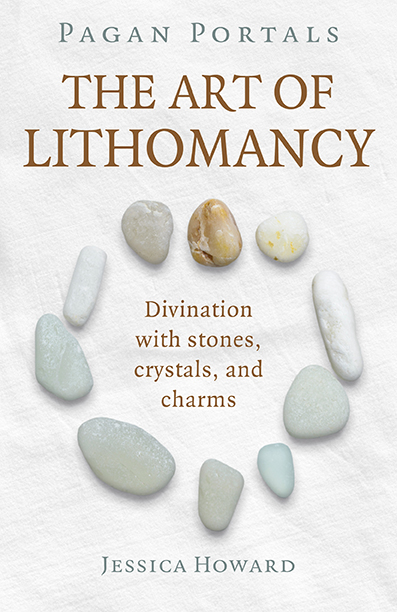
The art of lithomancy is one which many people are aware of, although they may not know the name of it. The most common definition of lithomancy is the art of divination by reading stones. It involves the caster, or the diviner, ‘throwing’ stones and then divining the future based on both where the stones fall in relation to each other, and the patterns in which they fall. It is a simple yet extremely insightful method that relies on nothing but some easily accessible tools and your intuition. This is the beauty of lithomancy; you don’t need to spend a ridiculous amount of money on buying exactly the right kit (although there is nothing wrong with buying a pre-made kit), or to take a specific course to qualify as a ‘master’ at the expense of your bank account. It is easily accessible and easy to get to grips with, but don’t let this simplicity fool you; it is extremely effective.
I have tried many different divination methods, such as runes, tarot, pendulum, oracle cards, scrying, bird divination and more. But I can honestly say that lithomancy has been one which, from the first reading I ever did, just clicked with me. It is perfect for those who may be new or those who are looking to find a divination method they can learn and grow with.
Lithomancy commonly uses stones and crystals. However, you can use anything that has symbolic meaning to you (providing it is a suitable size and weight); coins, shells, charms, bones, etc. One of the many great things about lithomancy is that you can really tailor it to your own personal symbolism, get creative, and have fun with it.
It is said that the earliest verified account of lithomancy being used stretches right back to the Romans, in the city of Constantinople around the 800’s. The Patriarch of Constantinople, Photus, describes how a physician named Eusebius used a stone known as a baetulum (often formed from a piece of meteorite) to perform a ritual to divine the future. In this tale, Eusebius, having suddenly developed an urge to climb to the top of a mountain to the temple of Minerva, lay resting after his climb. From there he saw a sphere of fire falling from the sky down to the earth and a lion standing next to where it had landed. The lion disappeared as the fire was extinguished and there lay the baetulum. Roughly the size of the palm of the hand, baetulum’s are often white although sometimes purple in color. The one which Eusebius found would answer questions by emitting a shrill sound which he would then interpret.
A similar story recounts how Helenus used lithomancy to predict the destruction of Troy. It is recorded that the God Apollo gave Helenus a stone (or sometimes a magnet). After performing several rites which included washing the stone or magnet in the water from a spring, it finally spoke to him and told him of the fall of Troy.
The two stories, which are both attributed to being the earliest examples of lithomancy, are quite different to the lithomancy technique which is often meant of when we speak of it today. Aside from these two instances, there is a real lack of any clear historical records around the art of lithomancy. There are other books and websites that say the Celts used lithomancy or that it became well established in the medieval period. However, finding actual historical evidence of these claims is very difficult, and its history, practices, and the origins of lithomancy as we know it today remain a mystery.
It is one of the reasons I felt compelled to write this book. Simply searching through Amazon will show very few modern resources on lithomancy. It is a divination practice suitable for all levels, and deserves to be given more attention than it currently
seems to receive. This book is a combination of research and my own personal experience with lithomancy, and includes more traditional methods and modern ones. From choosing your stones, to assigning meanings, interpreting readings, and performing readings for others, this book should contain everything you need to get started.

Jessica has been a practicing witch for twenty years and has travelled many different paths during that time. She is very active online as an elder and moderator of several groups, as well as blogging about her experiences on instagram (@thecottagemysticwitch), and on her website http://www.thecottagemystic.com.
Her craft is an eclectic one but heavily influenced by Celtic witchcraft and water witchcraft, with a dash of kitchen witchcraft thrown into the mix. She lives in Hertfordshire, UK.
For more details: https://www.collectiveinkbooks.com/moon-books/our-books/pagan-portals-art-lithomancy
 The Pagan Collective
Leave a comment