

Maybe you are wondering, how can pilgrimage relate to me?
Our modern lives are busy, moving at a fast pace, sometimes chaotically, and technology only heightens our impatience for everything. Now. Collectively, our religious beliefs have generally waned, and been replaced with other more earthly and human centred concerns. How many of you remember the scenes in Forrest Gump where he “Just decided to go for a little run”? In the film, the title character, played by Tom Hanks, started running and didn’t stop until he’s crossed the USA several times. In one scene he is pursued by reporters who ask him, “Are you doing this for world peace? Are you doing this for the homeless…”
I expect you have seen adverts by charities asking people to do a sponsored event, walking a certain number of miles, or between certain points raising money for a good cause, or maybe you have taken part. Although the end result is monetary, there is a specific aim – helping others, less fortunate, which could be construed as worthy and soul fulfilling in the same way pilgrims achieve their religious goals when completing a pilgrimage. The idea of walking (or running) to make the world a better place, or a healthier one, largely started in the USA in 1953 with a woman, known as the Peace Pilgrim. She vowed to continue walking all over the USA and Mexico until there was peace in the world and kept going for twenty-eight years! With only the clothes she wore, relying on the kindness of strangers and spreading the ideals of a better world through peace, she transferred the belief that seeking a better place in heaven was something only a god could grant, by setting a human example and thus making real political change.
In 2016 Elvis Presley’s mansion, Graceland, which opened to the public in 1982, marked its twenty million visitors. You may be wondering why I have added this information in a book on pilgrimage. Let’s look at the facts: Every year the estate hosts an Elvis Week, regularly attended by over 10,000 people and which coincides with the day Elvis died (August 15th) when they have an All Night Vigil. Fans line up, for hours and days on end, to make offerings and lay flowers at ‘The King’s’ grave. Doesn’t this have very striking similarities to visiting a religious shrine? Especially so at the height of pilgrimage when pilgrims would queue for hours to pay their respects, and possibly leave offerings to the saint. For Elvis fans, this veneration at the graveside, during the all-night vigil, is the culmination of their pilgrimage to Graceland. For his devoted fans, this is a special journey that costs a lot of money and requires careful planning and can be physically demanding. The offerings themselves sometimes include pleas for Elvis to intervene with God or have a confessional element.
Modern day pilgrimages to graves and significant places relating to famous people, is one of the most popular forms pilgrimage has taken in contemporary society. I for one have done this. In 2008, as a final year student studying photography, I made a pilgrimage to Heptonstall in West Yorkshire to visit the grave of the poet Sylvia Plath. I had been using her poems to create a set of self-portraits and wanted to pay my respects and lay flowers on her grave. The journey to Heptonstall wasn’t an easy one. I had my camera/tripod and other equipment with me, and it was February with the threat of snow, as I climbed the steep hill on the Calderdale way. I felt as though I had stepped into Ted Hughes (Sylvia Path’s husband) world of whirling winds and remote otherworldly wildness. I made my way through the ethereal churchyard and ruined church dating from 1260, (made even more ethereal, by the swirling sleet that surrounded me,) to the more modern cemetery. It was a true awakening, and I felt a strong connection to both of them. When faced with the grave, I was overcome with emotion, having reached the end, both of Plath and my work on that project. I laid bedraggled tulips and muttered a few words of thanks. The feeling of completion and strength I drew from that pilgrimage enabled me to finish my degree and look beyond the physical in every part of my own creativity.
You may have done something similar to this, without even considering it relevant to pilgrimage? Have you ever visited a place of personal significance, a famous battle ground or a celebrity’s memorial site, for example? Returning to a more traditional form of pilgrimage, its transcendent nature sits very well with modern and New Age spirituality. There has been a resurgence of those travelling to historical pilgrimage sites, such as Glastonbury, along with other sites of pre-historic interest, like Orkney or Stonehenge and natural beauty spots; all places where the veil between the mundane and the Otherworld is thin, making the spiritual vibes more pronounced and available. These remarkable places offer a chance of spiritual enlightenment and personal growth. Going back a step to what I said earlier, our modern lives are full-up with time consuming commitments, work, and family, not to mention the costs involved which often have to take precedence over spiritual growth. People in general just can’t take the time to go off on pilgrimage for months on end. So, how then can you go on a pilgrimage with say, only a week to do it in? Is it even possible? The answer is, of course! Pilgrimage is more than simply walking from a start point to a finish point, a pilgrimage is a sacred journey taken to ultimately change something inside yourself; to seek physical or psychological healing; it’s about escaping the everyday, so you may return from it rested, and feeling different. A pilgrimage, however long it takes, is a journey with intention.
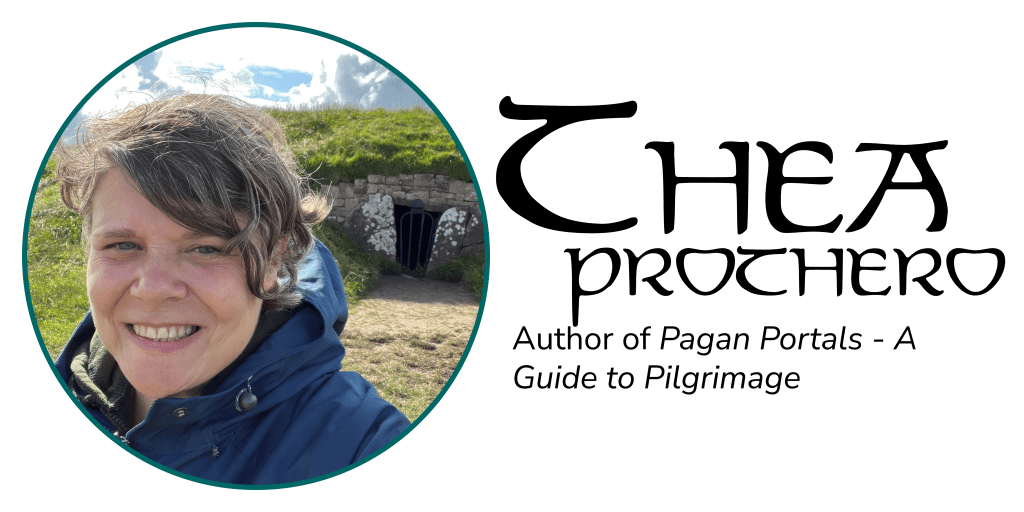
Thea is a Heathen and a pilgrim. She likes to think of herself as a Nemophilist, which means a ‘haunter of woods’. She spends most of her free time walking in the wildest remotest lands, places that still make the gods tremble, and she loves the challenge of finding connection through nature to the divine. She writes prolifically, read equally, has a passion for learning, taking photos, grow things, and spend time with her family. she works in education and lives in the south of the UK.
From Pagan Portals Pilgrimage by Thea Prothero, for more details: https://www.collectiveinkbooks.com/moon-books/our-books/pagan-portals-guide-pilgrimage

 The Pagan Collective
Leave a comment