

Working With Airmid and Herbal Magic
There are many reasons to work with Airmid as deity, ancestral ally or metaphor (depending on your personal belief system.) She is the herbalist’s divine ally, especially for those who tend to plant spirits, healing rites, and dig for the deep knowledge of the earth. To start working with her in a pagan practice you might like to build an altar or focus point dedicated specifically to her and/or to your herbal practice. Below is a ritual to set up and bless an altar dedicated to Airmid. As with all the rituals and meditations in this chapter, don’t see them as set in stone; adapt them to suit yourself or use them as inspiration for your own.
Supplies You’ll Need:
- A small table, shelf, or stone surface for your altar
- Green cloth or mossy scarf
- A bowl of spring water (or rainwater)
- A candle (green, white, or soft gold
- Fresh or dried herbs (especially healing ones — like yarrow, mugwort, calendula, nettle, or thyme)
- A plant or growing pot (optional)
- A symbol of Airmid (e.g., a carved spiral, herb bundle, or a goddess figure)
- Your herbal tools (mortar, journal, scissors, etc.)
Step 1: Cleanse and Prepare the Space
Light your candle and gently cleanse the altar surface with spring water or smoke from burning mugwort or rosemary. As you cleanse, say a simple charm such as:
“By leaf and flame, by earth and stream,
I clear this space for sacred dream.
Let no shadow linger near,
Only truth and healing here.”
Step 2: Dress the Altar
Lay down the green cloth to represent life and nature’s abundance. Place the candle, bowl of water, and herbs on the altar. You may also add a small cauldron, stones, a figurine representing Airmid, or really whatever works for you.
Step 3: Invocation to Airmid
Stand before the altar and read this invocation poem (or better yet write your own), aloud and with intention.
Airmid of the healing hand,Daughter of root and ancient land,
Who wept upon her brother’s grave
And from her tears, the green herbs gave.
Keeper of the leafy tongue,
Where every cure and charm is sung,
Beneath your cloak the secrets grow —
The leaf, the balm, the root below.
Come, bright lady of the glen,
Walk among the herbs again.
Bless this space, these hands, this art,
Plant your wisdom in my heart.
With water pure and candle flame, I speak your healing, holy name.
Airmid, healer, herb-wife true —
This altar stands in honor of you.
Place your hand over the bowl of water and say:
“May this water bless all I create here.”
Use the water to anoint the four corners of the altar, your tools, and your forehead or hands.
Step 4: Dedicate the Working Space
Now place your herbal tools — your mortar and pestle, clippers, scissors, journal — beside or beneath the altar. You may wish to keep a small Herb Journalbeside the altar for dream-herbs, spirit messages, or recipes she guides you to.
Place a handful of herbs in the offering bowl or scatter them on the earth afterward. You may also pour a little herbal tea as libation.
Let the candle burn for a while or snuff it with thanks. Your altar is now open — return to it often with reverence and intention.
If you have a witchcraft or spell work practice, you can use Airmid’s herbs in simple folk magic rituals. Below are some examples, making use of the herbs we looked at in the last chapter and inspired by traditional folk practices and charms.
Love Divination Spell with Yarrow
Walk in a circle three times sunwise (clockwise), holding nine sprigs or stalks of yarrow and saying:
“Spirits of land, sky, and sea,
Circle ’round and speak to me.
On love’s true path, let insight grow —
What’s sown in heart, let yarrow show.”
Take the 9 stalks and bind them in the middle with the red or green ribbon. As you tie, say aloud your question or intention. Be clear — e.g., “Is [name] true of heart?” or “When will love find me?”
Place the tied yarrow bundle in the bowl of water. Place the quartz beside the bowl, anchoring your focus. Watch the way the yarrow floats or shifts for a few minutes. Traditional diviners often believed movement in water spoke truth. Use your intuition:
If it floats still or upright: The love is steady or approaching with patience.
If it drifts to the side quickly: A change or decision is coming — new energy or choice.
If it sinks or tips unevenly: Caution — mixed intentions or inner conflict may be present.
If it spirals or moves in a circle: A returning love or repeated pattern is involved.
After your scrying, take the yarrow bundle outdoors (if possible) and leave it at the base of a tree or in a hedge with thanks.
Keep the quartz near your bed for dreams.
Protection Spell with Nettle
Purpose: To protect yourself, your home, or a loved one from harm, negativity, or psychic intrusion.
What You’ll Need:
- A handful of dried nettle leaves or stalks (fresh can work, but handle with care!
- Black or dark green thread or twine
- A small pouch of natural fabric (linen, wool, or cotton)
- Salt (sea salt preferred)
- A sprig of rowan, ash, or oak (optional, for added Celtic power)
- Candle (black, white, or dark green)
Light the candle and place the nettle, salt, and pouch in front of you. Take a moment to center yourself. To craft the talisman, place the nettle into the pouch with a pinch of salt. If using, add the sprig of rowan, ash, or oak. As you tie the pouch shut with the dark thread, say:
“Bound in leaf, in salt, in thread,
Let ill intent be turned to dread.
What would wound, now shall flee —
By nettle’s guard, I walk free.”
Bless and activate your charm bag by holding the pouch over the candle flame (not touching) and imagine it glowing with protective energy. Say three times:
“Burning nettle, shield and thorn,
Guard me now from fear and scorn.
From seen and unseen, keep me whole —
Body, spirit, heart, and soul.”
Carry the pouch with you for personal protection, or hang it near a doorway or window to ward off external harm. You can also bury one at the threshold of your home (or by a gate) for warding the property.
To close the ritual snuff the candle. Thank the spirit of nettle by offering a bit of water or crushed leaf to the earth.
Good Luck Spell with Clover
Purpose: To draw good fortune, open lucky opportunities, or bless a new venture or journey.
What You’ll Need:
- One fresh or dried three-leaf or four-leaf clover
- A small piece of green cloth or ribbon
- A coin (silver if possible, or any coin of value)
- A bit of honey or milk (as an offering)
- A stone or charm you associate with luck (optional)
Step outside if possible, or sit by a window with natural light. Wrap the coin in the green cloth or tie the clover to it with the ribbon. As you do, say:
“By leaf and silver, luck now tied,
Flow like a stream and turn the tide.
Blessings bright and pathways clear —
Let fortune’s favor now draw near.”
Pour a small amount of honey or milk at the base of a tree, stone, or into the earth as an offering to the land spirits. Say:
“Sweet to the spirits, sweet to the land,
A gift I give with open hand.
Share your blessing, fair and free,
As I walk in harmony.”
Carry the clover and coin charm in your pocket, bag, or charm bag for seven days. On the seventh day, bury the coin near your home or a crossroads for the luck to “take root.’
Cowslip Beauty Spell
Purpose: To enhance beauty, charm, and confidence — both seen and unseen — and to draw loving or gentle attention from others.
What You’ll Need:
- A handful of fresh or dried cowslip flowers
- A small mirror (handheld or compact)
- A bowl of spring water or rainwater
- A few rose petals (optional, for love and softness)
- A pale pink or gold ribbon or string
- A candle (light pink, white, or soft yellow)
Light your candle and place the cowslip flowers and rose petals (if using) into the bowl of water.
Let them steep for a few moments while you focus your intention. Dip your fingers in the flower-infused water and gently dab your face, neck, or heart area. Look into the mirror and say aloud:
“I see with eyes both kind and clear,
The beauty that draws people near.
Not just of skin but soul and spark,
Like cowslip gold from shadowed dark.”
Then, tie a small bundle of cowslip with the ribbon and let it dry. Keep it by your mirror, vanity, or bed. As it dries, it holds your intention — each time you see it, you could say:
“Glow of field and gentle grace,
Let beauty bloom upon my face.”
To close the ritual, snuff the candle and pour the flower water into the earth or a garden with thanks.
Making Your Own Herbal Incense
Making your own herbal incense is a beautiful and ancient practice, especially when done with care and magical (focused) intent. To begin, you’ll need some dried herbs, a slow-burning base like sandalwood, cedarwood, or natural resin (such as frankincense or myrrh), and a mortar and pestle or grinder. Choose herbs that match your purpose — for example, lavender for peace, rosemary for purification, mugwort for dreamwork, chamomile for love, thyme for courage, and nettle for protection. Combine three to five herbs in equal parts and grind them together gently, moving clockwise while focusing on your intention. You might say a simple charm aloud as you blend: “By root and leaf, by flame and air, blend my will with loving care.” Once your herbs are blended, you can add a bit of powdered resin or wood to help them smolder better when burned. Test your mixture by placing a small pinch on a lit charcoal disc in a heatproof bowl or censer — adjust the blend if needed. If you prefer to make incense cones, combine your powdered blend with a bit of water and a natural binder such as honey, gum arabic, or makko powder to form a paste. Shape into small cones or sticks, and let them dry in a shaded, well-ventilated place for about a week. Once your incense is finished, store it in a glass jar or sealed pouch, clearly labeled with its name, ingredients, and magical purpose. Letting the blend rest for a few days before burning allows the scents and energies to settle and strengthen. With this simple process, you can create personalized incense blends for ritual, meditation, or everyday enchantment.
For example, this protection and warding blend is designed to create a strong, earthy scent that’s perfect for clearing space and setting boundaries. Combine equal parts nettle (for defense and grounding), rosemary (for purification), juniper berries or needles (for protective energy), and frankincense resin (to lift and seal the energy). Grind them together and burn while speaking a protective charm or walking the perimeter of your space to ward off negative influences.
A blend for dreaming and divination helps open the intuitive senses and invites dreams or visions. Combine mugwort (for dreamwork and second sight), lavender (to soothe and clarify the mind), yarrow (for psychic strength), and myrrh resin (to ground while traveling inward). Burn this blend before sleep or during tarot, scrying, or other forms of divination to enhance your spiritual practice. You can also simmer it in water for a gentler scent to accompany a meditative environment.
Or try making a blend for love and desire; combine rose petals (to attract love and beauty), jasmine (to deepen affection and sensuality), cinnamon (for passion and energy), and vanilla (for sweetness and allure). This blend creates a warm, inviting atmosphere, perfect for rituals of self-love, drawing affection, or enhancing romance. Burn this blend in a quiet space to invite warmth, attraction, and positive emotional energy.
Making Your Own Herbal Tea
To make a herbal tea, start by selecting the dried herbs you wish to use, based on the benefits or flavors you’re seeking. Common herbs for tea include chamomile for relaxation, peppermint for digestion, rosemary for clarity, or lavender for calming. Begin by boiling water, then place about 1–2 teaspoons of dried herbs per cup into a tea infuser or directly into a teapot or cup. Pour the hot water over the herbs, ensuring they are fully immersed. Let the tea steep for 5–10 minutes, depending on the desired strength of flavor and potency. If you’re making a larger batch, adjust the amount of herbs and water accordingly. After steeping, strain the herbs (if using a teapot or loose herbs) and enjoy your freshly brewed herbal tea. For added flavor, you can sweeten it with honey or stir in a slice of lemon, depending on your preference.
To create a healing herbal tea with nettle and chamomile, begin by gathering your dried herbs. Nettle is known for its cleansing properties, supporting the body’s natural healing processes, while chamomile helps to calm and soothe, promoting rest and relaxation. Once you’ve prepared your tea by adding 1 teaspoon of dried nettle and 1 teaspoon of dried chamomile to your infuser or directly into your teapot, and poured hot water over them, take a moment to focus on your intention for the tea. As the water steeps, close your eyes and imagine a soft golden light surrounding the herbs. Visualize this light infusing into the water, carrying with it the energy of healing and balance.
As the tea brews, say a charm to focus your intention:
“By leaf and root, by warmth and brew,
Healing flow, come forth, be true.”
While you sip the tea, allow the visualization to deepen. Imagine the golden light expanding, moving through your body as you drink. Feel it enter your throat, soothing and clearing, moving down into your chest, warming and relaxing your heart, and continuing down through your abdomen, your legs, and all the way to your feet. With each sip, you draw in more healing energy, restoring your body, mind, and spirit. See any areas of discomfort or imbalance in your body being gently washed away by the golden light, replaced by a sense of peace and vitality.
This combination of intention, charm, and visualization can enhance the therapeutic power of the tea, inviting not just physical healing but also emotional and spiritual restoration.
Creating Your Own Materia Medica
Creating your own materia medica (herbal journal or notebook) as a home herbalist is a deeply personal and empowering practice that allows you to build a comprehensive and practical herbal reference guide tailored to your own needs, preferences, and experiences. A materia medica is essentially a collection of detailed information about the herbs you use or plan to use in your herbal work, and it can include their medicinal properties, uses, preparation methods, dosages, and even personal notes about how they interact with your body or spirit.
To start building your materia medica, begin by selecting the herbs you want to work with. This can be based on your immediate needs (such as herbs for common ailments like insomnia, digestive issues, or stress), or it can be driven by curiosity about specific plants or the desire to grow a particular area of knowledge. For each herb, create a dedicated section or page in your herbal journal or a separate binder. If you prefer, you could also use digital tools such as a Word document or specialized apps for easy organization.
Each entry typically begins with the botanical name of the herb, followed by common names, as this helps to avoid confusion with similarly named plants. After the basic identification, include descriptions of the plant — this can include its appearance, habitat, and how you gather or grow it. It’s important to know the plant in its natural state, as this helps to build a relationship with the plant and aids in identification in the wild or when purchasing dried herbs.
Next, document the medicinal properties and uses of the herb. Research its traditional and modern uses, noting its actions (e.g., anti-inflammatory, sedative, tonic) and the specific systems of the body it affects (e.g., digestive, nervous, respiratory). Include any known contraindications or safety precautions, especially for herbs that can be potent or should not be used by certain groups (e.g., pregnant women, young children, or people with certain health conditions). It’s also important to note the part of the plant used (leaf, root, flower, etc.) and the method of harvesting or preparation. This could also include details on the seasonality of the herb and how best to preserve it.
As a home herbalist, personal experience is one of the most valuable aspects of your materia medica. After using an herb in your own practice, be sure to record your experiences with it. Did you use it for a specific issue, and how did it work for you? Was it effective, and what did you notice about the herb’s effects? These observations will deepen your understanding of the plant and guide you toward better-informed future use. For example, when using lavender for stress relief, you might note whether it had an immediate calming effect, or if it worked best when paired with another herb, like chamomile, for more powerful results.
Alongside medicinal uses, you can also include recipes or specific preparations for each herb. Include how you would make herbal infusions, decoctions, tinctures, or salves, and any tips for best results. This section could also involve experimenting with the herb in formulations, such as blends for specific ailments or emotional support. Be sure to document the proportions you use, what works well together, and any personal tweaks you make to the recipes as you refine your herbal practice.
Additionally, you can incorporate energetic properties into your materia medica, which focuses on the plant’s spiritual or metaphysical attributes. Many herbalists include information about how each plant connects with different elements (earth, water, fire, air), its symbolic meanings, and its connection to the chakras or emotional states. For example, rose might be noted as a heart-opening herb, linked to love, compassion, and emotional healing.
As your materia medica grows, consider adding sections on herbal preparation methods, healing traditions, or common ailments with recommended herbs for treatment. You may want to create a herbal index or cross-reference guide for easier navigation. Over time, your materia medica will become not just a reference tool, but a living document that evolves with your herbal knowledge and practice.
Remember that creating your materia medica is not a one-time task, but an ongoing journey of discovery. With each herb you add, you deepen your connection to the plants and your ability to work with them in a mindful and respectful way. It’s also helpful to regularly review your materia medica, especially as you try new herbs or revisit ones you’ve used before, allowing for continued growth in your herbal practice.
Studying Herbal Medicine
As you work with Airmid and herbs, you might find yourself wanting to study herbal at a more professional or clinical level, and if so there are plenty of options available to you. Choosing a teacher or school to learn herbal medicine is an important decision that can shape your entire herbal journey, so it’s essential to approach it with careful thought and consideration. Whether you’re a beginner or an experienced herbalist looking to deepen your knowledge, the right teacher or school can help you grow your understanding of the plants, their healing properties, and learn how to incorporate herbalism more deeply into your life and potentially your career. Many people who work in other areas of healthcare are becoming interested in herbalism and you can find specialist courses too; for example herbs for pregnancy and childbirth if you’re a midwife or doula. Below are some factors to consider when making your decision about where and who to study with.
First and foremost, experience and credentials are vital when evaluating a potential teacher or school. Look for a teacher who has extensive experience in herbalism, ideally with several years of practice. A seasoned herbalist will have a wealth of hands-on knowledge, which is invaluable when learning how to apply herbal medicine in real-world situations. Many herbalists also have formal training in areas such as naturopathy, traditional medicine, or botany, which can offer a broader understanding of the plants and their uses. However, it’s also important to note that formal credentials in herbalism can vary. Some excellent herbalists may not have formal degrees, but their real-world experience and mentorship can be just as valuable, if not more so, than academic qualifications. If a teacher or school claims certain credentials or certification, take the time to verify them and consider whether they are recognized and respected within the wider herbal and healthcare community.
Another key aspect to consider is the teaching style. Everyone learns differently, so it’s essential to choose a teacher or school whose approach resonates with your personal learning preferences. Some people thrive in a structured, academic environment where they can learn through textbooks, lectures, and formal coursework. Others may prefer a more experiential, hands-on approach, where learning is rooted in connecting with plants directly, participating in field walks, and preparing herbal remedies. Consider what method suits you best and look for a program that incorporates practical skills, such as how to properly harvest, prepare, and store herbs.
Specialization is another important factor. Herbalism is a vast field, and teachers and schools often have areas of focus, such as Western herbalism, Chinese medicine, Ayurvedic herbs, or traditional medicine of specific regions. Some programs might focus on clinical herbalism—training students to use herbs to treat a wide range of health conditions, while others may emphasize energetic or spiritual herbalism, exploring the connection between plants and metaphysical healing. If you have a specific interest—be it plant spirit medicine, herbal skincare, or herbs for emotional wellbeing—it’s worth seeking out a teacher or school that specializes in that area.
You should also consider the reputation of the teacher or school within the herbal community. Look for feedback from past students to gauge the quality of instruction. Reviews and testimonials can provide insight into the teacher’s effectiveness, the content of the curriculum, and how well the students were able to apply the knowledge they gained. If possible, try to connect with former students to get a personal perspective on their experience. The teacher’s mentorship style is also something to consider—are they approachable and supportive, or more detached? A good teacher should not only impart knowledge but also encourage questions, foster curiosity, and provide constructive feedback.
When it comes to curriculum and materials, ask what is covered and whether it aligns with your goals. Does the curriculum include botanical identification, herbal medicine preparation, plant energetics, and safe usage of herbs? Is there an emphasis on ethics, such as sustainable harvesting and respect for indigenous knowledge, or on safety and proper dosages? A comprehensive herbalism program will cover a wide range of topics, including the medicinal properties of common plants, how to make tinctures, teas, salves, and other preparations, as well as ethical considerations and historical uses of herbs.
If you’re considering a long-term commitment, such as enrolling in a year-long program, consider the structure of the course—is it taught in-person, online, or a hybrid? In-person classes can offer more direct, hands-on experience, while online courses might offer more flexibility but potentially less one-on-one interaction. Some schools offer self-paced courses, while others may follow a set schedule. Think about what fits best with your lifestyle, budget, and availability. Additionally, consider how often the teacher or school offers live interactions, workshops, or mentorship opportunities, as this can enhance your learning experience.
Another critical consideration is the cost of the program. Herbalism education can vary greatly in price, depending on the format and the depth of the program. While some local community-based classes may offer affordable options, more extensive programs at recognized schools can be quite expensive. If budget is a concern, look for programs that offer payment plans, scholarships, or other forms of financial assistance. It’s also worth asking if the program offers ongoing support after completion, such as access to resources, alumni groups, or continued mentorship.
Finally, consider the ethics and philosophy of the teacher or school. It’s important that their values align with yours, especially when it comes to topics like sustainability, respect for indigenous knowledge, and safe, responsible herbalism. Personally, I would be looking for a teacher who respects the traditional uses of plants, acknowledges their cultural significance, and advocates for ethical harvesting practices that can help ensure that I develop a responsible, holistic approach to herbalism.
If this is something you’re thinking about, why not ask Airmid, at her altar, to help you decide or to bless your endeavours? Make a cup of your favourite herbal tea, sit at your altar, invoke Airmid’s help and meditate on your question.
Seasonal ritual
Airmid is rooted in the land and the cycle of plant life, so honouring her at the various sabbats of the neopagan Wheel of the Year is an appropriate way to work with her. Something you might like to record in your own materia medica is which herbs and plants are appropriate for which sabbat. For example, mine would be;
Yule/Winter Solstice Pine. Frankincense. Juniper. Mistletoe. Cedar.
Imbolc/ Brigid’s Day/Candlemas Rosemary. Snowdrop. Dandelion.
Spring Equinox/Ostara Daffodil. Lemongrass. Lavender. Daisy. Red clover.
Beltane/May Day Bluebell. Hawthorn. Lily. Marigold.
Midsummer Rose. St. John’s Wort. Strawberry. Calendula. Chamomile. Yarrow.
Lammas/Lughnasadh Sage. Hops. Motherwort. Basil. Blackberry.
Autumn Equinox Cinnamon. Apple. Fennel.
Samhain. Mugwort. Rosemary.
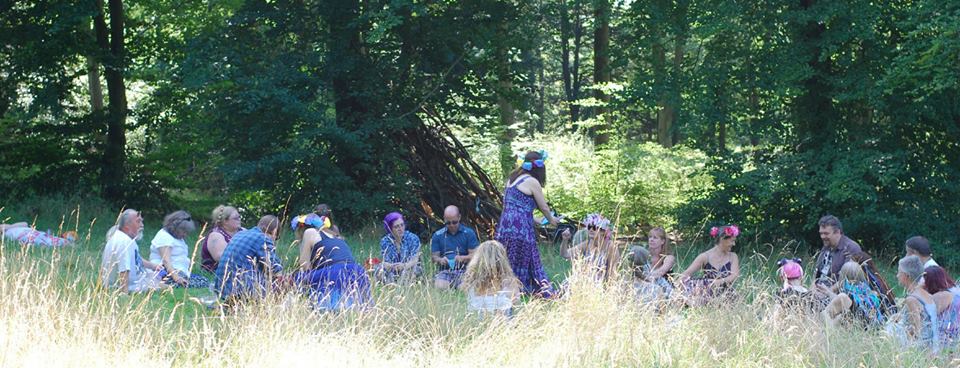
While you could honour Airmid at any of the festivals, the Spring festivals seem an obvious time to celebrate her associations with plants and the greening of the land. The Spring Equinox is a time of balance and renewal, and Airmid’s connection to the life-giving, restorative powers of plants makes her the perfect spirit to invoke at this time. Below is a suggestion for a Spring Equinox group ritual to honour her and give thanks for the return of the green, for the growing plants, and invoke Airmid’s healing and abundance for the coming season.
Spring Equinox Group Ritual
Set up an altar outdoors (if possible) or in a bright, natural space. Use a green cloth or moss as the base. Place symbols of Airmid on the altar — perhaps a statue, an image, or a bundle of healing herbs. You can also have a bowl of spring water, a candle (green or white), and offerings like flowers (especially cowslips, clover, or primroses), herbs, or seeds. Place tools of the herbalist (mortar and pestle, scissors, small jar of dried herbs) to honor the craft of Airmid, the goddess of plant wisdom and healing. Light a green or white candle to symbolize the balance of the Spring Equinox — equal day and night, growth and rest, light and dark.
Begin the ritual by gathering the group in a circle, facing inward. Allow each participant to hold an item of natural origin (a stone, herb, flower, or seed) that connects them to the Earth.
One person (or several in turn) can say aloud:
“On this day of balance, the Spring Equinox, we gather to honor Airmid,
Goddess of the green, healer of the Earth.
We give thanks for the greening of the land,
For the abundance of plants that sustain us.
Let us now open the circle with love, light, and gratitude.”
As a group, repeat the following invocation to Airmid, calling on her to bless the land and your lives with abundance, healing, and wisdom:
“Airmid, daughter of the healing Earth,
Keeper of plant and root, seed and bloom,
We call on your presence to bless this land,
To fill our hearts with the knowledge of growth,
To guide our hands in the healing arts,
And to bring abundance to our lives.
From your wisdom, the herbs spring forth,
Their power a gift from the land itself.
With each leaf, each petal, each vine,
We are nourished, we are healed, we are renewed.
We thank you, Airmid, for your gifts,
For the greening of the Earth,
For the promise of life and health to come.”
As a symbolic act of planting for the coming season, pass around seeds or small herb plants. Each participant may plant a seed in a pot or in the ground (depending on the location). As they plant the seed, they should speak a word or their intention aloud.
While planting, participants may also add herbs or flowers to a communal herb jar that will be kept on the altar or used throughout the year for future herbal work, healing, or blessings. This is great if you have a regular group or coven.
After the planting, take a moment for each person to offer a word of thanks to the Earth and Airmid. You can share what you are grateful for and ask for her continued blessings in the coming season of abundance.
To conclude, hold hands in a circle. One person can say:
“We give thanks for Airmid’s presence,
For the land that nurtures us,
For the herbs, flowers, and trees that will bloom,
We ask for health, for growth, for wisdom,
And for the balance of the season to flow within us.
As we leave this circle, we carry her gifts with us,
In our hearts, in our hands, in our work.”
Snuff out the candle, acknowledging the ending of the ritual but the continuation of the seasonal cycle.
Guided Meditation Journey: Meeting Airmid
This meditation aims to bring a sense of healing, restoration, and access to the deep knowledge of plants. Have someone read it to you, or record it so you can play it back. You can also find it as a recording on my website.
Begin by finding a quiet and comfortable place where you won’t be disturbed. Sit or lie down with your hands resting gently in your lap or at your sides. Close your eyes and take a few deep breaths. Inhale slowly through your nose, hold for a moment, and exhale fully through your mouth. Let go of any tension with each breath. As you continue to breathe deeply, begin to bring your awareness to your body. Start at the top of your head. Feel the gentle warmth of green-gold light begin to wash over you. This light is the healing energy of the Earth — it is vibrant, loving, and filled with wisdom. Allow the light to touch the crown of your head, softening and relaxing the scalp. Now, allow this green-gold light to flow gently down to your forehead, smoothing away any tension or tightness. Feel it wash over your temples, your eyes, your nose, and your cheeks. Let the light soften your jaw, your neck, and your throat. With each breath, you become more relaxed, more at ease. Allow the light to continue down your arms, all the way to the tips of your fingers. Feel the green-gold healing energy as it nourishes your hands, your wrists, and your elbows, restoring balance to your body. Now, bring the light down to your chest, your heart space. As you breathe in, feel your heart gently open, expanding with this radiant, healing energy. Let the green-gold light fill you with love, compassion, and peace. Feel the light continue to move down to your abdomen, your lower back, and hips, releasing any tension or discomfort. Let the green-gold energy soothe your digestive system, bringing harmony and calm to your center. Allow this light to move down your legs, your knees, your calves, and your feet. With each breath, the light flows deeper into your body, bringing healing and rejuvenation wherever it touches. Feel your body becoming fully relaxed, fully at peace, filled with the green-gold healing energy.
Now that you are deeply relaxed and your body is fully bathed in healing light, imagine yourself standing at the edge of a peaceful woodland. The sun filters through the trees, casting dappled light across the ground. The air is fresh, filled with the scent of pine, moss, and earth. There is a soft, gentle breeze that rustles the leaves. As you step forward into the woods, notice the vibrant green of the plants and trees around you. Feel the earth beneath your feet, firm and supportive. You are walking deeper into this sacred space, knowing you are in the presence of something ancient and wise. Ahead, you see a sparkling spring, its waters clear and inviting. A beautiful woman stands near the water, her presence serene and calming. She is dressed in flowing robes of green and gold, and her hair is long and adorned with flowers. This is Airmid, the goddess of healing, of plants and wisdom. As you approach her, Airmid smiles warmly, and you feel a deep sense of peace and understanding radiate from her. She gestures for you to sit by the spring, and as you do, she sits beside you, her energy blending with yours. Airmid speaks softly as she welcomes you, her voice like the whisper of leaves in the wind.
She places her hands on your head, and you feel a wave of green-gold light flood your being. This light is filled with ancient knowledge — the knowledge of the plants, their healing powers, and their connection to the Earth. You sense the deep wisdom of Airmid, the divine herbalist, flowing into you. With each breath, you receive a new understanding of how to care for your body, mind, and spirit using the gifts of the Earth. Airmid speaks again, her voice carrying the ancient wisdom of the Earth. “Know that you are always connected to the plants and to the land. The wisdom you seek is already within you. Trust the earth, trust the plants, and trust yourself.”
You may ask Airmid for any specific guidance now. Feel free to ask her about your own healing or any aspect of your life you wish to understand more deeply. As she answers, listen closely, knowing that her wisdom is clear and true.
Airmid then places a small bundle of herbs into your hands — a gift of healing. Feel the energy of the herbs, their healing power flowing into you, filling every cell of your body with vitality, health, and balance. As Airmid places her hand on your heart, you feel a deep sense of gratitude for the wisdom and healing she has shared.
Now, it is time to return. Go with the wisdom of the plants, with the healing energy of the Earth. You are always connected, always supported. With a final look of love and peace, Airmid steps back, and you begin to slowly walk back through the woods, feeling lighter, more balanced, and filled with healing energy. You feel the green-gold light still glowing within you, gently guiding you back to the present moment. As you walk back through the woods, the path ahead becomes clearer. You feel yourself returning to the room, to the here and now, carrying with you the healing knowledge you’ve received. Slowly, become aware of your body, your breath, and the space around you. When you are ready, gently open your eyes, knowing you carry the wisdom of Airmid with you.
For more details: https://www.collectiveinkbooks.com/moon-books/authors/kelle-ban-dea

 The Pagan Collective
Leave a comment