

Geese are the embodiments of marmite; you either love them or hate them. It is no wonder such harsh and polarising reputations have been attached to every devilish gaggle since many have been on the receiving end of their aggressive and territorial temperaments. Even the slightest mention of certain breeds, such as the Canadian Goose, will invoke a procession of horror stories about their feral nature, earning them a range of fearsome titles, including “Cobra Chickens”.
However, when we investigate the relationship between geese and human belief, we reveal a multitude of unique facets relating to wider spiritual and magical traditions. As a Welsh Marches Folk Witch, I live within a rural landscape where geese are prevalent and periodically grace me with glimpses of their magnificent formations during migratory flights. Sometimes, if I’m lucky, I’m able to steal a cuddle with those I have formed good relationships with. Yet it’s not apparent to many people within witchcraft or pagan communities just how special geese are, especially as they are overlooked in favour of animals who are stereotypically depicted as magical, such as cats or toads. However, their very being serves as an opportunity for us to reconcile our fearful beliefs in exchange for appreciation. For this bird is more than just a boisterous menace, but an active symbol of creation, fertility, and enchantment.
It remains elusive as to when domestication of this poultry occurred, but it is argued that European geese, such as the Greylag, found their way into our human abodes around the Eastern Mediterranean vicinity[1]. Having said that, these distinguished creatures can be seen to have originated within wider mythology, bearing extreme significance as the sacred manifestation of creation itself. Examples of this can be found in regional ancient Egyptian beliefs, where life began as the result of the Great Cackler, who fathered the primordial egg from which the sun hatched [2]. We can also discover this within the Egyptian Book of the Dead, where the Great Cackler is embraced as part of a funerary spell to have dominion over the waters of the underworld.
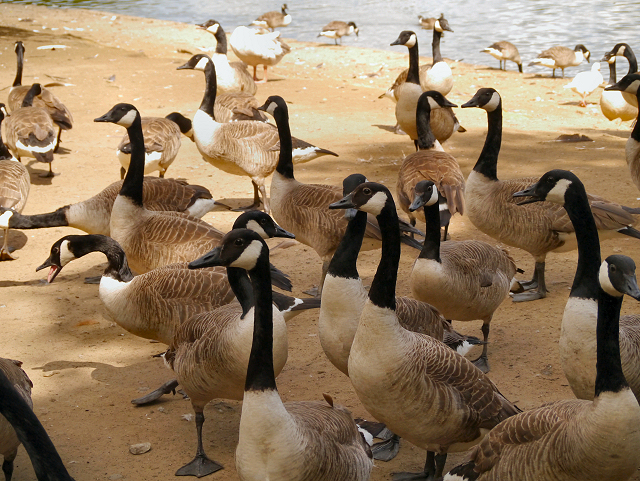
Geese are also frequent in various artistic depictions of Deities across various cultures, including ancient Greece, where the Goddess Aphrodite rides upon a goose or, alternatively a swan,[3] as well as the Goddess Juno of the Roman Pantheon. It is here that we witness in the late 4th century, a thwarted siege led by the Gauls upon the Roman Republic. According to the quasi-mythical tale, after several fierce yet unsuccessful attempts at overthrowing the Romans, the Gauls climbed the cliffs of the Capitoline under the veil of night, only to be met by the relentless honking of Geese within the temple of Juno[4]. Consequently, this alerted the sleeping garrison and thus the bird became an emblem of vigilance and protection. Diving further into the defensive virtues associated with geese, we can also see additional Deities within the British Isles possessing goose attributes. This includes the mysterious yet captivating Ocelus. Despite this, the only information we have on this perceivably indigenous Deity, who bears a Latin name, comes from three inscriptions with two located within Caerwent. A commonality can be found between them, which is the invocation to Mars, the Roman God of war, which would explain the fiery disposition of many Geese. All we have left of any surviving iconography is a pair of human legs attached to a pair of goose feet upon one of the stones[5].
The Goose and its connection to the divine may have dwindled slightly during the later Christianisation of Europe, but the animal found refuge within the miraculous feats of certain Saints. Many arguments have been formulated around the idea that Saints are Pagan Gods in disguise, forced to endure a place in Christianity, but as with all things, there is nuance to be found. Although some Saints share similar motifs with Pagan Deities, they are undoubtedly a product of Christian belief. But to limit them to this cosmology restricts their role within common folk practices as beings of supernatural ability, and so their saintly nature did not take residence without possibly being influenced by previous occupiers of the landscape. One example of such a Saint who is heavily associated with geese, and one I work closely with in my own personal practice, can be found within the Welsh Marches. Saint Milburga, the Patron Saint of Shropshire and Abbess of Much Wenlock, is renowned for her miracles amongst our local stories, including resurrecting deceased children, healing the sick, as well as preventing damage to local crops by exercising power over wild geese. It’s not uncommon to see images and banners with geese by her side, and every 23rd of February, the saint is celebrated along with all that she embodies, including her humility, passion, and love for community. With such holy connotations, it is no wonder the goose found itself as a representation of the Holy Spirit in Celtic Christianity, with the spirit of God just as rambunctious and unpredictable as our feathered friends. [6]

Of course, with any discussion involving geese, it is imperative to bring up the most famous of all portrayals; the beloved fictitious woman who weaves magic into traditional children’s stories, which many of us are acquainted with: Mother Goose. From Humpty Dumpty to Little Miss Muffet, Mother Goose has persisted within the imagination of generations, covertly teaching us the use of magical narrative behind spoken nursery rhymes. Words have power; they are an expression of our potential and capability, able to alter perception in various ways. When looking closely at the rhymes produced by the iconic witch who flies upon a mighty goose and the charms and curses spoken by historic and folkloric witches, we can observe just how powerful narrative magic really is. This is especially evident since these stories have lasted so long, rooted within our memories that many of us instinctively know what happens to Jack and Jill when they reach the top of the hill or when Humpty Dumpty sat on a wall, without much effort.
Nobody knows for sure the identity of Mother Goose, but many have argued a resemblance to Bertrada of Laon, an 8th-century Queen who was nicknamed Bertha Broadfoot by Andenes Le Roi in the 13th century due to supposedly having goose shaped foot[7]. Whether this is factual or not remains unclear, but this physical trait is also shared by additional figures, especially within the Alpine region. This includes the infamous Frau Berchta, a terrifying witchlike figure and enforcer of communal taboos during the 12 days of Christmas who issues punishment to the disobedient by slitting their bellies open[8]; all while sporting a goose foot.
Whether we admiringly watch their yearly flights or smile at their gentle bobbing upon our lakes, or whether we run when encountering their ferocity, it is undeniable how important geese have been in our most cherished stories and in the creation of the world. Just like witches, geese have been heavily misunderstood, but they do have a soft side to them. And when respect is given to such a divine creature, we can see the wisdom they have to teach us about nature, including its fierceness, its beauty and its gift-giving properties. In saying that, I don’t think their silly antics or the way they amuse us when they waddle Is going anywhere anytime soon.
Brett Hollyhead
Witch of Salopia

Brett Hollyhead, also known as the Witch of Salopia across social media, is a practicing Welsh Marches Folk Witch, workshop leader and a public speaker at regular Pagan related events/ conferences throughout the United Kingdom. He’s a member of the Cylch y Sarffes Goch Coven (Circle of the Red Serpent) alongside Mhara Starling and Moss Matthey. He’s also a member of OBOD and a guardian of the Doreen Valiente Foundation.
References:
[1] Heikkinen, M. “ The domestication history of the European goose: a genomic perspective.”(2017)
[2] Armstrong, E. A. “The symbolism of the Swan and the Goose”Folklore,55, no.2 (1944): 54-58
[3] Marcovich, Miroslav. “From Ishtar to Aphrodite”. Journal of Aesthetic Education 30 no. 2 (1996):43-59.
[4] Bremmer, J.N. and Nicholas M. Horsfall. “Roman myth and mythography”. Bulletin Supplement (University of London. Institute of Classical Stuides) (1987): iii-120
[5] Green, Miranda. Dictionary of Celtic Myth and Legend. Thames and Hudson Ltd. London. 1997
[6] Batterson, Mark. Wild goose chase: Reclaim the adventure of pursuing God. Multnomah, 2009
[7] Kelsy, Atiqa. “Nursery Rhymes and the history behind them” Motifs: An international Journal of English Studies 2, no 1 (2016), 7-27.
[8] Smith 1, John B. “Perchta the belly-slitter and her kin: a view of some traditional threatening figures, threats and punishments.” Folklore 115, no. 2 (2004): 167-186

 The Pagan Collective
Leave a comment