
I love the liminal moments, the in-between and oft-forgotten, the barriers and boundaries. As a poet, I have always found inspiration in the borderline; the tension between the internal and external voice, between the things we know as facts and the things we feel as truths. As a Draoí or Irish witch – witch being the nearest word in English, but not synonymous with Draoí, another little line of tension – I follow the call of the curlew, the rustle of the wind or the song of the season.
The only thing I won’t follow is the music of the Sidhe because the Good Neighbours are tricky, and that’s a whole other story.
No, I am happy in my mundanely magical life, no need to seek misadventure on the duns and raths. I live in a city where the seasons are marked both by our abundance of greenery and parkland, and by the strange rituals of the city itself. The crisp crunch of leaves underfoot, the sound of rush hour traffic as the schools reopen, the faint cries of spectators as the playing fields host new battles. The clash of ash, as hurling begins again after the long summer break.
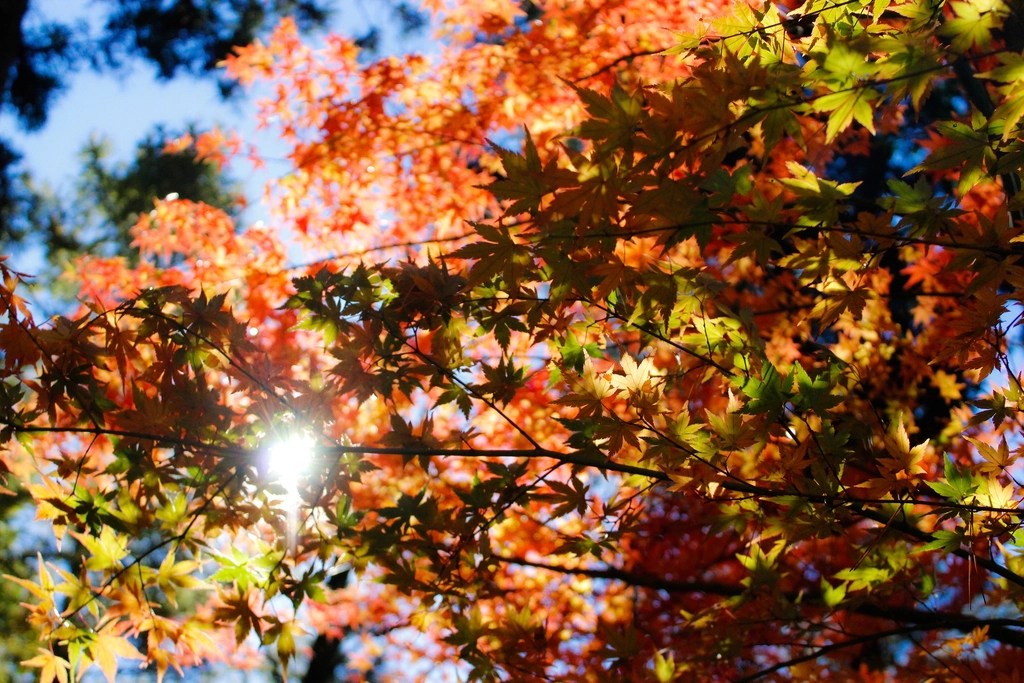
I sit in my car, on the school run, laptop on my knee and a crow caws secrets to me from a nearby rooftop. The gathering of parents and childminders provides one of my favourite soundtracks, the lilting sound of gossip. Voice raised, did you hear? Voice lowered, I swear to god she did, and he hasn’t a clue. The way the whole body is involved, hands and feet and head, like a piper pulling notes from a chanter. Then the eruption of chatter, the high and joyous song of the newly released scholar, laughing and calling out their days, and sometimes, in little voices, confiding the sorrows of the heart. Parents’ heads bowed down to catch the whispered saga.
All this is good enough, but the real magic, the deep down bone and blood sorcery, lies in what we do with all this sound energy. What is it we need from this season, this death of Summer, that yet hands us harvest and fruit? We have constructed our year in a sort of counterweight to the natural order, with our school terms, college semesters, and back to work after Summer’s joys. In Ireland, Autumn traditionally begins in August. We straddle the long-lit days with the festival of Lughnasadh, but by September, the season has settled in. The trees confront us with their unblushing changes; the threat of Winter lies behind each falling leaf. The rowan berries hang heavy, and the old folk say, the same every year, “It’ll be a long winter, you can tell.”
We want reassurance. The contract is social, and willingly entered into; we will embrace the dark months, we will sing and light bonfires and dance and give gifts and lean into the cold and the long nights, but only if we can be sure of light returning. Give us hope, Autumn, before we have only faith to light the way. Give us some promises to calm the fear of empty bellies and cold hearths, inherited from a brutal past.
And this is the Song of Autumn. Part melancholy, the sweet voice of Summer stilled and lowered. Part joyful, the turning of our hearts to fireside, to family, to community. She takes and gives in equal measure, and we respond, our voices half raised in joy and half lowered in sadness. She reminds us of our mortality but in such a way that our hopes are simply buried, resting, fermenting, composing new songs under the covers.
She gives and takes, she sings and she listens, so we line up our Autumn songs. Put aside the “road trip” playlists and break out the cosy songs, the Norah Jones, and Melody Gardot albums. Hum to yourself, as you go about the new routines of earlier twilight and later dawns. Lift up your voice, and compose hymns, paeans to the fruit and those who gather it. Roll the words around your mouth, taste them like they were berries lifted from the thorn. Crab apple, plum, blackberries, quince, beetroot, scallion. Russet, orange, purple, olive, brown, amber and gold.
Is your song one to sway to, or one that makes you stomp your feet? Is the rhythm of the crowd on the terraces or behind the goal posts? Do you dance through the streets, dodging the raindrops, shopping bags in hand, or is it the crackle of the first fire, lit against the chill of night? Find your beat, and move your body.
Like Spring, Autumn betokens a future joy, a return of affection given and received. Love her, her startling changes, her withering and her blooming, and she will hand us over gently to her sister, Winter. If Winter will listen to anyone, it’s to her. Look, she will say, they light bonfires and they dance. They will adorn you with glitter and tinsel and sequins.
Be good to them, she sings. Be kind.
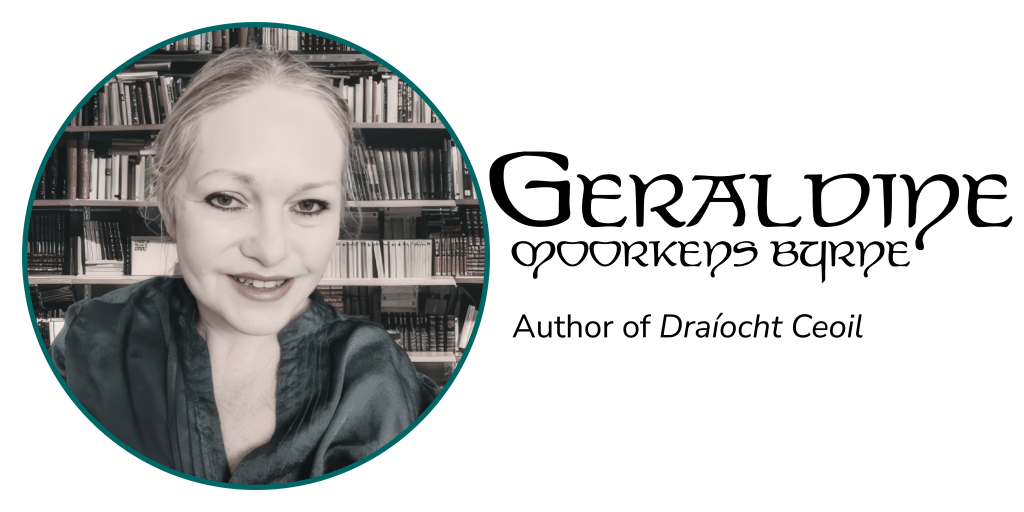
Geraldine Moorkens Byrne is a well-known poet and writer, as well as an educator in Irish Folk Magic Traditions and Ceremony writer; she was a founding editor of the Pagan Poetry Pages. She has facilitated workshops and creative writing groups. Her work has been published in a variety of media, from print anthologies to Ezines, including Poems from a Lockdown, and her poem “Where Once Were Warriors “was the title piece of Asia Geographic Tribes edition. Several poems have been performed as theatre in Ireland, the UK and the USA. She was a prize winner in the Inaugural John Creedon Listowel Writers Festival Competition. Her short story “A Stranger Among Friends,” was a winner in the Cunningham Short Story Competition. She is also the author of a popular series of mystery novels. Her collection of poetry “Dreams of Reality” is available now.
She was the fourth generation of Byrnes to run the famous Charles Byrne Music Shop, in Stephen Street Dublin Ireland. This was a landmark business in the city of Dublin and an integral part of Irish classical and traditional music for 150 years.
For more details: https://www.collectiveinkbooks.com/moon-books/authors/geraldine-moorkens-byrne
 The Pagan Collective
Leave a comment