

In comparison to Brigid, who is most typically associated with the light and the coming of Spring, Brigitte is a goddess of death. She is the lady of the night. Within the dark, Brigitte is revered for reclaiming all those who lived on the fringes of society in life and gathering them into her family in death as they wander aimlessly in the spirit world. In death, she gives them a place of belonging that they may never have experienced in life. This is what possibly made her known as a great mother figure. A mother in the living world and also beyond the veil of death. Brigitte was also worshipped as the protectress of their graves in the living world. From the quiet cemetery, she notices all evil actions in life and calls them out in death, and so, is a symbol for justice, especially for women and children. Maman Brigitte evolved into a figure that was much loved but also feared. With her large eyes, there is nothing that she could not see in the light and in the dark. Her skin is deathly pale, which is another reason why she is often compared to Brigid of Ireland. But in nature, she is very different to Saint Brigid.
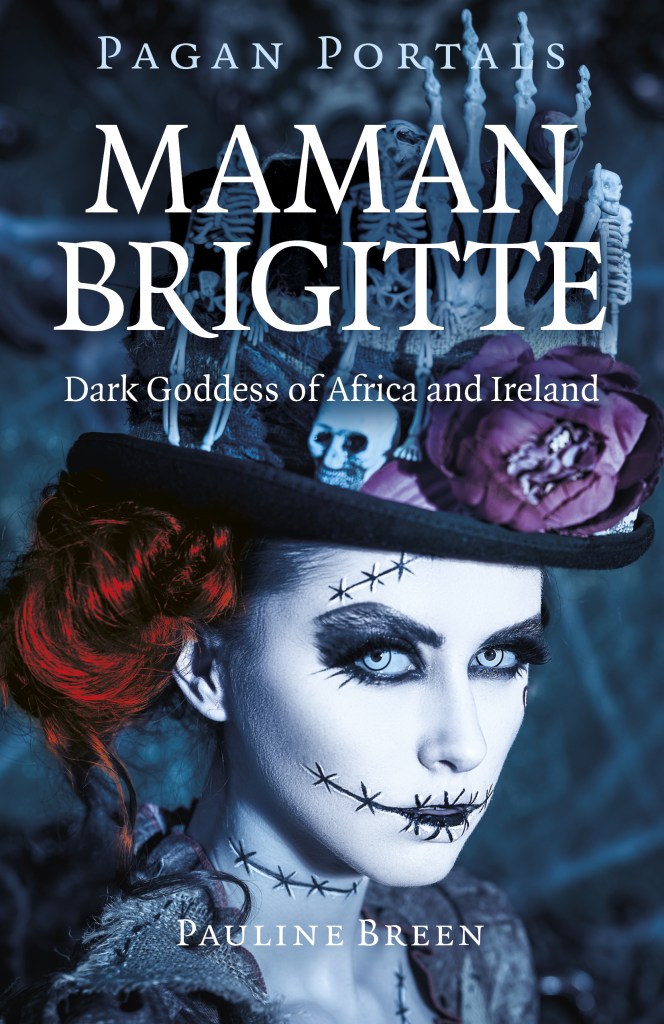
Brigitte, in contrast to Brigid, is sensual, sexual and is associated with a most provocative dance known as the Banda, to arouse sexual feelings as the ultimate expression of life. If Brigitte emerged during hardship, she definitely reminds her devotees of the importance of taking pleasure in life anywhere they can. Life is short. She is known to enjoy a cigar or cigarettes and take a glass or two of rum. This aspect of her made her accessible to her people. She knew how to have a good time without materialism and would demonstrate the joy that can also be found in life, amongst the most atrocious conditions. Her followers understood her ability to enter all worlds easily, which made her immortal and able to transcend time. As the lady of the night and associated with the deathly dark realm, Brigitte became synonymous with all issues pertaining to the dark, especially deep, shadow work by shining her fiery light into the darkness and being a silent presence.
For those brave enough to enter their individual darkness and pain, she became the epitome of backbone, a formidable femme to showcase human strength, especially strong women. Herself, born out of enforced slavery and flourishing in a muddy swamp, who better than her to showcase survival? Brigitte showcased death as a significant physical transformation that is inevitable for us all. She would remind us to take pleasure in life, but to be accountable for all our actions in death. This would not only introduce a serious undertone into the melody of life but also assure those victimised by injustice in this world that their day of justice would come. As guardian of the cemetery and fluid traveller between all worlds, she would assure us of her unspeaking, motherly presence when our time comes to depart the living world. She, the dark goddess of the cemetery, is the mysterious and aromatic Maman Brigitte.

For more details: https://www.collectiveinkbooks.com/moon-books/authors/pauline-breen
For Pauline, Brigid is an expression of the Great Mother Goddess. Pauline is passionate about showing the various faces of Brigid that are often overlooked. Pauline is the author of three books on Brigid. In her first book ‘This is Brigid – Goddess & Saint of Ireland’ Pauline introduces Brigid in her original, pagan form as mother goddess and then as Christian saint. She considers both versions and shows the interplay between both cults. She suggests many ways to connect to Brigid through her symbols, numbers, animals and practices on her feast day of February the 1st associated with the goddess and the Saint. In her second book ‘Maman Brigitte – Dark Goddess of Africa and Ireland’ Pauline shows another lesser known face of Brigid, a vodou deity that came forth into being during the hardship of slavery. Maman Brigitte is also a blended deity from indigenous African deities and Brigid of Ireland. In her third book ‘Brigantia – Warrior Goddess’, Pauline questions whether the migrating Brigantes tribes of northern England brought Brigid into Ireland, as we know her today. Pauline hopes that showcasing all sides of Brigid that includes her side as dark goddess and warrior goddess, from historical. archaelogical and linguistic sources will enable even more people to connect to Brigid.
 The Pagan Collective
Leave a comment