
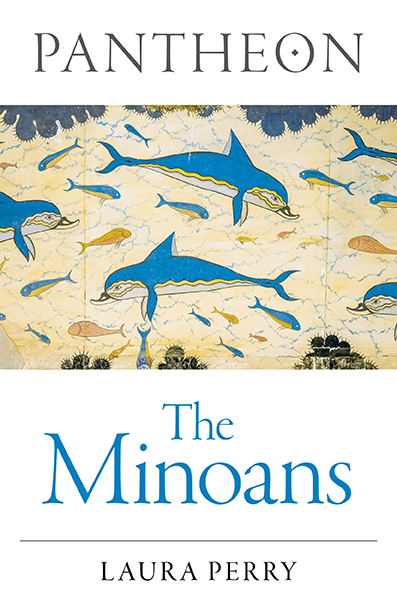
The Minoan sacred calendar reflects both the cycle of the seasons and the mythos of the deities. This time of year, we look toward the Winter Solstice, one of the great turning points of the solar year. Here, then, are the seasonal festivals that surround Minoan Midwinter, involving the Sun Goddess Therasia, the Earth Mother Goddess Rhea, and the god Dionysus in his guise as the Divine Child. To discover more about these deities, the rest of their divine family, and the festivals that fill the rest of the year, make your way through the pages of Pantheon: The Minoans.
Therasia’s Labor
16 November to 19 December (exact dates may shift if Solstice is not on 21 December)
Instead of a single day, Therasia’s labor is a sacred season, a time of expectant waiting, reflection, and preparation for the arrival of Winter Solstice. Liturgical seasons leading up to sacred days are far older than Christianity. And both archaeoastronomy and comparative mythology tell us the Winter Solstice was a major focal point of Minoan religion.
The Solstice is a solar festival, based on the sun’s annual cycle. So Therasia is at the center of it, with her rebirth happening on the Solstice itself (see below). The season of Therasia’s Labor helps us focus on the way the solar year is slowing down before it comes to a metaphorical stop at Midwinter, then starts up again for the new cycle of Therasia’s death and rebirth, which frame the moment of sunrise on Midwinter morning.
The concept of labor and birth is also reflected in the other set of mythos associated with Midwinter, the story of Rhea giving birth to the Divine Child Dionysus on Midwinter morning. Our research suggests the Winter Solstice mythos surrounding the Sun Goddess is older than the Earth Mother mythos for the same day. But Minoan religion added layer upon layer over the centuries of Minoan civilization, so we acknowledge both at Midwinter. However, since Therasia’s tale is probably the older one, we’ve named the season in her honor.
The name “Therasia’s Labor” and the pattern of the sacred days within this holy season were created by Tribe member Forrest Novawynd, with Therasia’s inspiration. Therasia’s Labor begins in mid-November and is celebrated on seven separate days leading up to Solstice. These days fall in a pattern, coming closer and closer together as Solstice approaches, in much the same way contractions get closer together during labor. Here’s the pattern, assuming Solstice falls on 21 December. If it falls on 20 or 22 December, as it does some years, you would shift all the dates forward or back by one.
November 16
wait 7 days
November 24
wait 6 days
December 1
wait 5 days
December 7
wait 4 days
December 12
wait 3 days
December 16
wait 2 days
December 19
wait 1 day
WINTER SOLSTICE
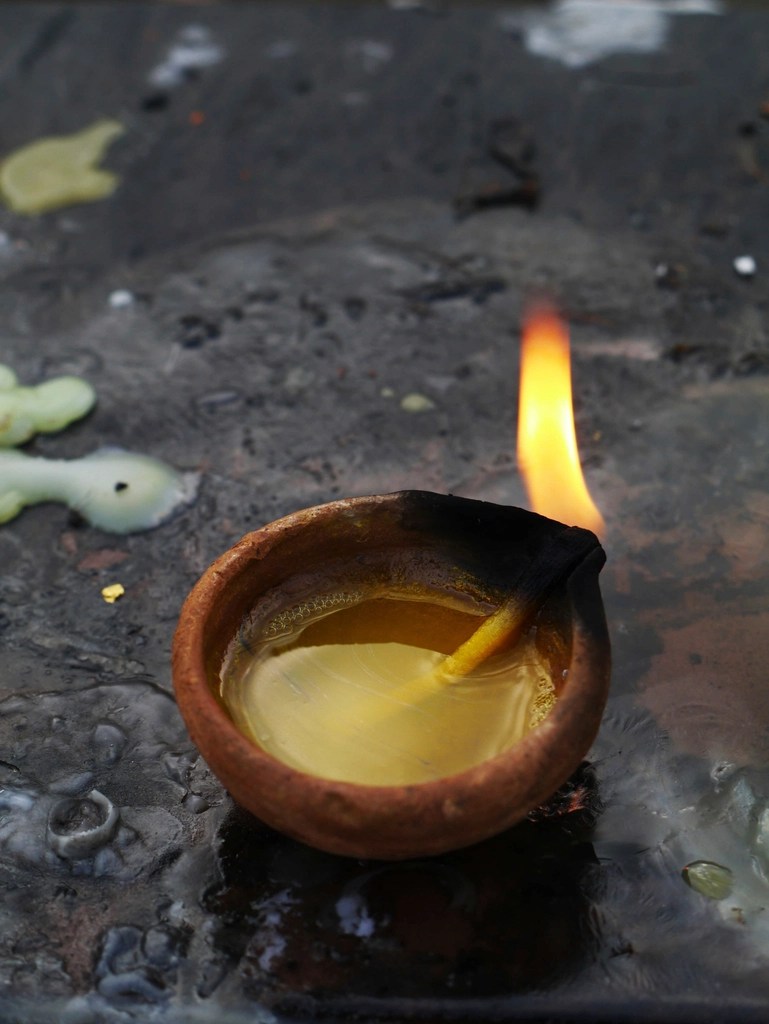
The activities for the marked days during this season should involve light in one way or another. You could frame each day by watching the sunrise and sunset. You could light an oil lamp or candle before dawn and/or after sunset. Or you could stand beneath the sun at noon, perhaps in the Minoan salute posture. As Therasia’s Labor progresses, you can feel the Solstice drawing ever closer.
The Depths of Winter
Winter Solstice, approximately 21 December (exact date varies from year to year)
Like the Summer Solstice, the Winter Solstice has two layers of mythos, involving Therasia, Rhea, and Dionysus. In the Depths of Winter, the mythic symbolism is of birth and rebirth, the end of one cycle and the beginning of another. And both myths involve sacred caves.
The height of Therasia’s power was at Summer Solstice, when her heat powered down on the Earth; now she’s so weak, she retreats to her cave to hide, to die and be reborn like the Phoenix rising from its own ashes. On Midwinter morning, within her cave she dies to herself in the last dark moment before dawn then arises from her cave at the first moment of sunrise, shining with new life.
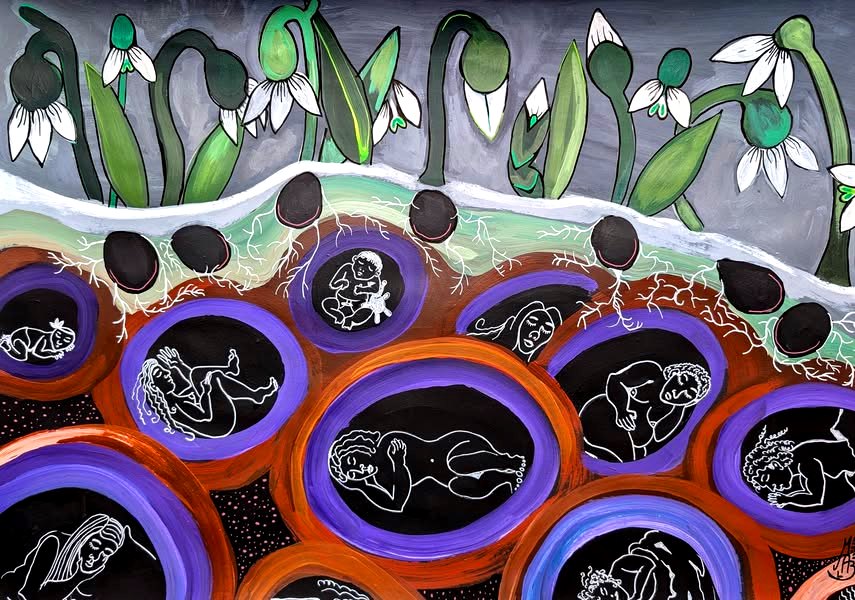
Winter Solstice is also the time when Rhea retreats to her cave to give birth to Dionysus, the Divine Child. Dionysus isn’t a sun god; instead, he’s a year-king, the embodiment of the cycle of the solar year. Rhea labors through the night on Midwinter eve, and at sunrise on Winter Solstice morning, the Divine Child is born.
Winter Solstice astronomical alignments in the Knossos Throne Room suggest Midwinter sunrise was a time of sacred ritual there. And the griffins on the frescoes suggest a connection with Therasia. Maybe the Minoans kept vigil all night, waiting for the sunrise and the sacred birth and rebirth. An all-night vigil is one possibility for a modern celebration of Winter Solstice. But simply getting up before sunrise to witness the sun coming over the horizon, followed by offerings and celebrations, would also be fitting.
The Winter Serpent Days
Late December / early January
The Winter Serpent Days, the days between the Winter Solstice and the Blessing of the Waters, are a special time of year, a season rather than a single day. Because the Blessing of the Waters takes place on the first full moon following the Winter Solstice, the number of days between the two events varies from year to year. The movable lunar cycle slithers like a serpent around the steady points in the solar calendar. We might think of the days between Winter Solstice and the Blessing of the Waters as intercalary days, days that belong neither to the half-year that has just ended nor to the one that’s about to start. A time out of time, slinking its way between the parts of the calendar, shifting in size from one year to the next, but always magical and special. This is an excellent time for reflection on the previous half-year and divination for the half-year to come, particularly regarding anything you might begin or “birth” during the upcoming half-year.
Laura Perry is the founder and Temple Mom of Ariadne’s Tribe, a worldwide inclusive Minoan spiritual tradition. In this role, she also leans on her experience as a Wiccan priestess, a Reiki Master, an artist, and a longtime herbalist and fiber artist. She has been writing all her life, but her first book was published in 2001. She writes pagan and magical-themed fiction and non-fiction and has also created a Minoan Tarot deck and coloring book. Her articles have appeared in The Magical Times, Indie Shaman, SageWoman and Pagan Dawn magazines, among others. When she’s not busy writing, painting, or leading rituals, you can probably find her digging in the garden or giving a living history demonstration at a local historic site.
Website: https://www.lauraperryauthor.com/
 The Pagan Collective
Leave a comment