

Interviewed by Thea Prothero
This is the eighth in a series of interviews with people who are inspired by my book, A Guide to Pilgrimage, published a year ago in the Pagan Portals series by Moon Books. These interviews are a way of digging deeper into the various aspects of pilgrimage and a way of highlighting what it means to different people.
The idea is to inspire you, dear reader, to consider pilgrimage as an act of devotion, or a way of connecting to the world around you, now or in the future.
Pilgrimage is an ancient form of devotion, one which is as relevant to the modern seeker as it was to ancient Greeks over 2000 years ago. One of my missions as a modern advocate is to bring pilgrimage out of the medieval church and firmly into the twenty-first century.
This November, I had the opportunity to interview Scott Irvine, proud Portland (Dorset) resident, and as he says, a Druid in a witch’s hat. He is well known to Moon Books readers for his two books: Ishtar and Ereshkigal (2020) and The Magic of Serpents (2022.) He has recently published a pilgrimage/ guide book to Portland Dorset, entitled Ancient Footsteps – The History, Mystery, and Magic of the Isle of Portland, which has inspired me to go and visit the area next year.
Scott was kind enough to talk to me about his pilgrimage experience.
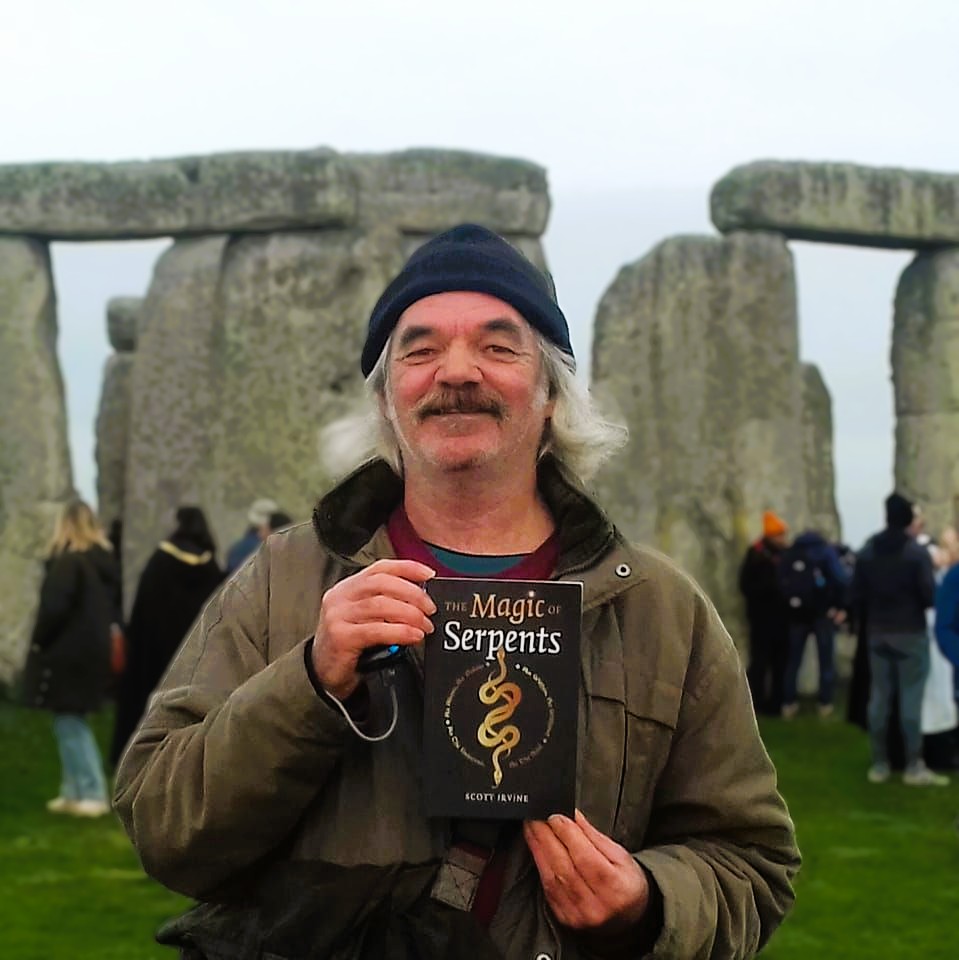
As an introduction, how do you define a pilgrimage, and what does it mean to you?
I understand a pilgrimage as a visit to a sacred/spiritual place where the experience of the journey is as meaningful and important as the destination. Before I understood it as a pilgrimage, they were personal adventures to appease the soul, excite the heart and satisfy the curiosity of the mind. I see it as both a physical and a spiritual journey of knowledge and the wisdom of ‘knowing’ the forces of nature that connect us to God/Goddess.
Where did you go on a pilgrimage and why was it significant to you?
I was inspired to visit Malta in the Mediterranean and her sister island, Gozo, in 2010 after learning they have the most concentrated amount of still-standing manmade stone temples dedicated to the Goddess in the world, constructed over 5,000 years ago. In 2010, I was at the beginning of my pagan journey and still trying to understand the purpose of the many deities of the pagan pantheon. I became drawn to the Celtic world of the druids, the spiritual leaders of the Iron Age tribes who constructed many of the hillforts scattered across the country and abroad. I have been visiting these ancient sites of our ancestors since my first motorbike in 1976. They were places away from the busyness of the modern world, spaces of peace and calm, ideal places to sit and meditate and just be. I loved to reflect on who the Celtic people were, how they lived and who guided the druids in their ‘magic’. That is where I met Briget, the Goddess of the Forge, Keeper of the Flame and initiator of Spring. From there, I wanted to understand where she came from, which led me to the Greek Athena and on to the Goddess-driven Neolithic Malta for an adventure in search of the original Goddess.
I became fascinated by the idea of pilgrimage after reading ‘The Pilgrimage’ by Paulo Coelho (1987), a spiritual quest on the Camino de Santiago. It inspired my pilgrimage to Malta. I had decided to get away from the madness of the Easter Bunny and her eggs at home and dive into the hot and sunny realm of the New Stone Age Goddess on a small island not much bigger than Portland. A bit like home from home, but warmer.
How long had you been planning this pilgrimage? Was it a dream or a more recent calling?
It was a case of taking a week off work when I learnt of the number of Goddess Temples in Malta. The ‘adventure’ was planned, booked, and I was flying out of Bournemouth Airport a month later for an Easter break in the sun.
How important was the journey as a way of disconnection from everyday life and becoming a pilgrim?
A very good question. I didn’t consider myself a pilgrim at the time, more of an Indiana Jones-type adventurer in search of the Goddess. The disconnection from the world of taxes, bills, and work is very important. A major aspect of the pilgrimage is to be able to contemplate the journey itself without the distraction of home and guided by an open mind, passion, a trust in intuition and a free will to follow new opportunities. Being at one with the unfolding experience of pilgrimage allows the most subtle of primal earth energies to reveal themselves to an unfettered mind open to the hidden mysteries of the local spirits.
Tell a little bit about the practical aspects of organising your planned route around Malta. What type of transport did you use?
Once I had settled into my hotel, I bought a seven-day bus pass and, with a timetable, had the freedom to move around the island at will. On the agenda was not only the Neolithic sites, but Malta had a very good selection of castles, churches, museums, cemeteries and Christian caves and catacombs scattered across the island and Gozo, which of course, required a ferry. The buses were fascinating in themselves, very frequent, creaky post-war Bedfords servicing the islands. All the buses were yellow, but each one was individualised inside and out by its driver.
How did you keep a record of your visit, and how did this help after your return?
Like all of my adventures, I keep a journal, take photographs and some video, keep all my tickets, receipts and bought postcards. After my Malta pilgrimage, I was inspired to self-publish photo/story books of my experience, ‘In Search of the Goddess’.
When you returned and reintegrated into everyday life, how did it feel? Did you find it difficult to reconnect to everyday life?
I reintegrated and reconnected back into ‘normal’ life without any difficulty once I had adjusted to the cold and wet English weather after the hot sun and blue skies of Malta. However, that was short-lived when I was made redundant soon afterwards and found myself unemployed for some years, searching for work instead of the Goddess. I was too busy jumping through hoops to please the job centre. There was no time for the Goddess or money for adventures. It felt like the Goddess had abandoned me.
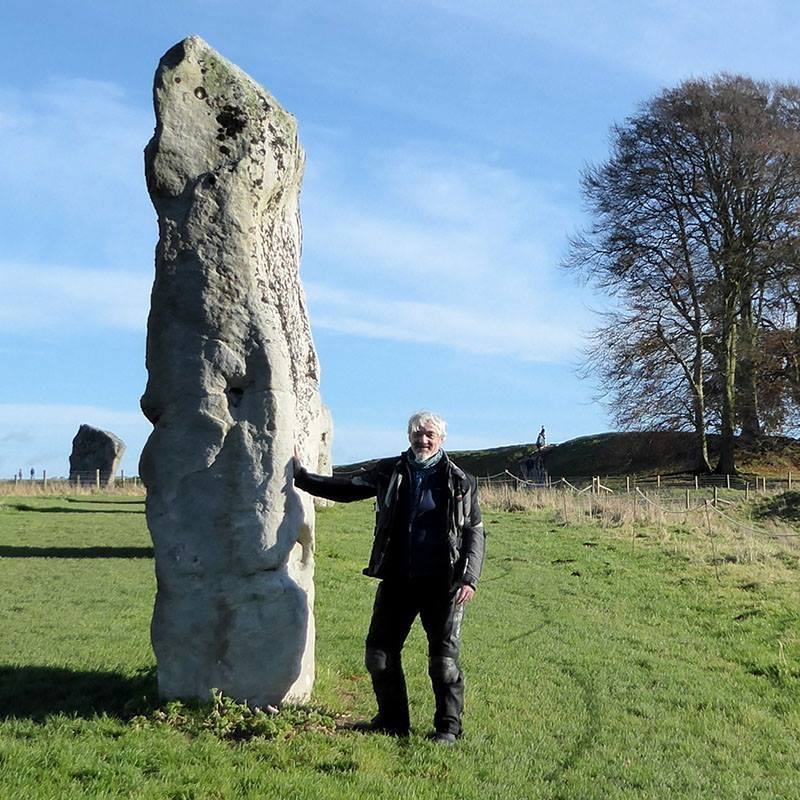
How has going on the pilgrimage changed you? What is the most significant memory you have of your pilgrimage that will stay with you?
Good question. The pilgrimage has given me a better understanding of the Stone Age Goddess, Neolithic life and the ambitions of the temple builders and their adoration of the Mother Goddess who influenced the Maltese civilisation (until they disappeared from history around 2,500BCE). It steered me to the next part of the pilgrimage that I have yet to accomplish 15 years later. Many of the ancient sites I visited portrayed the Bull motive among the Goddess statues, suggesting to me the temple builders had migrated westwards from the older Minoan culture of Crete in the Eastern Mediterranean.
My most significant memory of the pilgrimage, despite the mysterious underground chambers of the Hypogeum, the marvels of the stone temples of Tarxien, Mnajdra, Hagar Qim and Ggantija, the magnificence of St. Paul’s Church, Grotto and Catacombs in Rabat, Addolorate Cemetery and the National Museum of Archaeology in Valletta, the memory that sticks out the most was the Romans. Yes, you read that right, Romans were marching around Valletta, where I was staying, looking for Jesus.
98% of Maltese are Roman Catholic, and despite being Easter, I had no idea of the magnificent ceremonies in adoration for Mother Mary across Malta and the ‘Passion of Christ’ acting out across the ancient streets of Valletta over the week. The cast of Jesus, his disciples and followers were trailed by a van with large speakers blasting out pre-recorded voices of the cast for the several hundred audience. I caught up with Jesus later that day in the marketplace, and had become so involved, I tried to warn him that the Romans were looking for him. The Apostle Paul glared at me and told me to be quiet. Then Jesus smashed up the market and quickly disappeared into the crowd.
The following evening, after visiting Goddess temples around Malta, I found Jesus again, arrested and being dragged to the courthouse of Pontius Pilate by two Roman guards. To get a better view, I made my way to the front of the audience and stepped over the barrier for a photograph on the narrow path to the courthouse. I got stuck there; the audience would not let me back over the barrier, forcing Jesus and the guards to squeeze past me one at a time. When Jesus squeezed past, he looked me in the eye and, speaking very gently, called me an idiot.
By the time I returned from Gozo the following evening, Jesus had been crucified, nailed to the cross and removed to his tomb. A few days later, towards the end of my ‘adventure’, rumours began around Valletta that Jesus had been seen around the town, resurrected, they said. I probably wasted too much time looking for him, but to no avail; I think he was avoiding me.
Has any element of the pilgrimage transpired into any of your writings?
The pilgrimage gave me a focus to write about and gave me insight into the spiritual symbolism of the Goddess symbols painted in the hypogeum and engraved in the stone temples. Also, an insight into the ‘resurrected’ Christian statues paraded around Malta, in particular, the ‘Beloved Virgin’, at the feet of her dying son on the cross, Mary, the Virgin, Mother and wise elder. I recognised the Celtic Briget in her as the Maiden, Mother and wise Crone. Many Mary statues had a dagger plunged deep into her heart. I recognised this as symbolising the death of the Goddess and the shift in power from the feminine to the masculine domination of our spiritual wellbeing. Much of my writing has this in mind.
What advice do you have for readers considering a pilgrimage in the future?
Firstly, leave your ‘usual’ self at home. Your normal everyday dealings with life should not be a distraction from your pilgrimage. Dedicate yourself to your travels from the start as a spiritual endeavour as well as a physical experience. Recognise symbols and patterns, synchronise those that present themselves, even if they go against your belief or understanding. Keep an open mind and be prepared to alter your plans if an opportunity presents itself. Most of all, enjoy yourself and trust in your spiritual guide.
Are you planning more pilgrimages, and if so, what are your plans? Would you do anything different next time?
I have not made any plans yet, but I am feeling the pull of Crete calling to continue following the symbol of the Bull back further in time to the time of the Minoans. Since my pilgrimage to Malta, I have traced the Bull back to Sumer, the first civilisation and its rivalry with the ‘cursed’ Serpent 6,000 years ago. Sumer is now largely in Iran, and unfortunately not a safe place to explore at the moment.
What I would do differently is for my fiancée, Therese, to share the experience with. As they say, two minds are better than one.
Finally, is there anything else you would like to share about your pilgrimage journey, or any other aspect of pilgrimage?
If at first you don’t succeed, try again. Never give up.
I often take pilgrimages with my old friend Griff on our motorbikes, generally around the local Dorset hillforts, stone circles and sacred wells. Twice we have toured through the Foret de Broceliande, the Enchanted Forest that once covered most of Brittany. We followed the King Arthur and Merlin trail between the megalithic stones of Carnac on the southern coast the mysterious old town of Paimpot at the heart of the ancient forest. One of the myths has Merlin trapped in a crystal cave by Vivienne le Fay in the Val sans Retour, the Valley of No Return, near Paimpot. We found the valley on our first visit, but were unable to find the entrance to it. More information was required, and we vowed to return to the Valley of No Return on another visit. We did repeat the pilgrimage several years later and, with the aid of sat nav, the internet, and Google Maps, found the entrance only to go around the trail the wrong way and miss the cave. We have planned to return to the Valley of No Return and try again in the future.
Thanks to Scott for spending time contemplating pilgrimage with me.
For more details: https://www.collectiveinkbooks.com/moon-books/authors/scott-irvine

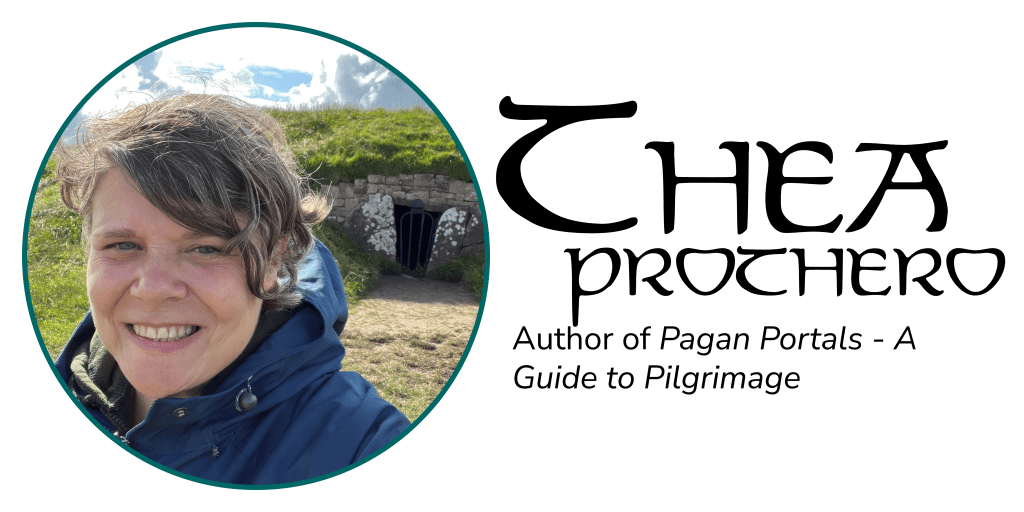
Thea is a Heathen and a pilgrim. She likes to think of herself as a Nemophilist, which means a ‘haunter of woods’. She spends most of her free time walking in the wildest remotest lands, places that still make the gods tremble, and she loves the challenge of finding connection through nature to the divine. She writes prolifically, read equally, has a passion for learning, taking photos, grow things, and spend time with her family. she works in education and lives in the south of the UK.
For more details: https://www.collectiveinkbooks.com/moon-books/authors/thea-prothero
 The Pagan Collective
Leave a comment