

Evidence reveals ancient rituals of reincarnation on the winter solstice
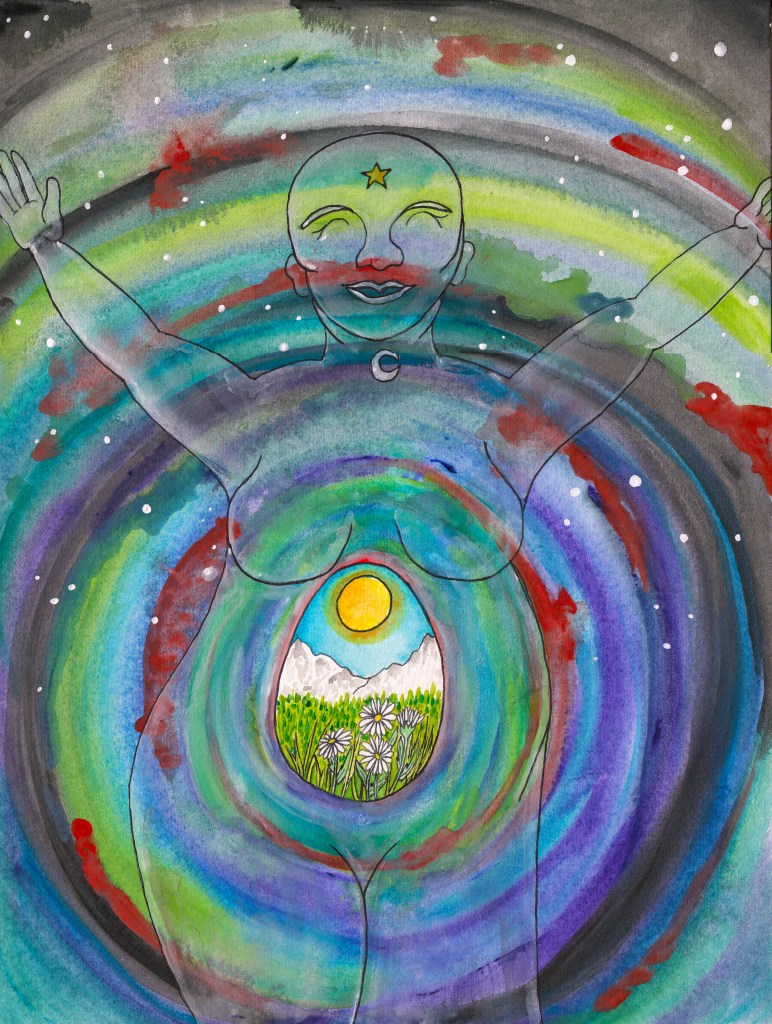
A wide range of cross-cultural evidence shows that ancient cultures around the world gathered on the winter solstice at megalithic sacred sites to celebrate the miraculous reincarnation of human souls, an event they believed was triggered by the rebirth of the sun.
Direct evidence at 17 sacred sites scattered across five continents and ranging in age between 800 and 11,000 years old supports the conclusion that reincarnation was a core belief across cultures, and was celebrated as the climactic moment of a week-long celebration of the winter solstice.
Against the backdrop of massive stone temples aligned with the rising sun, there were bonfires, food, drink, music, dancing, and the Ursid meteor showers providing the fireworks. The performance of drummers, musicians, and singers was enhanced by sound effects designed into the megalithic sites. Studies in 2014 and 2020 showed that drumming or hammering on the original egg-shaped ring of blue stones at Stonehenge would have produced a ringing sound like a bell that reverberated within the larger structure.
After months of watching the sun symbolically die as it fell lower in the sky amid the gathering cold, a dramatic performance of sacred theatre was orchestrated to wake up, re-energise, and greet the reborn sun at dawn, as the souls of the dead were delivered to new life. It was the most important date on the sacred calendar, a time for distant relatives from faraway settlements to join together as participants in a ritual that celebrated the never-ending cycle of life.
The belief in a communal reincarnation of souls on the winter solstice was embedded in a core concept of ancient religions: As above, so below. When the sun was reborn in the heavens, human souls were reborn on earth. The final act in this sacred drama was the delivery of reincarnated souls into infants, another miraculous moment made possible by the sacred calendar. Nine months earlier, in the spring planting season, ancient farming cultures engaged in ritual sexual intercourse to evoke the universal power of fertility in the soil.
“Ritual sex relationships during crop cultivation were customary … (and) could revive the fertilising power of the soil,” according to a 2016 study in the Journal of Reproduction and Infertility.
In Mesopotamia, the Sumerians celebrated the springtime sexual union of Dumuzi and Inanna, the god and goddess of agriculture, with the king taking the part of Dumuzi and a high priestess representing Inanna. The sex act took place in a chamber at the summit of the stone ziggurat in the centre of the city, and state-sanctioned poetry describing the union was sexually explicit. In ancient Egypt, Greece, Rome, and later European cultures, spring holidays on the sacred calendar were set aside for drinking, parades, and sex. A boomlet of babies in mid-winter was the inevitable result. Winter solstice celebrations would have included a high number of women with infants or near full term, playing their role in the final act of the sacred drama. The best healers in the area would have been present to attend live births.
The role of birds
The celebration of rebirth on the solstice depended on a crucial role played by birds, which were commonly believed to be divine agents of the sun and an essential link between the material and spirit worlds. Birds were identified as helpers and emissaries of the sun across cultures because their migrations follow the sun north and south each year, they announce the dawn every morning, their flight brings them relatively close to the sun, and their feathers represent the colours of the rainbow.
In cross-cultural myths, birds guided the souls of the dead through the afterlife, a role similar to the mother goddess in the cyclical process of life, death, and rebirth. The oldest example dates back 11,500 years at Göbeklitepe, Turkey – carved into a stone pillar is a headless human holding on to a vulture’s neck, seemingly along for the ride.
The sacred sites were not only aligned to the dawning sun on the winter solstice, they were all designed with prominent egg-shaped stone forms and built on the wintering grounds of migratory birds and busy migration corridors, often overlapping two global flyways.
Scholars agree that across dozens of ancient and indigenous cultures, birds were believed to deliver the souls of the dead on a round-trip migration to the afterlife, followed by a return to material form, as reflected in the myth of storks delivering infants. The egg-shaped stone forms built on the wintering ground of migratory birds represented a symbolic nest, an incubator where the souls of the dead were healed and rejuvenated, preparing for their ultimate rebirth.
The Ursid meteor showers begin on December 17, the first day of the week-long gatherings, and end on the final day, December 24. The ‘shooting stars’ appear to come from the north, where Cygnus the Swan spends midwinter, streaking toward the southeast horizon where the newborn sun would rise. It must have seemed the universe itself was playing a role in the great drama.
Winter solstice mythology abounds with musicians, singers, dancers, and poets joining with flocks of wintering birds to welcome and announce the sun’s rebirth on the winter solstice. The ancient Greeks wrote of the sun god Apollo making a midwinter journey north to the island of Hyperborea, where he conducted singers and musicians harmoniously with the calls of whooper swans, according to the 1st century Greek historian Diodorus Siculus.
When the Japanese sun goddess Amaterasu hid herself in a cave in December, the other gods came after her and built fires outside the cave, bringing roosters of the Eternal Land that crowed continuously as Amaterasu emerged and created people with the Storm God. On the island of Borneo, the Iban say two birds brought people to life with bird calls. In ancient Egypt, the voice of the ibis-headed god Thoth caused the cosmic egg to hatch.
The week-long winter solstice celebration was a dramatic performance of sacred theatre intended to represent miraculous events. As the rising sun warmed the stones at megalithic temples, the spirits of the dead emerged from their incubation and took material form in newborns and near-term pregnant bellies. There would have been dozens of women with infants in their arms, at near term, or giving birth during the week-long festivities. Birthing likely occurred in the controlled atmosphere of inner chambers or nearby caves. Healers and midwives from near and far attended the births, along with diviners and oracles. In terms of ancient astrology, the power of the sun’s divine rebirth on the solstice was infused in the newborns, giving them qualities that could make them heroes, kings, and demigods.
From Ireland to Egypt and ancient Rome, India, and Japan, birds played a role in the birth of divine beings, cultural heroes, kings, and emperors on the winter solstice, including the Egyptian sun god Horus the Falcon, who was miraculously conceived by the winged Isis and her dead husband Osiris. Closely associated with the rooster, the Greek and Roman sun god Apollo was born on the winter solstice, as was the Persian solar god Mithra, who received directions from a raven acting as a messenger of the sun. Christian artwork depicted the Virgin Mary being impregnated by the Holy Spirit in the form of a dove; her son Jesus was said to be born a few days after the solstice, on December 25.
A variety of methods were used to attract birds to sacred sites, including circular water-filled ditches, shallow pools, fruit trees, placing fresh molluscs on altars, and playing bird-calls on whistles or flutes fashioned from the wing bones of vultures, eagles, or swans. To simulate reincarnated spirits flying from the temple at dawn on the solstice, priests may have released captive birds from inner chambers to fly out among the crowd as diviners charted their flight and landing spot to make predictions of the future.
A review of 17 sacred sites around the world shows remarkable similarities in far-flung cultures over a period of more than 10,000 years, including a range of prominent egg-shaped forms, direct alignments to the winter solstice, and locations on the wintering grounds of migratory birds or busy migration corridors. Scholars agree that many of the cultures celebrating the winter solstice at the sacred sites believed in reincarnation, while some of the oldest were built by unknown peoples.
Most anthropologists have an expertise in one culture; as a field of study, anthropology does not typically look for parallels and contrasts across a multitude of cultures. However, any scholar would agree that the amount of time and energy it took to design and construct the megaliths reflects their importance. In this case, the cluster of unique correlations found at so many different solstice-aligned sites over such a vast span of time suggests a significant meaning beyond what’s currently understood about the nature of winter solstice gatherings.
‘Masters of Rebirth’ at Brú na Bóinne
When whooper swans left Iceland in late fall to fly southeast across the North Atlantic, the ancient Icelanders believed the swans carried the souls of the dead with them. Today, the swans still migrate to England and Ireland, including the Boyne Valley in County Meath. Their vocalisations were described in Irish myth as soothing and healing to the soul.
Built about 5,200 years ago, the egg-shaped megalithic mound known as Newgrange sits atop a high hill overlooking a sharp bend in the River Boyne. The rising sun on the winter solstice still shines into the entrance, travels 60 feet down a stone passage, and enters a domed central chamber more than 20 feet high. The layers of fill at Newgrange alternate between soil and thousands of oval river cobbles imported to the site, like a nest of stone eggs. It’s one of three megalithic mounds along with dozens of smaller mounds and stone rings scattered across the 2,000-acre site known as Brú na Bóinne, including the largest collection of prehistoric megalithic art in Europe.
Directly across the river from Newgrange, archaeologists identified a huge semi-circular natural land form that likely served as an amphitheatre. Enormous crowds, likely in the thousands, once gathered to celebrate the sun stopping its southward descent on the horizon and turning north again, promising another spring.
For pregnant women nearing full-term, the onset of labour was likely facilitated by walking to the sacred site, where the percussive sound of drums was enhanced by the acoustic effects created by the topography of the landscape and a circle of 36 standing stones more than 8 feet tall. Dozens of infants may have been born inside mounds, where inner chambers could be sealed and operated as saunas with stable temperatures that support the birth process and the health of newborns.
“The problem of controlling and maintaining temperatures to ensure the viability of a newborn infant is a critical factor in the negotiation of birth,” according to “Birthing in pre-history,” a study in the June 2004 edition of the Journal of Anthropological Archaeology.
The Irish hero Cú Chulainn was said to be born at Newgrange, where his mother Dechtine took the form of a swan and his father, the sun god Lugh, encountered her in a dream. A book of 11th-century Irish prose known as the Dindsenchas reports that Brú na Bóinne was also the birthplace of Cermait, son of the Tuatha Dé Danann chief Dagda and his consort Boann, the Milky Way goddess who created the River Boyne. “Behold the two paps of his consort, here beyond the mound, west of the fairy mansion, where Cermait was born, behold it there, not a far step.”
The Tuatha Dé Danann (Tribe of Danu) are the legendary original Celts who brought poetry, music, and artisan metal-work to Ireland and celebrated the musical whooper swans in mythic tales. Although the Celts did not build Newgrange, they incorporated the site into their mythology. One member of the tribe was Tuan MacCarell, who was said to survive Noah’s flood by reincarnating as a salmon and living dozens more lifetimes before relating the history of Ireland to St. Patrick. Atlantic salmon still spawn in the tidal River Boyne in midwinter. The Celts believed that reincarnating into a wide variety of animals was essential to the development of the soul.
When the Tuatha Dé Danann were ultimately defeated by the invading Milesians from Spain, they agreed to surrender and disappear into the spirit world under the mounds and the waters. But an Irish legend suggests the Danann agreed to become spirits as part of a secret plan to reincarnate themselves in the bellies of the Milesian princesses, a neat metaphysical trick that would have returned them to power. The legend was recounted in the 1912 book, The Fairy Faith in Celtic Countries, by W.Y. Evans-Wentz, a college classmate and longtime friend of the poet W. B. Yeats. The Danann were known as “masters of rebirth” in the Irish countryside well into the early 20th century.
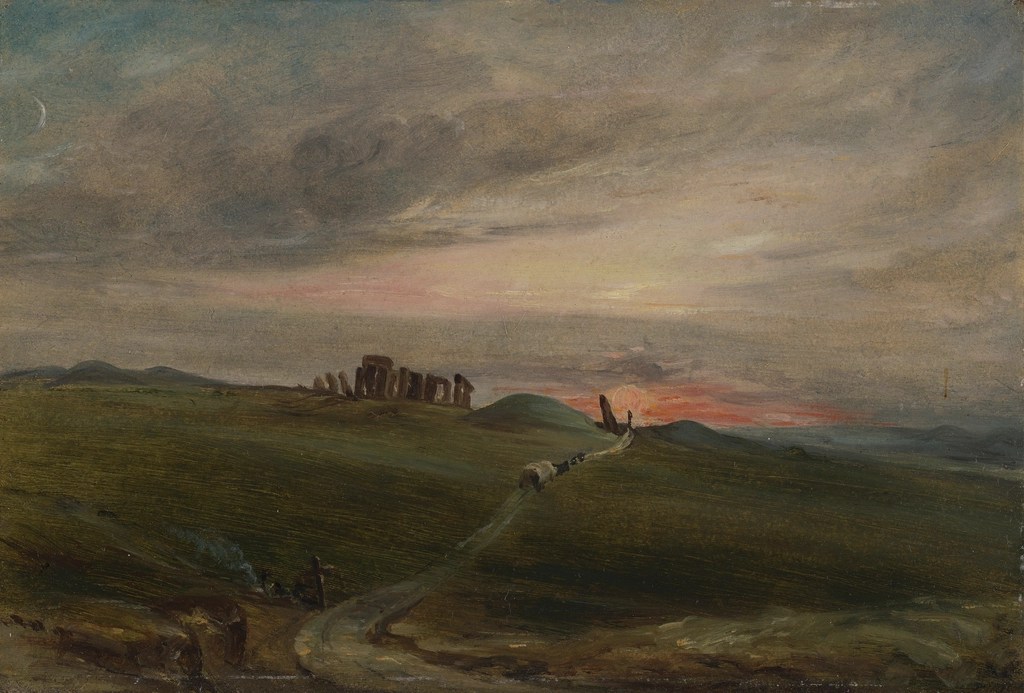
Stonehenge and Durrington Wells
England is the winter destination of migratory birds coming south from Arctic Canada and northern Siberia. Located on a migration route on the East Atlantic Flyway, Stonehenge was built 4,500 years ago with a primary alignment to the winter solstice. Drumming or hammering on an egg-shaped ring of standing blue stones at Stonehenge would have created a bell-like ringing effect, according to a 2014 study. Using an exact model of the original megalith, researchers in 2020 found that sound was amplified more and reverberated longer inside the outer circle of quartzite sandstones, enhancing the sound of drumming and music.
Less than two miles east on the Avon River is Durrington Walls, once a large settlement contained inside an egg-shaped henge measuring 1,700 feet by 1,475 feet, built about a century before Stonehenge. The long axis of the oval ring is perpendicular to the southeast horizon where the sun rises on the winter solstice.
The ovoid towers of Angkor Wat
Tonle Sap Lake in Cambodia is one of the largest wintering grounds for migratory birds in Southeast Asia. Just a few miles away, the ovoid conical towers at Angkor Wat represent the mythical Mount Meru, where Hindu souls are reincarnated. The stone walls are sculpted with musicians playing double-headed drums, hour-glass drums, barrel drums, horns, gongs, chimes, cymbals, and conch shells. A wide canal forms a rectangle around the temple, attracting thousands of birds.
On the walls of the temple is painted the mythical Garuda bird, which discusses the metaphysics of reincarnation in the Garuda Purana. A small temple on a nearby hill was the designated viewpoint for watching the winter solstice sun rise over the towers. The temple was built about 900 years ago by King Jayavarman II, who proclaimed himself the reincarnation of the Hindu god Shiva.
The Buddha-Egg of Maharashtra
About 2,100 years ago in Maharashtra, India, the Ajanta Caves were dug out from a massive rock face near the Jaikwadi Bird Sanctuary, a winter ground for about 30 species of migratory birds. On the winter solstice, the rising sun shines on a standing Buddha in Cave 19, who appears to be emerging from a white egg of polished stone. The Ajanta Caves contain murals depicting the many reincarnations of the Buddha, including both human and animal forms, illustrating the Buddha’s journey toward enlightenment over many lifetimes.
Karahan Tepe
The oldest winter solstice alignment in the world dates back more than 11,000 years at Karahan Tepe in southeast Turkey, where a beam of sunlight enters through a stone porthole in the outer wall of Structure AB and illuminates a protruding stone head for about 45 minutes.
Structure AB is egg-shaped and filled with standing stones believed to be phalluses. Some believe a large hole in a stone slab may have functioned as a “soul-hole” for the deceased to travel to another world. Karahan Tepe features a stone statue of a vulture and is located on a route of the Mediterranean/Black Sea Flyway and the active boundary of the East Asia/East Africa Flyway. The Egyptian vulture still migrates through Turkey today.
In addition to the carving of a headless human and a vulture at nearby Göbeklitepe, the 9,000-year-old archaeological site at Çatalhöyük in south-central Turkey features murals of vultures and headless humans, again suggesting a relationship between vultures and the afterlife. In ancient Egyptian, Greek, and Roman cultures, the vulture was perceived as a mother goddess and believed to be an all-female species that reproduced by immaculate conception.
The Almendres Cromlech
Located on a route of the East Atlantic Flyways that makes landfall nearby, the stone oval ring known as the Almendres Cromlech was built about 6,000 years ago near Evora, Portugal. It measures 230 feet on the long axis and 130 feet across, with 95 oval/almond-shaped stones up to 11 feet tall. About a mile away is a single standing stone, almost 15 feet tall, that formed a visual alignment with the rising sun on the winter solstice. Evora is one of three almond-growing regions in Portugal.
In Greek and Persian myth, the almond tree was associated with rebirth, reawakening, and victory over death, perhaps because almond trees bloom in February and March. There are about 800 dolmens in Evora, featuring inner chambers that could have been used for live births.
Mnajdra and Ġgantija
About 5,600 years ago, on the island of Malta in the Mediterranean, a pair of virtually identical egg-shaped enclosures were built, known as the Mnajdra and Ġgantija temples, and both are aligned to the rising sun on the winter solstice. Malta is located at the junction of two bird migration routes linking Sicily to North Africa on the Mediterranean-Black Sea Flyway.
Some scholars have suggested the two ovals inside the two temples were meant to appear as a mother goddess figure from above, like the Gravettian Venus, with over-large breasts atop even larger hips. Local legend claims the massive stones were carried to Ggantija by a giantess who carried her baby in a cradle on her back. Hundreds of bodies were found at the nearby necropolis known as the Xagħra Circle, suggesting a symbolic link between the two sacred sites involving the cycle of life and death.
The ‘Sleeping Lady’ of Malta
Also on Malta, a three-level underground tomb known as the Hypogeum was built about 6,000 years ago. The tomb complex stayed in use for 1,200 years and contained the remains of about 7,000 people. Most of the stone rooms across the three levels of the Hypogeum are egg-shaped, and sunlight penetrates into the second level at dawn on the winter solstice.
One of the most compelling features of the second level is a stone sculpture known as the Sleeping Lady, whose body is made of oval shapes, including her legs, arms, and head. Scholars believe she is a mother goddess presiding over the process of death and rebirth. A remarkable acoustical feature in the rounded Oracle Room produces a strong resonance that radiates throughout the structure when a voice speaks at about 110 hertz into a small oval niche.
The Sun Temple of Odisha
On the Bay of Bengal in northeastern India’s State of Odisha is Lake Chilika, the biggest wintering ground for migratory birds on the Indian subcontinent. Nearby is the Hindu Sun Temple at Konârak, built about 700 years ago and aligned to the winter solstice. The temple features a dancing hall and sculpted musicians playing drums, flutes, lyres, and cymbals.
After shining down a long pathway between various structures, the winter solstice sun enters a pyramidal/ovoid structure and into the inner sanctum, where it once illuminated a green chlorite statue of the sun god Surya, embedded with gems. Today, Hinduism is the largest religion in the world that continues to believe in reincarnation as a core precept.
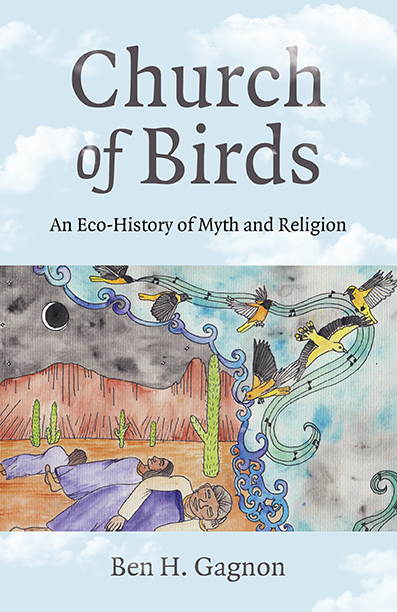
Birds and serpents in Ohio
The Great Serpent Mound in southeast Ohio was built at least 2,000 years ago, likely by the Adena culture, which believed in a mythic Thunderbird that ruled the sky and a great serpent that governed the earthly realm. The snaking mound was built high on a ridge above a serpentine creek in an area where two global bird migration flyways converge in a narrow corridor below the Great Lakes, producing a high population and a wide variety of birds.
The serpent is 1,300 feet long and three feet tall, with its mouth stretching around an egg-shaped mound. Various curves of the serpent are aligned to the solstices and equinoxes. The mound may have been what scholars call a “magico-religious schema” to engage with a sacred raptor, encouraging it to descend from the sky and battle the giant serpent with its mouth around an egg.Scholars believe the Adena believed in the afterlife and the cyclical nature of life and death.
Monks Mound at Cahokia
About 1,300 years ago, a small city specialising in maize production emerged on the Mississippi River just east of St. Louis. Given the name Cahokia by archaeologists, the urban trading centre consisted of 120 large earthen mounds with a population of 20,000 or more. It was a place of seasonal feasts where the sacred theatre of music and dance was likely performed on the flattened tops of mounds aligned to both solstices. Scholars agree that Mississippian cultures believed in reincarnation.
At the centre of the city was a mound with an ovate base 1,000 feet long and 800 feet wide, standing 100 feet tall. Known as Monks Mound, it was created from layers of past structures, buried ancestors, and fill. From above, the earth-worked edges of one end appear to be shaped like the tail feathers of a bird. Hundreds of small clay tablets were found in the area depicting a bird-man “falcon dancer.” Cahokia is located on a route of the Central Americas Flyway and the active boundary of the Atlantic Americas Flyway, and just north of a modern-day trumpeter swan wintering ground.
The recent excavation of two solstice-aligned mounds suggests that birds played a central role in rituals. Archaeologists found that 434 swans buried in Mound 34 were not eaten, but many of the wing bones were used to make beads and awls. Twenty-five bird species were found inside Mound 51, including bald eagles, red-tailed hawks, peregrine falcons, herons, pelicans, egrets, ravens, parakeets, woodpeckers and 13 kinds of ducks. Very few species of birds buried in the mound were part of the indigenous diet, suggesting the burials were part of a religious ritual.
The oval village of Chankillo
Located where a route of the Pacific Americas Flyway makes landfall on the coast of northern Peru, the boundary line of the 2,400-year-old village of Chankillo was an egg-shaped stone ring with concentric walls; small houses surrounded a civic plaza and stone temple. Above the village on a north-south running ridge are the Thirteen Towers of Chankillo, with the north end aligned to the summer solstice and the south end to the winter solstice. The spiritual beliefs of the Casma/Sechin culture that inhabited Chankillo are unknown.
The Sun Temple at Cusco
Located in Cusco, the Sun Temple Coricancha is aligned to the winter solstice and was the gathering place for thousands of Incas during the solstice Festival of the Sun, Inti Raymi. Dating back 3,000 years, Cusco is the oldest city in the Americas, located on a route of the Pacific Americas Flyway and the active boundary of the Central Americas Flyway. One of the remaining sections of the temple that remains is a curved, semicircular wall. Scholars agree that the Inca believed in reincarnation – those who lived virtuously would go to the “warmth of the sun.”
The Great Zimbabwe Ruins
Believed to be built about 800 years ago by an unknown Bantu-speaking people, the main feature of the Great Zimbabwe Ruins is the egg-shaped Great Enclosure, surrounded by granite walls 32 feet high that would have created unique acoustic effects. Bantu peoples believe in reincarnation as part of the cyclical journey of life, death, and rebirth. It’s the largest prehistoric stone structure south of the Sahara, located at the rare convergence of three global bird flyways. In a 2002 study, Richard Wade of the Nkwe Ridge Observatory in South Africa found that the three bright stars of Orion rise over three standing stone pillars on the morning of the winter solstice.
The Cairn de Gavrinis
The oldest megalith in western Europe designed to capture the dawning winter solstice sun is the egg-shaped Cairn de Gavrinis in the village of Carnac on the northwest coast of France, where a route of the East Atlantic Flyway makes landfall. Measuring 160 feet across and 20 feet high, the age of the mound is unknown, but scholars believe it was abandoned about 5,400 years ago. When the cairn was discovered, the inner sanctum was empty, and no bones were found. Carnac features the greatest concentration of megalithic structures in the world, over 10,000 total, including standing stones, dolmens, and tumuli.
The Kastelli Giant’s Church
Built by hunter-gatherers across northwest Finland between 5,500 and 4,000 years ago, Giant’s Churches were ovate and aligned to the solstices and equinoxes by doorways and the long/short axis. The acoustic effects inside the churches would have been unique. Among the largest ovals is Kastelli Giant’s Church, at 197 feet on the long axis and 115 feet on the short axis. Only short stone walls in a grassy field are left to mark the outline of the church today. The site is located near the shores of the Gulf of Bothnia, a popular bird migration corridor.
The Oyu and Komakino stone circles
Located on a wintering ground of the Asia/Australasia Flyway, the Oyu stone circles include oval-shaped stone arrangements within two large circles built 3,500 to 4,000 years ago by the Jomon people. The circles are aligned to both the summer and winter solstice. Not far north and built around the same time is the Komakino stone circle, also aligned to the winter solstice, where the outer circular rings were made by placing oval stones vertically and horizontally to build walls. As viewed from the circle, the sun sets directly behind the sacred Mt. Iwaki. Scholars believe the Jomon people believed in reincarnation.
Sacred theatre of the solstice
Long before the advent of Judaism, Christianity, and Islam, it appears there was a near-universal belief that sex, pregnancy, birth, and reincarnation were inextricably tied to the ritual calendar, culminating on the winter solstice, when gods and cultural heroes were said to be born.
These were miraculous events taking place against dramatic backdrops with unique acoustic effects, producing a form of sacred theatre that allowed the entire community to participate in rituals that celebrated the often traumatic phases and cycles of life.
Springtime mating and winter birthing appear to be an example of Darwin’s “survival of the fittest,” and may be much older than farming cultures. Giving birth in midwinter would have made it more likely that infants survived, as the group was holed up in temperature-controlled caves with enough spare time to help mothers through the birthing process. Expecting babies to be born over the winter would have been an added motivation to ensure enough food was gathered and stored. In addition, numerous women going through the stages of pregnancy at the same time would have been another social advantage. When spring rolled around and the group became more active, the infants would be mature enough to manage. As grasses and flowers began to grow in spring, mating at the same time as other animals and birds may have been second nature for hunter-gatherers.
Ben H. Gagnon has won awards as a newspaper reporter, editorial writer, documentary filmmaker, long-range city planner, and most recently as a novelist for his work of historical fiction, People of the Flow: A Journey into Ireland’s Ancient Past, published in October 2019. Gagnon has been a speechwriter, a campaign manager for open space, co-producer of the State of the World Conference at the Aspen Institute, and a DJ on public radio in Colorado and Massachusetts. His website, churchofbirds.com, features the colorful work of illustrator Catherine Masters. He lives in Charlemont, MS.
Ben H. Gagnon is the author of Church of Birds: An Eco-History of Myth and Religion, for more etails: https://www.collectiveinkbooks.com/moon-books/our-books/church-birds-eco-history-myth-religion

 The Pagan Collective
Leave a comment