
Meet the author is a series of articles intended to introduce you to our wonderful authors. Learn about the books they’ve written, the spiritual pathways they’ve traversed and some fun little tidbits… introducing Katie Ness!
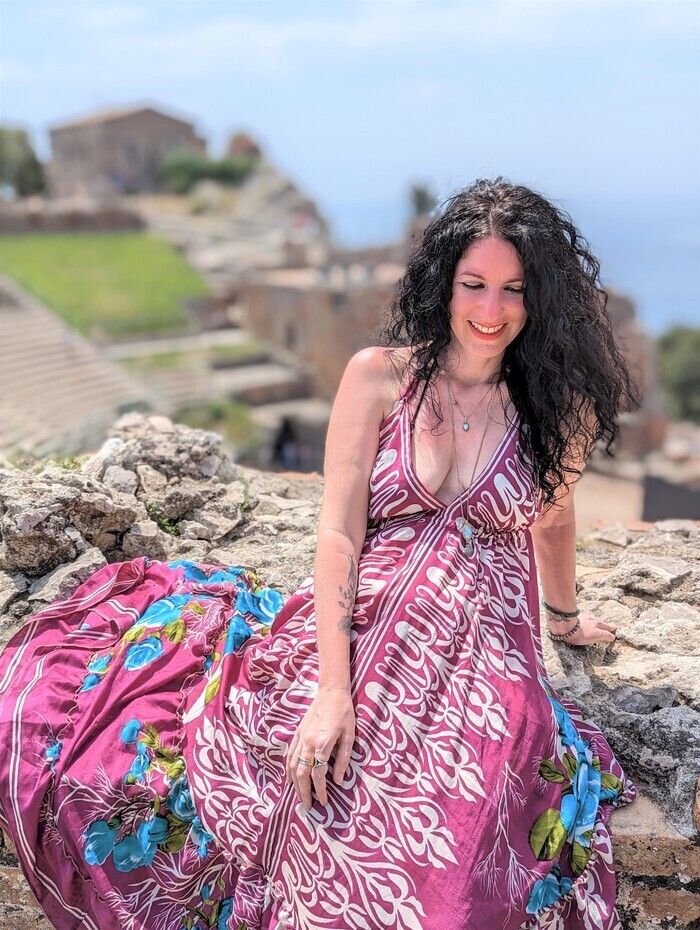
Tell us about yourself….
My name is Katie, and I am a historian and folklorist-in-progress, author, and wellbeing teacher.
My spiritual path is a tapestry woven from hedgewitchery, yogic practice, and priestessing, blending scholarship with lived spirituality.
I was born in a small coastal town in Lancashire, though my journey has carried me across the UK—from Liverpool to Preston, Plymouth, Newton Abbot, and London—and even abroad to Cyprus, Bali, and Australia. Each place has shaped me, deepening my sense that creativity, spirituality, and travel are the three vital threads of my life. Without them, I feel incomplete; with them, I feel alive.
I began practising folk magic at thirteen, and over the years, my path has blossomed to embrace yoga and service to the goddess. My practice today includes working with the Tarot, dream incubation and interpretation, goddess ceremonies, devotional chanting, and witchy crafts—each a way of entering into dialogue with mystery and meaning. Alongside this, I’ve pursued academic study: I attained a BA(Hons) in Fine Art back in 2012 and I have now completed short courses with Oxford University in Prehistoric Art: From the Paleolithic to the Iron Age, The History of Folklore, The Practice of Magic in Medieval Society, and Death and Devotion: The Art of Death Across the Middle Ages in preparation for attending a Masters program.
As a wellbeing teacher, I specialise in Ayurvedic Hatha Yoga, Grief Yoga, Yoga Nidra, sharing circles, and womb healing & blessings. I have also studied extensively with Oxford’s Centre for Hindu Studies, completing over 100 hours in Yoga Philosophy, Tantra, Vedanta, Sanskrit, Women & Goddesses in Hindu society, Kirtan, and classical texts such as the Bhagavad Gita and the Yoga Sutras. I also offer my knowledge as a guest Yoga Philosophy teacher on yoga teacher training programs.
I am deeply passionate about the ongoing exploration of both Western and Eastern mysticism, folklore, philosophy, and magic—and as a teacher, I seek not only to study these traditions, but to embody them, weaving their wisdom into the heart of my workshops and offerings.
What books have you written?
My first book, Word Witchery: Walking the Path of the Poetry Priestess, was published with Moon Books, and I am currently developing two more potential manuscripts. Word Witchery explores the power of words throughout history, delving into the archaeological and historical material culture of word craft and poetry magic—from ancient poems composed by priestesses to deity, to medieval birthing girdles inscribed with protective charms. One chapter is dedicated entirely to lesser-known women poets and writers who used the written word for votive or magical purposes. History often fragments or erases women’s voices, and this book seeks to honour as many as I could uncover.
The second half of Word Witchery brings the temple to life, filled with practical activities, spells, and rituals for incorporating poetry and writing into your spiritual or magical practice. Even if you are not pagan or a practitioner of witchcraft, these rituals can be adapted as forms of healing through poetry and writing therapy.
In addition, I have two poetry collections published with independent presses. My first, Aphrodite Fever Dream, carries a summery, daydream-like vibe, while Juggernaut explores themes of life, death, rebirth, grief, memory, ghosts, and hope.
How would you describe your spiritual pathway?
It began with Catholicism, the faith I was born into and genuinely enjoyed. From an early age, I felt called to walk a spiritual path in some capacity. As a child, I was very much like Luna Lovegood from Harry Potter—mystical, thoughtful, and dreamy. Catholicism still lingers in my practice today, much like many Italian and Latino witches who weave Christian symbols, angels, and saints into their workings. Even then, though, the “supernatural” often revealed itself in ways my Religious Studies classes could not explain. Other children teased me, calling me “witchy,” and by the age of five, I was already having premonitions, lucid dreams, and conversations with spirits as well as memories of past lives that I assumed were normal until I learned otherwise.
At thirteen, I widened my path through books—some discovered in charity shops, others borrowed from my mother’s shelves. Witchcraft, Wicca, astrology, palmistry, Tarot symbolism, Buddhism, reincarnation, crystal healing, chakras, pagan and Eastern philosophies, folklore—the list was endless. I spent hours in the rose gardens of my local park writing poetry and spells, quietly communing with nature spirits. Years later, I discovered that ashes of deceased animals had been scattered there, which explained the magnetic pull I had always felt.
At fifteen, I bought my first Tarot deck, just as my grandfather began telling me about our English Romanichal heritage: my Romany great-grandmother had been the local tea leaf reader, and my aunt a scryer. Though he spoke fluent Roma, the language was never passed down to my mother and her siblings—yet the folk magic survived in whispers.
By my twenties, I was drawn to the yogic path—first through meditation and philosophy, later through asana practice, which continues to this day. In 2017, I was initiated as a Magdalene priestess, stepping into the lineage of Mary Magdalene. I wear her Camargue cross as a symbol of my devotion to the sacred feminine in all her forms. In 2018, I ventured to Ibiza to train as a women’s circle facilitator. This training was steeped in Vedanta and goddess traditions. I then continued my Vedantic circle facilitation training in Bali alongside my yoga teacher certification.
Over the years, my practice has become an amalgamation of hereditary folk magic, hints of Catholic devotion, yogic spirituality, priestessing, and hedgewitchery. I have trained to hold sharing circles and cacao ceremonies, to work with anointing oils, and to facilitate rites such as the Munay-Ki 13th Rite of the Womb.
Today, if a label is needed, I call myself a Hedgewitch. To me, it encompasses all that I am: a mystic of the liminal, a folk witch working with dreams, herbs, ancestors, deities, and spirits; a maker of charms, totems, and amulets; and someone who dwells “over the hedge” of society—living quietly, but always ready if someone knocks on my door seeking a Tarot reading, dream interpretation, ritual blessing, yoga practice, remedy, or simply a magical chat over a cup of tea.
I dream of becoming like the Owens aunts from Practical Magic—and in many ways, I am already on that path. A whimsigoth at heart, I craft my own herbal black soaps, candles, botanical journals, and charms. Little by little, I’m becoming the woman I once admired from the screen and in the books: a witch rooted in both magic and everyday life, living enchantment in every breath.
What tips do you have for folk beginning their spiritual journey?
Read widely—immerse yourself in books on a variety of spiritual traditions, make notes, and follow what sparks your curiosity. Most importantly, remember that your path is uniquely yours. It will shift and change over the years; sometimes it will evolve beautifully, other times it may seem to devolve—but both movements are part of the journey. Let it grow in the direction your heart longs to experience.
There have been times in my own life when I didn’t feel spiritual at all. Looking back, I now see those moments were shadow work in disguise. Sometimes the magical path doesn’t look outwardly “magical,” yet deep alchemical work is happening within. At other times it feels effortless and enchanting—like when I was in Bali, and each day unfolded with synchronicity, tuning me deeply to liminal energies. It ebbs and flows: at times feeling mundane, you may feel lost, stuck, bored, then it’ll shift into joy, wonder, and captivation. All of these states belong. It is a path—and it is your path. As long as you do no harm to yourself or others, it is a beautiful, freeing journey of curiosity.
One final note: ego has no place here. Those who have practised longer are not “better” than you. Perhaps in a past life you were a great oracle, and in this lifetime your soul chose to rest for a while, or to focus on different karmas before you pick up a magical practice later in life. One lifetime does not define your practice—it is part of a much greater continuation over many lifetimes. So stay humble, stay curious, and allow your journey to unfold.
What is something quirky about yourself?
I am a belly dancer and have been dancing since I was nineteen, becoming semi-professional throughout my mid-twenties to early thirties. I’ve had the joy of studying with renowned performers such as Rachel Brice and Samantha Emmanuel, and I became known in my performances for my fluid, serpentine undulations and brilliantly controlled hip shimmies. Friends nicknamed me “Esmeralda,” after the character in The Hunchback of Notre Dame, a nod not only to my dark curls and green eyes, but also to my Roma ancestry.
Beyond dance, I love collecting quirky postcards and vintage cabinet cards—some charming, some spooky, and a few delightfully risqué. This passion was inspired by a friend’s mother, who decorated her hallway and staircase with postcards, a simple yet enchanting display that left a lasting impression on me as a young adult and became one of my loveliest core memories.
I also collect replica figurines of prehistoric goddesses and female saints from my travels, a way of keeping the divine feminine close at hand. More recently, I’ve begun learning to play ancient melodies on the lyre harp, and for the past year, I’ve also been studying Italian on Duolingo—small but joyful extensions of my creative and spiritual journey.
What Deity(ies) would you love to have dinner with?
First, Aphrodite and Hekate—because I hold a theory that they may once have been one and the same before patriarchal pantheons divided their roles. Aphrodite’s lesser-known epithets include “She upon the graves,” linking her to death, while Hekate bears the epithet “Nourisher of Life.” Their origins also intertwine: Hekate traces back to ancient Turkic/Levantine traditions, while Aphrodite appears as a fusion of local Cypriot fertility idols with Levantine influence. Both embody the vastness of the cosmic mother of earth, sea, and heavens.
Next, Rhiannon. I would ask her how she was dethroned from goddess status to “Faery Queen,” and whether there were once more written works about her—stories now lost to time.
And lastly, though not a goddess, I would love to share tea with Mary Magdalene. She is, to me, part of the sacred feminine, and I would ask her to tell her own story—what truly became of her gospels and writings, and how she would want to be remembered.
What magical items would you take with you if you had to live on an island for a year?
I would bring my Tarot decks. They are endlessly versatile—companions for divination, a simple card game, or even something to “speak with,” since the human faces on the cards can feel like company. And in moments of true desperation, the cards could even serve a practical purpose, such as helping to spark a fire for warmth or cooking.
Books would come with me, too. I see them as divinatory tools in their own right: they guide the pursuit of knowledge, refresh wisdom, and expand imagination. They keep boredom at bay, nourish creativity, and offer continuous support for spiritual practice. Alongside them, I’d bring a journal—for writing, reflection, sketching botanical illustrations and recording the island’s magic as it unfolds.
Where can people find you?
Instagram: @katie_wild_witch
Facebook: Kalyaani Temple Page
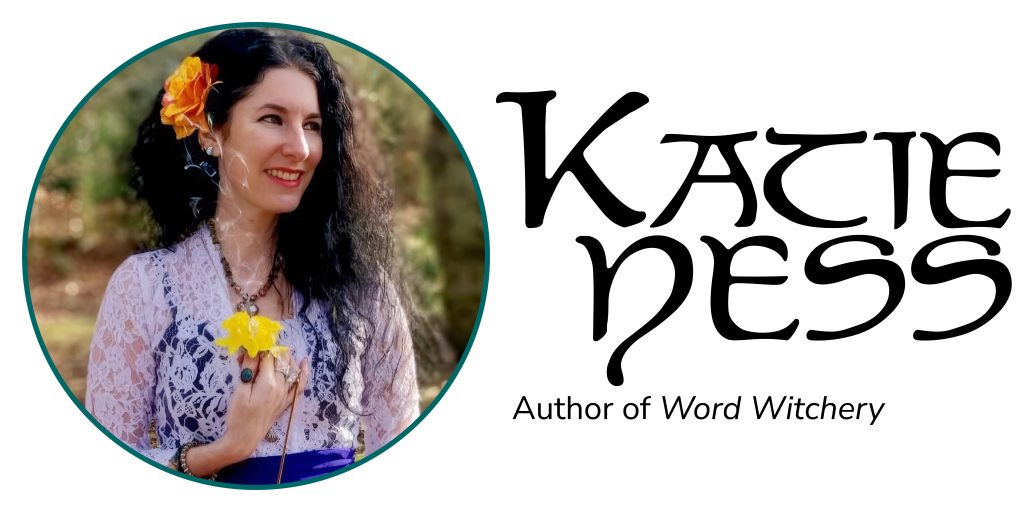
Katie Ness is a knowledgeable writer, budding historian, and yoga instructor specialising in folklore and spirituality, holding a BA Honours in Fine Art from UCLAN, Level 4 certifications in Prehistoric Art and The History of Folklore from Oxford University, and extensive expertise in Yoga history, Vedic philosophy, Sanskrit and the Śākta Traditions from the Oxford Centre for Hindu Studies.
As a yoga instructor and wellness educator specialising in women’s spirituality and health, Katie integrates yogic principles with pagan practices, priestess ceremonies and women’s circles together with therapeutic arts and folk-crafts, and she also offers instruction on the history and philosophy of yoga, available as a guest teacher for teacher training programs.
She has been a contributing writer for Kindred Spirit Magazine, Femme Occulte, Witches Magazine, Occulture Magazine, Haunted Magazine, The Feminine Macabre, Girl God Books, The C Word Mag, Rebelle Society and You Aligned among a variety of others. Two of her short stories feature in Mulberry Literary and a book collection entitled ‘Incurable’ published with Running Wild Press. Her poetry is published widely with an array of anthologies and two poetry collections entitled ‘Aphrodite Fever Dream’ and ‘Juggernaut’.
As of 2025, Katie is engaged in learning to play the Lyre Harp with Luthieros Traditional Music Company as well as workshops in corn dolly making and willow basket weaving while preparing to pursue her Master’s degree in Occult/Folklore History, focusing on sacred art and magical crafts.
In her free time she is a passionate globetrotter, she’s explored more than 25 countries, backpacked through 5 of them, and even set down temporary roots in Cyprus, Bali, and Australia, all while pilgrimaging to sacred sites on her adventures!
As a devoted Bhakti Yogini of the Shakti tradition and initiated Magdalene Priestess, Katie beautifully weaves together her spiritual practice centred on the sacred feminine with hereditary hedgewitchery and folk magic.
For more details: https://www.collectiveinkbooks.com/moon-books/authors/katie-ness
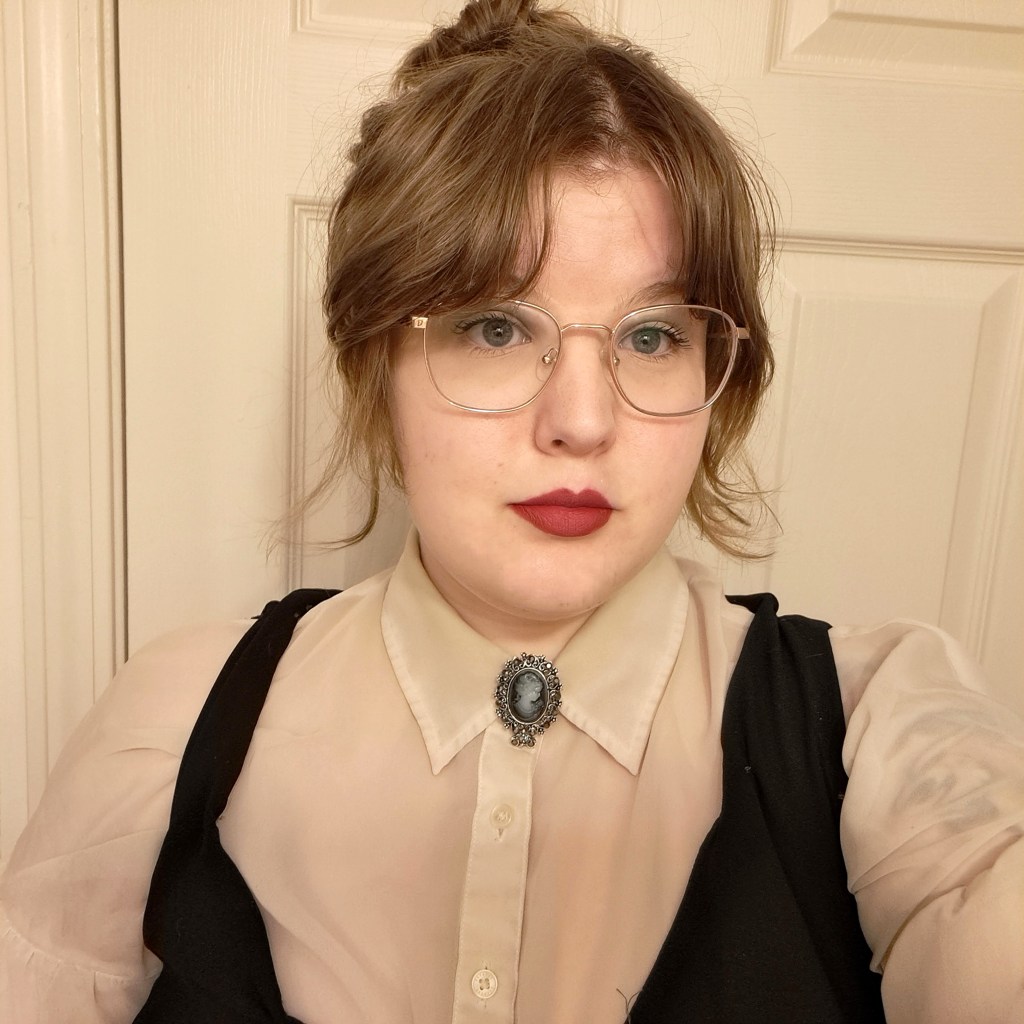
 The Pagan Collective
Leave a comment