

One of the most dangerous things about being a bird enthusiast is the risks when you’re driving. I once nearly ended up in a hedgerow when a flock of curlews came level with the car, just a few feet above, as I was navigating a slow country lane. Thankfully, I’m a pretty good driver, but wow, they can be distracting.
Today was another of those instances. I was driving down the local A-road when a flock of around 100 birds moved in perfect synchronicity, exposing their white bellies to the cloud-rimmed sun in sudden contrast to the black wings that had been visible before. I gasped and had to triple-check my position on the road before continuing, as the birds continued their seemingly choreographed swirl across the sky, breaking into two flocks, then merging again, flipping from dark to pale and back again.
These birds were lapwings, Vanellus vanellus, often called a peewit after their shrill, sharp calls that sound straight out of a child’s toy laser gun. The common name refers to the flight style I described, zigzagging back and forth across the sky, in literal laps.
Lapwings were once a common sight across the UK, but are sadly now in decline. According to the RSPB, there are fewer than 100,000 breeding pairs, although more birds come to winter here from colder climes. Their conservation status is listed as red, which means they’re in dire need of assistance, with their total numbers having dropped by an alarming 55% since the late 1960s.

Helping Farmers Help Wildlife
One of the biggest impacts on British wildlife is intensive farming. As natural countryside gives way to farmland, habitats are lost. Farm machinery crushes and destroys nesting sites of many birds, while the constant activity scares them away from what once may have been ideal breeding grounds.
But of course, we need to eat. Farmers are an essential part of our lives and the economy, and we can’t simply ask them to stop. With that in mind, many conservationists and wildlife organisations have published guidance on wildlife-friendly land management — lower-impact farming practices that may help support breeding grounds for these endangered birds.
Recommendations from organisations like the RSPB include looking out for nesting sites and avoiding them during drilling, cultivation, and muck spreading. Predator management is another way to protect these birds, for example, by fencing or walling off areas of pasture to discourage foxes and other predators from seeking out the protein-rich eggs and young birds. Leaving some areas suitable for nesting is also essential: not transforming every field into cropland, but leaving some as short, meadow-like grasses that encourage nesting.
Connecting with Lapwing Folklore
Protecting the lapwing is about more than ensuring a diversity of birds across our countryside — although this is a critical consideration. Lapwings are also an essential part of our history, and wider global history, with many appearances in legend, myth, and folklore.
The Rekhyt people were an early group of ancient Egyptians, and their name was the same as that of the lapwing, and referred to its unusual, staggering, fluttering behaviour in flight. The word Rekhyt also meant enemies of Egypt, those who are defeated, and those who are of a lower class. However, it was also given to craftspeople, and Pharaoh Seti I was depicted holding a lapwing in his hand as a symbol of rulership.
In Lincolnshire, UK, they tell the tale of the Tiddy Munn. A small man of supernatural origin lived out on the fens, running back and forth, sometimes seen by passers by, but only ever a glimpse. His presence was announced by the call of the peewit. Sometimes, the water came dangerously high, and the locals would pray to the being, the Tiddy Munn, to send the water back. In time, it was decided to drain the dangerous fen. Once the land was dry, people became sick, and the peewits called no more. Realising the Tiddy Munn must have cursed the land, the locals took water out and refilled the ditches and dykes of the fen. The peewits returned, and the sickness passed.
The Museum of Witchcraft and Magic houses a beautiful sculpture of a lapwing, with the tuft on its head prominent. The statue’s donor tells us only that the monochrome bird was always present at rituals, and that it was associated with deceit or overcoming illusion in some way. This shows that the ritual organisers in question had a good understanding of the lapwing. These birds create false nest sites in order to fool predators and distract them from eating their eggs and young. Thus, the collective noun for a group of lapwings is a “deceit.”
Learning these tales connects you to the history of the lapwing, but also the history of the living world around you. When you look up and see a flock of lapwings swooping in tandem in the sky, you’re seeing the same sight your ancestors looked upon, and the same gasp-worthy imagery that inspired myths and tales that have lasted throughout the centuries.
With their tufted head, iridescent wings, and haunting calls, lapwings are a magical part of our living landscape — and worth looking out for.
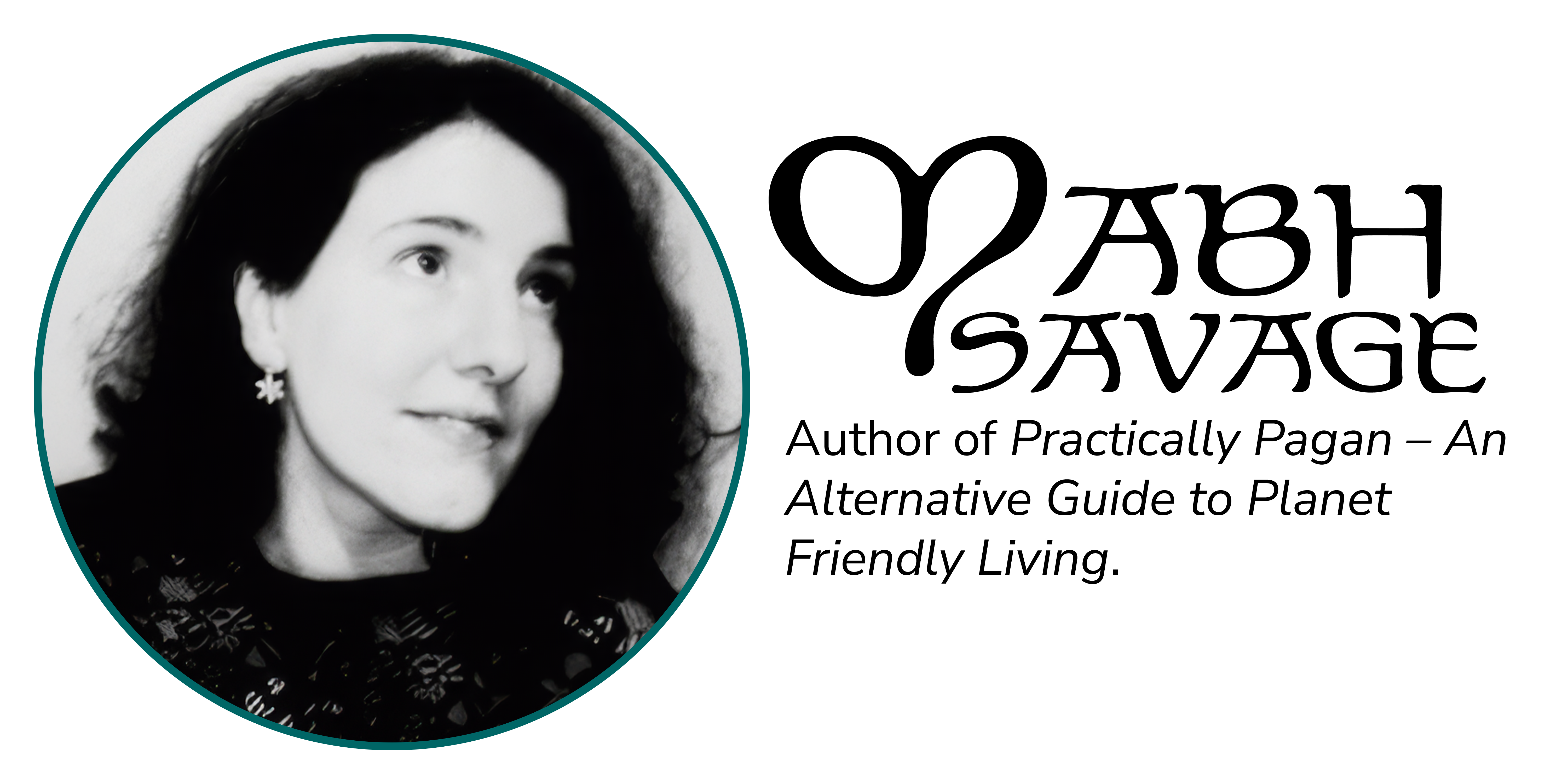
Mabh Savage is a Yorkshire Witch, Pagan author, and musician with a particular interest in Irish spirituality, and folklore from all across the U.K. and Ireland. She’s also a member of the global Covenant of Hekate and has assisted in some fascinating collaborative projects such as working with members all over the world to create a song for Hekate.
Mabh is the secretary of the Pagan Federation Children and Families Team, a group that aims to make life easier for Pagan families in England and Wales. She’s also the current editor of Aether, the magazine for Pagan families.
She’s been a member of the UK Green Party for many years, and believes firmly that it’s possible to reverse the damage being done to our planet with the right focus and action now.
For more details: https://www.collectiveinkbooks.com/moon-books/authors/mabh-savage
Photo by Daniil Komov on Unsplash

 The Pagan Collective
Leave a comment