

Extract of ‘Pantheon. The Romans’ by Rachel S Roberts
The Capitoline were the principal three deities of Ancient Roman Religion, but who were they, what did they symbolise, and how were they viewed and worshipped by the Ancient Romans? Rachel S Roberts shares more in this extract from her book Pantheon The Romans.
The Capitoline Triad
Jupiter
Jupiter came to be considered the highest of the Roman Gods and the ultimate example of kingship. He was originally a sky god associated with storms, rainfall, lightning and thunder and these associations did continue throughout Roman history. His primary place of importance can be attributed to his manifestation as rain; that essential element that enables crops to grow, the rivers to flow and the earth to flourish. Jupiter was known for his benevolence, strength and wisdom and is frequently described as ‘kindly disposed’ towards humans. Clever and powerful, he was respected as the mighty eagle, he who sees and knows all. He was closely connected to a God called Vediovis (or Vejovis), who was regarded as his opposite and personified all that was harmful, while Jupiter, who was all that was good. His consort was considered to be Juno Regina, and his son was Mercury, son of the sky.
In the earliest history of Rome, he was known as Jupiter Elicius, ‘he who brings forth’ and was associated with farming and the elements; the natural forces, like rain, that could destroy and create life. To the Latins and Etruscans, he was most well-known as the god who regulated rainfall and was evoked as such in many rites and rituals. According to Ovid, Jupiter was the god who created the seasons, splitting the year into four seasons, whereas before, in the time of Saturn, it had been a golden age of eternal spring. Jupiter’s age was defined by silver, bronze and then iron. As the empire grew, so did Jupiter’s roles. He became the head of state as Jupiter Optimus Maximus (Best and greatest) and patron of the armies. War was declared under his aegis (breastplate or shield), and he was offered the spoils of war. Another popular epithet was Jupiter Stator, ‘Jupiter who holds men firm’ (especially in the face of their enemy). The acronym IOM was used on almost all altars in dedication to the chief God of Rome, Iuditer Optimo Maximo. Many dedications were also made to him ‘To Jupiter, Best and Greatest, who saves’ in recognition of Jupiter as the supreme life-sustaining power. Another popular name for Jupiter was Jove.
The temple of Jupiter stood on Capitoline Hill and was the largest and most important in the city. It was recorded that in the regal era, women of the aristocracy would climb the hill to his temple to pray for rain. Also, upon Capitoline Hill was the temple of Jupiter Feretrius, the “maker of agreements”, and it was Rome’s oldest temple, built in the eighth century BCE. By tradition, it was commissioned by Romulus to hold all his battle booty. On his feast day, the Ides of September (13th), every year, from the foundation of the republic onwards, a nail was hammered into the temple doorpost to mark the passage of time and remember the dedication of the temple. The Ludi Romani, the principal and grandest games of the year, were celebrated in his honour annually in mid-September, as were the Capitoline Games on 15th October and the Ludi Plebeii from November 4th to 17th. These festivals coincided with the return of the rain after the drought of summer. Every year, the consuls would also make a sacrifice to Jupiter to begin their term of office.
Bidentals were also sacred to Jupiter. A bidental is any place that has been struck by lightning. This was a practice inherited from the Etruscans, who walled in any area struck by lightning as it was deemed sacred space. To the Romans, bidentals belonged to Jupiter alone (whereas the Etruscans believed many gods could communicate through various forms of lightning, such as Menvra, the Goddess of lightning), and offerings were made to Jupiter in these locations. Two-year-old animals were sacrificed to Jupiter at bidentals, two being symbolic of the two-pronged fork of lightning.
Juno
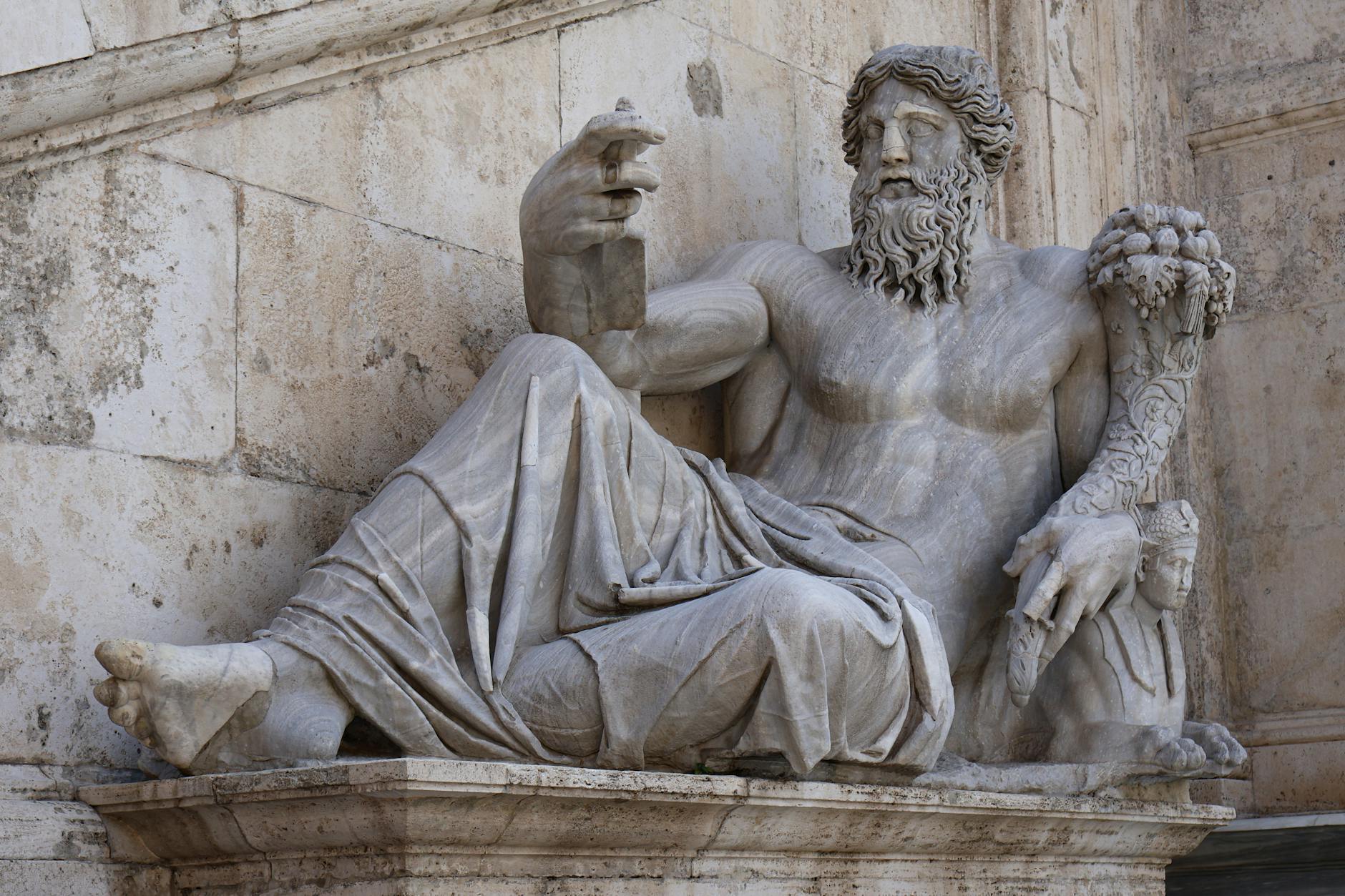
Juno was the supreme Goddess of the Roman pantheon and considered the Goddess of the People, ‘Juno Populona’. She was an Etruscan goddess of light, known to them as Goddess Uni and in ancient Lanuvium (Latium) as Juno Sispes Mater Regina; Juno, Saviour, Mother and Queen. There were many statues of her in the Etruscan capital of Veii, which was considered her city as she was their patron. Livy tells us that when this city was sacked by the Romans, many statues of her were taken to Rome, and it was considered that she herself was also fully transferred at this time and officially became the patron of the Romans, as she had been previously for the Etruscans. However, she was present and worshipped from the earliest stages of Rome, with her temple shrine built on the Esquiline Hill in 735 BCE. For the Romans, she was believed to be the majestic embodiment of the virtues of Roman matronhood. She was considered to be dignified, patient, modest, chaste and maternal, the virtues of all of which Roman women were encouraged to emulate. She was titled Juno Regina, Queen of Heaven and was the Goddess of marriage, motherhood and domestic harmony, and the month of June was named in her honour.
She had ten different names that were associated with various themes, archetypes and festivals. As Juno Lucetia/ Lucina, “the bringer of light”, she was associated with moonlight and with childbirth. This was a very early aspect of Juno, and it was believed she would safely bring children from the dark of the womb into the light just as the moon lights the way at night. Offerings to her were often made by women, in particular mothers and pregnant women, as it was believed she would bestow nourishment and health. A grove to Juno Lucina was located on Esquiline Hill, where a temple was later built in 375 BCE. In the grove, the vestal virgins would give offerings and locks of their hair that were hung upon a great and ancient tree. The consort of Juno Lucetia was Jupiter Lucetius, “Jupiter the bringer of light”.
As the goddess of light, heaven and the sky, she was associated with several birds, including the peacock and geese. Geese were guardians of the household, farmland and the city of Rome, reflecting Juno’s role of motherly protection. During the attack of the Gauls upon Rome in 390 BCE, it was Juno’s sacred geese that famously called the alarm and alerted the Romans to danger. As the guardian of the state and protective patron of the Eternal City, Juno was known as Juno Moneto, Juno, the ‘One who Warns’. The temple of Juno Moneta crowned the Arx Capitolina, and in the Area Capitolina were kept her sacred geese. She was also the protectress of funds and the Goddess of historical memory. In her temple buildings the standards for weights and measures were kept, as well as official lists of Magistrates and money was coined in her temple complex. Juno as Juno Quritis was of Sabine origin and had her own temple in the Campus Martius, where military functions, training and triumphs took place. Quritis (meaning spear, such as with the War God Quririnus) was the Sabine Goddess of protection, who guarded and watched over the people.
Juno, as great protectress and Goddess of light and motherhood, has not only one source, but was worshipped by many early italic tribes, including the Etruscans, Faliscans, Villanovans, Latins, Sabines and Umbrians. Some traditions in Latium believed her to have originally been the consort of Vulcan, the God of Fire, who was then later deposed by Jupiter. She was also the mother and sole parent of the God Mars, who was her son through union with a flower. As mother of Mars, she was also honoured as the grandmother of Romulus (Quirinus). She was also the mother of Iuventas ‘youth.’
The kalends (the first) of every month were sacred to Juno. She also had several festivals, with the primary holy days considered to be on the 1st July and the 13th September.
Minerva
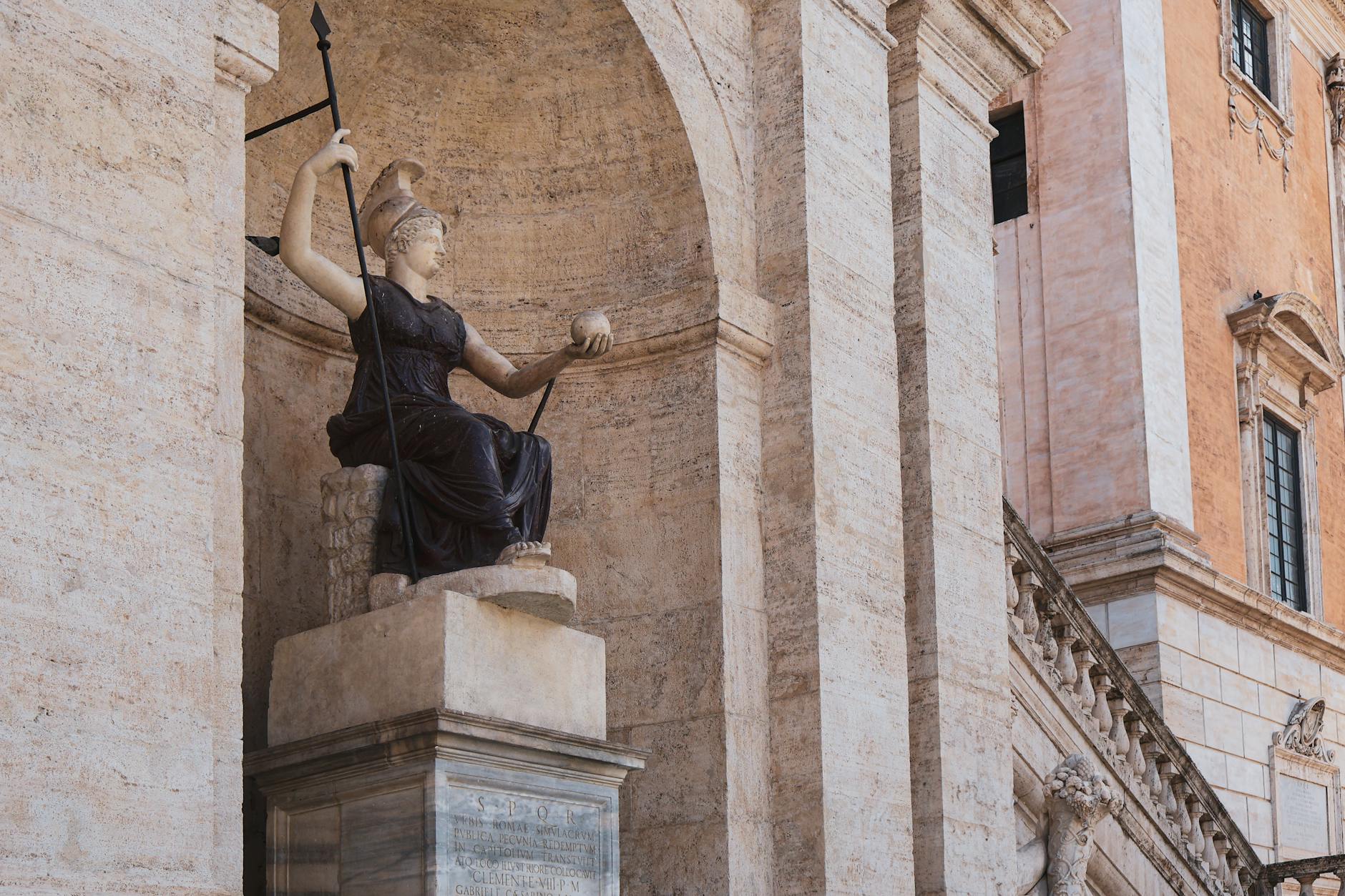
Minerva was the Etruscan goddess of wisdom, associated with weather phenomena. She was known to the Etruscans as Goddess Menvra and Menerva. In her Etruscan origins, she was the child of both Goddess Uni and the God Tinia and known as “the lightning thrower”, and was depicted by the Etruscans with lightning bolts as her primary symbol or personification. Menvra, as the lightning bolt could illuminate the darkness of a storm and via light connected earth to heaven, and it was this that led to her association with enlightenment and acquisition of wisdom and knowledge.
In ancient Rome, she was the Goddess of health, art, learning, writing, crafts and trade guilds. It was believed that she would bless all those who sought to learn and create. She was associated with, and governed, writing, industry, craft, music and education and was known as the goddess of a thousand crafts. As Minerva was considered a Goddess of creation and construction, she was popular with, and patron of, craftsmen such as weavers, blacksmiths, metalworkers, bronzesmiths, artists, cloth and shoe makers, quarrymen and potters. She also presided over writers and was connected to clerks and libraries.
Minerva Medica was the patron of doctors, and the cult of Minerva Medica was associated with healing and medical knowledge. As Minerva Pallas, she was connected with weaving, spinning and domestic craft. Girls would make offerings to her when they first began to learn spinning, winning and carding. She was also considered a Goddess of song and music, in particular the flute.
On a coin created by Vespasian when he became Emperor of Rome, Minerva is shown overseeing a situation in which a female representing Rome is rising from the ground. The image is accompanied by the motto ‘Roman Resurges’ – ‘Rome, thou shalt rise again’. It reminded all who saw it of Minerva’s involvement in making Rome mighty through its craft and construction, and affirmed her as the Goddess who could bring things into being with the hands of men and inspire men to create and give life to thoughts and ideas.
The temple of Minerva in Rome on Aventine Hill, dedicated on the 19th March (pre-218 BCE), was the location of the headquarters for the guild of writers and actors and the guilds of craftsmen. Her statues were also frequently located in the libraries of the Roman Bathhouses and gave tribute to the Roman interest in aligning physical culture and leisure with intellectual pursuits. Minerva was present wherever meetings, learning, and the sharing and acquiring of knowledge could be conducted. As Minerva Capta (‘captured’), she had a temple on the Caelian Hill in Rome, which contained a statue of Minerva captured from Falerii. She also had a temple in the Forum of Nerva, built and dedicated by Domitian and a Temple of Minerva Medica on Esquiline Hill. She had her own temple as part of the Capitoline Triad complex on Capitoline Hill and was honoured there as part of the supreme triad of Rome.
Her main festival was the Quinquatrus on the 19th March; however, she also had festivals on the 19th June and the 13th September.
Minerva was the favourite Goddess of Emperor Domitian, and he renamed the Chalcidicum of the senate house the Hall of Minerva in her honour. It was the courtyard from which one would enter all the rooms that housed records and important documents.

For more details: https://www.collectiveinkbooks.com/moon-books/authors/rachel-walker
Rachel is the author of Lupa, Wolf, Pantheon.The Romans and Flora, as well as the creatrix of Wolf Woman Rising, a wisdom school where she empowers you to embody your unique wisdom, reclaim your wild and create a life lived on purpose. Through online community, courses and training, as well as in-person retreats she offers easy and enjoyable access to ancient symbology and mythology, nature alchemy & divine connection.
Her desire has always been to create a bridge between history and spirituality, mythology and well-being, transmuting mythology into embodied wisdom, so that it becomes a tool of healing, empowerment and awakening for all. Rachel read History with Religious Studies at University and then went on to complete post-graduate qualifications in History and Heritage Management. She has also worked in the heritage sector for over a decade, primarily working with children and interpretation and she can claim to have worked in 5 different castles! Running parallel to her love of history she is a sacred dance teacher, storyteller, priestess and empowerment and flower essence coach
and is also the founder and principal teacher of Under the Dancing Tree School of Sacred Dance and Healing. She teaches sacred dances including Belly Dance, Polynesian dance, movement meditation and archetypal dance. Using her own journey and over 18 years’ experience of teaching and training she empowers and inspires students to deeply understand and practice courage, trust and authenticity; the three pillars of her wisdom school.


 The Pagan Collective
Leave a comment