
Interviewed by Thea Prothero
This is the ninth and last in my series of interviews with people who are inspired by my book, A Guide to Pilgrimage, in the Pagan Portals series by Moon Books. These interviews are a way of digging deeper into the various aspects of pilgrimage and a way of highlighting what it means to different people.
The idea is to inspire you, dear reader, to consider pilgrimage as an act of devotion, or a way of connecting to the world around you, now or in the future.
Pilgrimage is an ancient form of devotion, one which is as relevant to the modern seeker as it was to ancient Greeks over 2000 years ago. One of my missions as a modern advocate is to bring pilgrimage out of the medieval church and firmly into the twenty-first century.
This December, I had the opportunity to interview Roselle Angwin, author of A Spell in the Forest – Tongues in Trees. This is a beautifully gentle guide into developing a deeper relationship with trees and forests, and one that I highly recommend. When talking to Roselle, I was pleased and delighted to discover that she is also passionate about Iona, where the destination of my pilgrimage in book is.
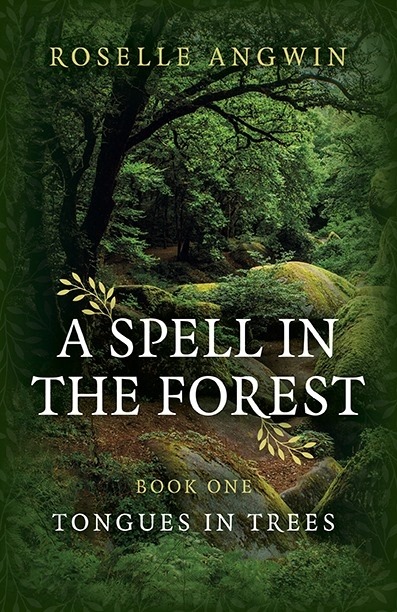
You can find more about Roselle’s guided pilgrimages on her website: https://roselle-angwin.co.uk/week-long-residentials/islands-of-the-heart-iona/
Roselle was also kind enough to share one of her poems about Iona with us. As you may know from reading my book, A Guide to Pilgrimage, chapter, Tools to help You, I shared several haiku which were inspired by my own pilgrimage to Iona.
Roselle was kind enough to talk to me about her own pilgrimage experiences.
Firstly, as an introduction, could you tell me how you define a pilgrimage and what it means to you?
Well, we know that a pilgrimage, traditionally, is to a sacred place, and is usually undertaken on foot with degrees of hardship involved. Generally, in the West, we see it historically as a Christian practice. However, other faiths also place a high value on such journeys, and there is evidence to suggest it was also a practice of our pagan ancient ancestors.
For me, there are three other aspects of pilgrimage that are significant.
One is that it is a state of mind, of presence, as much as an outer activity. In this ‘mode’, a pilgrimage might take place without even leaving our garden.
A second is that the journey, the process, is as important as the destination, the event.
And thirdly, it’s a journey undertaken with intent/intention; in such a journey, transformation is a desired or at least likely outcome.
The destination may be an outer one long recognised as sacred, or it might be a journey that is significant to us for personal reasons.
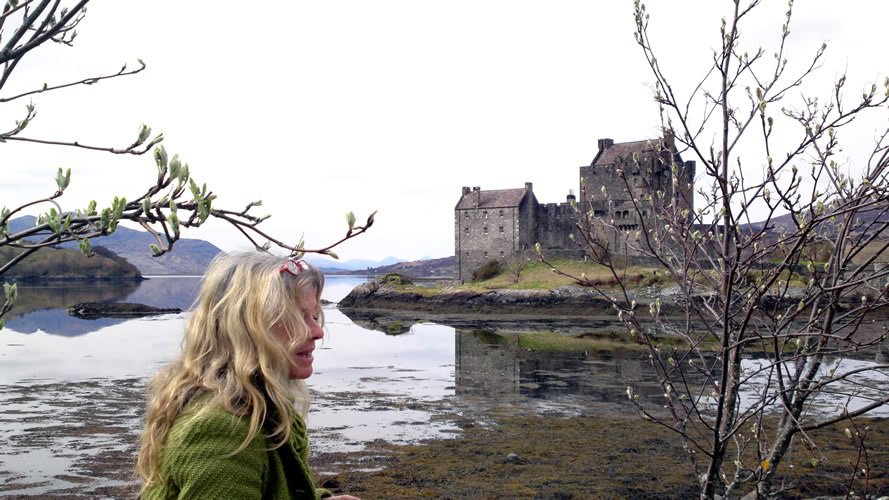
Could you please tell us where you went on pilgrimage and why this place is significant to you?
I realise that my lifelong tendency towards holy wells, in my case the wells of Cornwall and Devon, from childhood on (taken there by my father), has always been a pilgrimage. Symbolically, it’s tending the waters of the world and the waters of the Lost Feminine, i.e. Soul, too. When I can, from my teenage years, I’ve cleaned them out.
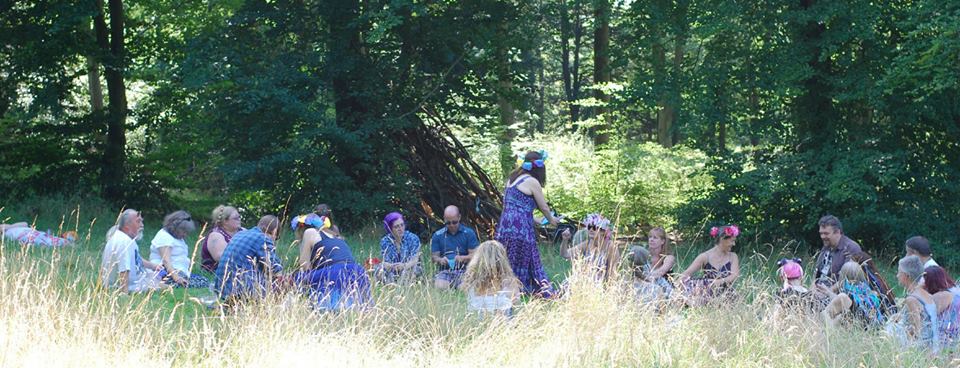
Later, the megalithic monuments, stone rows, stone circles, dolmens and the like, especially of my native Westcountry and now Brittany, have pulled me in a similar way. In West Cornwall, I have resumed offering an outdoor writing retreat called The Lands Wild Magic, in which we visit holy wells and various ancient sites in the spirit of pilgrimage.
The biggest one for me is my Islands of the Heart writing retreat on the Isle of Iona in the Hebrides. Although we don’t actually walk to the island, my own journey involves 3 ferries, 2 or 3 trains, and a bus. We walk on the island in a spirit of pilgrimage. I’ve been offering this retreat since 2000, and I know that the participants, many of whom repeat it year after year, find it utterly compelling and, yes, transformative. Iona has been a place of pilgrimage probably since before St Columba’s fame drew people. It is possible that the tiny offshore islet known as the ‘Island of the Women’ remembers a pagan colony of women dedicated to the sacred.
How long had you been planning to go on pilgrimage (Ie has it always been a dream of yours to go there, or a more recent calling?)
Well, my first visit to Iona came in my 20s (a long time ago!), as a result of a friend taking me there at a time of heartbreak for me. It was stupendous, and I took home a little yellow periwinkle shell and committed myself to going back in the way of pilgrimage. I have done that many times since, with the added poignancy of the fact that that friend died young.
Did you do any meditation/visualisation/journeying to guide you to specific places at your destination to visit? (for example, a stone circle, or other sacred site)
Not as such, but rather I will guide people to the physical sites we visit, tell them or read them something there, and guide people in journeying and visualisation as relevant.
How did you keep a record of your visit? Did you write in a journal or a notepad? How did this help you after you returned from your pilgrimage?
I write essays and poems at the sites and afterwards. (I also have hundreds of paintings that I’ve made of Iona.) I have a book of poetry from my work on the island: ‘A Trick of the Light – poems from Iona’. Available at all good booksellers, and I thought I would share one with you here:
iv Why we stayed (from the Columba Sequence)
It’s the glass-blue day
It’s the way light inhabits
the creases, smears colour
that steals your breath.
It’s the unbidden moment
that spells dolphin, otter, seal.
It’s the islands we come to
the islands we’re not.
It’s the white glyphs
that scribble the swell
in the Sound, and the bucking boats
that yield, and do not sink.
It’s the sand so pale
it might be grains of light.
It’s the big Hebridean night
that opens its arms
and drops its creels of stars
towards our upturned faces.
When you returned and reintegrated into your everyday life, how did it feel? Did you find it difficult to reconnect to your everyday life?
Well, no. I kind of live in this way anyway, and where I live helps that. What I find is that such a journey deepens me and ‘flavours’ my everyday experiences.
How has going on your pilgrimage changed you? What is the most significant memory you have of your pilgrimage that will stay with you?
I wonder whether it’s made me kinder? The world is so vast, and we’re all so small. I love watching people change as a result of this work. I have far more significant memories than I can begin to describe!
Are you planning more pilgrimages, and if so, would you like to tell us about your plans? Would you do anything differently next time?
Iona and Cornwall again in 2026. It’s important for me to give myself a bit of spaciousness around and within the experience, and I am so enthusiastic I sometimes forget how necessary that is.
Finally, is there anything else you would like to share about your pilgrimage journey or any other aspect of pilgrimage?
I love ‘The Art of Pilgrimage’ by Phil Cousineau. A participant on my first Iona retreat gave me a copy, and I’ve taken it with me ever since. Very inspiring.
Thank you to Roselle for answering my questions and sharing your lovely poem.
If any of you have any questions for me about pilgrimage, please send them to the Pagan collective, and I will be more than pleased to answer.
For more details: https://www.collectiveinkbooks.com/moon-books/authors/roselle-angwin

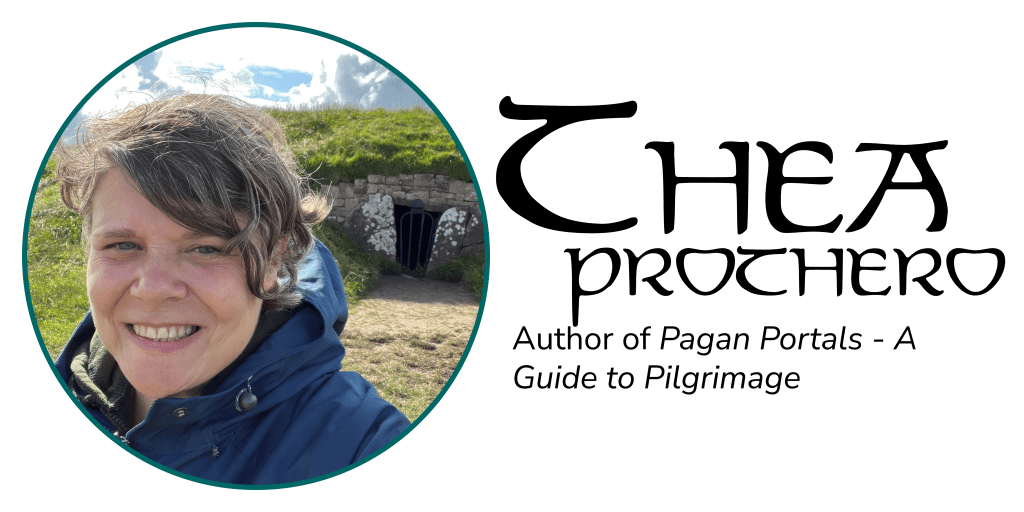
Thea is a Heathen and a pilgrim. She likes to think of herself as a Nemophilist, which means a ‘haunter of woods’. She spends most of her free time walking in the wildest remotest lands, places that still make the gods tremble, and she loves the challenge of finding connection through nature to the divine. She writes prolifically, read equally, has a passion for learning, taking photos, grow things, and spend time with her family. she works in education and lives in the south of the UK.
For more details: https://www.collectiveinkbooks.com/moon-books/authors/thea-prothero
 The Pagan Collective
Leave a comment