

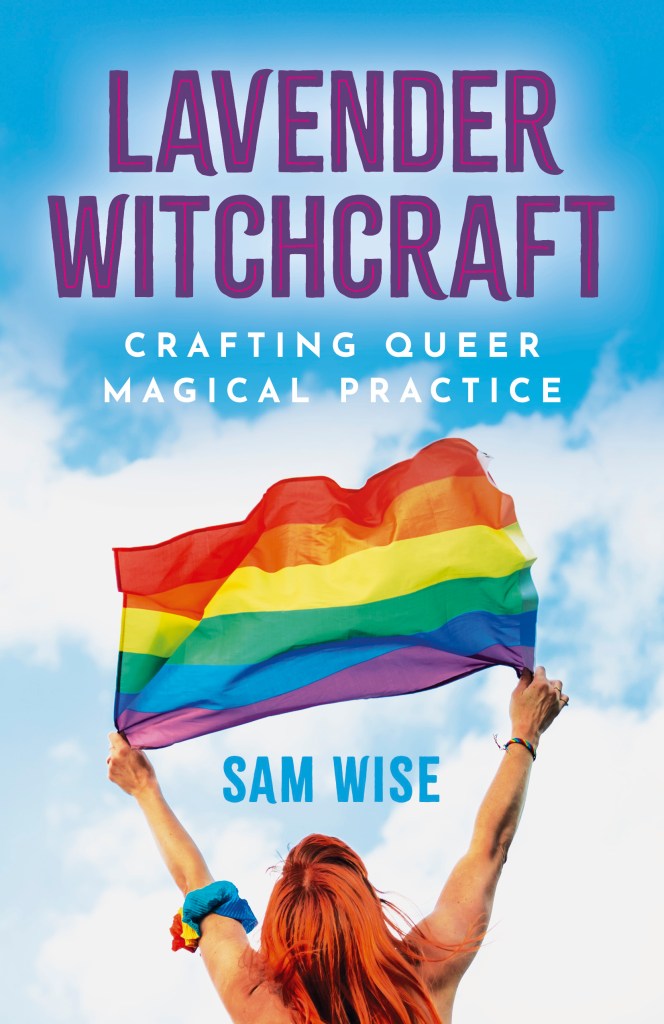
Extract from Lavender Witchcraft, by Sam Wise

Imbolc is the first Gaelic holiday of the year. At Imbolc, it is still winter, but we can see the first signs of spring beginning to appear. The days are getting lighter, and we know spring is just around the corner. In agrarian cultures, this is the time of year when ewes (female sheep) start producing milk.
Historically, Imbolc was observed by lighting candles to celebrate the increased sunlight as winter came to an end. This is where an alternative name for the holiday, Candlemas (literally “candle mass”), comes from. Modern Imbolc celebrations still often include lots of candles and other types of lights.
Historically, this was also a time for ritual purification with blessed water or a sacred candle flame, which prepared the household and the fields for the coming planting season. Even today, rituals for this sabbat tend to be focused on purification and blessing.
This focus on purification at the beginning of February was also present in ancient Rome — the word “February” comes from the Latin februa, meaning “purification.” The Februa or Februalia was a Roman festival dedicated to ritual purification, especially purification with fire.
Because of this connection to fire, the Februalia was connected to the Roman hearth goddess, Vesta. We still see this focus on hearth and home in modern Imbolc celebrations. It’s a sabbat for homebodies, with a focus on sharing light and warmth with our loved ones.
In Celtic countries, Imbolc is associated with the goddess Bríg (also called Brigid, Brigit, or Brid). Bríg is one of a few pan-Celtic deities, and she was worshipped in some form by nearly every culture under the Celtic umbrella, both in the Isles and on the continent.
Bríg was so beloved that after the conversion to Christianity, many of her myths were incorporated into the figure of Saint Brigid of Kildare. Saint Brigid is still considered a saint by the Catholic Church, and her feast day falls on February 1 and incorporates many traditional Imbolc celebrations.
Bríg/Brigid is the goddess/patron saint of foster mothers, and this aspect of her is emphasised at Imbolc. This side of Bríg is especially relevant for queer people, who may find ourselves raising or caring for children we did not birth ourselves. One of Bríg’s lessons is that parenthood doesn’t have to live up to our culture’s stereotypes to be valid.
This goddess and saint is associated with both fire and water, the two means of purification at Imbolc. In Gaelic cultures, families would invite her into the home and ask her blessing on the household. Many modern witches and pagans still honour Bríg on Imbolc.
The energy of Imbolc is very gentle and uplifting, with themes of nurturing, caregiving, bringing light into the darkness, and hope for spring. This is a day to spend cosied up with the people you love, showing them how much they mean to you. It is also a day to check in with yourself and make sure your own physical and emotional needs are being taken care of.
Sacred space for Imbolc celebrations usually features lots of candles. Gold or yellow candles are especially appropriate, as they represent the returning sun. You might also include traditional symbols like the Brigid’s cross or sun cross, a cross or “X” shape woven from straw with a diamond shape where the arms of the cross meet. The colours commonly associated with Imbolc are white, red, yellow, and green.

For more details: https://www.collectiveinkbooks.com/moon-books/authors/sam-wise
Hailing from the foothills of the Appalachian mountains, Sam Wise (she/they) is a Reclaiming witch and eclectic pagan with years of experience combining magic, activism, and queer culture. Sam is a member of AIRA (the Ableism-Impacted Reclaiming Alliance), where she serves as the current representative to BIRCH (Reclaiming’s decision-making body). They are also a member of the Fellowship of Fire and Ice, where they are part of the ritual team. Sam has a passion for combining folk traditions with modern practices to create accessible, affirming magic.

 The Pagan Collective
Leave a comment