

An excerpt from Pantheon The Minoans
The Minoans were fond of making offerings to their deities in great abundance, as the archaeological remains indicate. So we take inspiration from them in our modern spiritual practice. Making an offering is a way to show your appreciation and gratitude for the divine in your life. It’s a way to demonstrate your devotion and affection. Offerings connect us with the Minoans and our ancient ancestors, who used this activity as a way to maintain and reinforce their relationships with the deities. Most of the time, we make offerings to one specific deity, or perhaps a small group of them. But it’s also possible to make offerings to the entire Minoan pantheon in general. How you frame an offering, and which deity or deities you give it to, will depend on your intention for making the offering in the first place. Offerings are always included as part of our formal ritual structure, which you read about earlier in this chapter. But you can also make offerings outside of ritual, by themselves, as a stand-alone sacred act. That’s actually the most common way many of us make offerings, because it’s an easy way to interact with deity and make the all-important connection with the divine without taking too much time out of a busy schedule.
I discussed earlier what tangible ancient Minoan offerings looked like. Modern ones are often similar: food, drink, flowers, incense. Solid items like bread and fruit can go directly on the altar or on an offering stand that is itself placed on the altar. Modern footed cake plates are remarkably similar to Minoan offering stands, so they’re a popular choice. If you’re making the offering outside, you can set up a makeshift altar or simply leave the offering in an appropriate spot.
If you’re making a libation (a liquid offering), your best bet is to pour it into a container on the altar. Poured offerings appear to have been a major aspect of Minoan religion, judging from the hundreds of rhytons that have been found at archaeological sites and the images on Minoan seals. But just setting a cup of liquid on the altar isn’t necessarily the best choice. The act of pouring had meaning in Minoan religion, so we make the effort to pour liquid offerings instead of just setting them out. If you’re making a libation outside, you can pour it directly onto the ground. If the offering is intended for Underworld deities, you could even dig a hole in the ground to pour it into. This is reminiscent of the “moats” around the square pillars in the lower levels of Minoan temples, where liquid offerings may have been poured as a way to send them to the Underworld.
If you make an offering of incense, when you’re done, all that’s left is some ash to clean up. And if you pour some wine onto the ground outdoors, there’s nothing left afterwards. But in many other cases, there’s some food or drink or other perishable item like fresh flowers still on the altar. What should you do with those leftovers, and when?
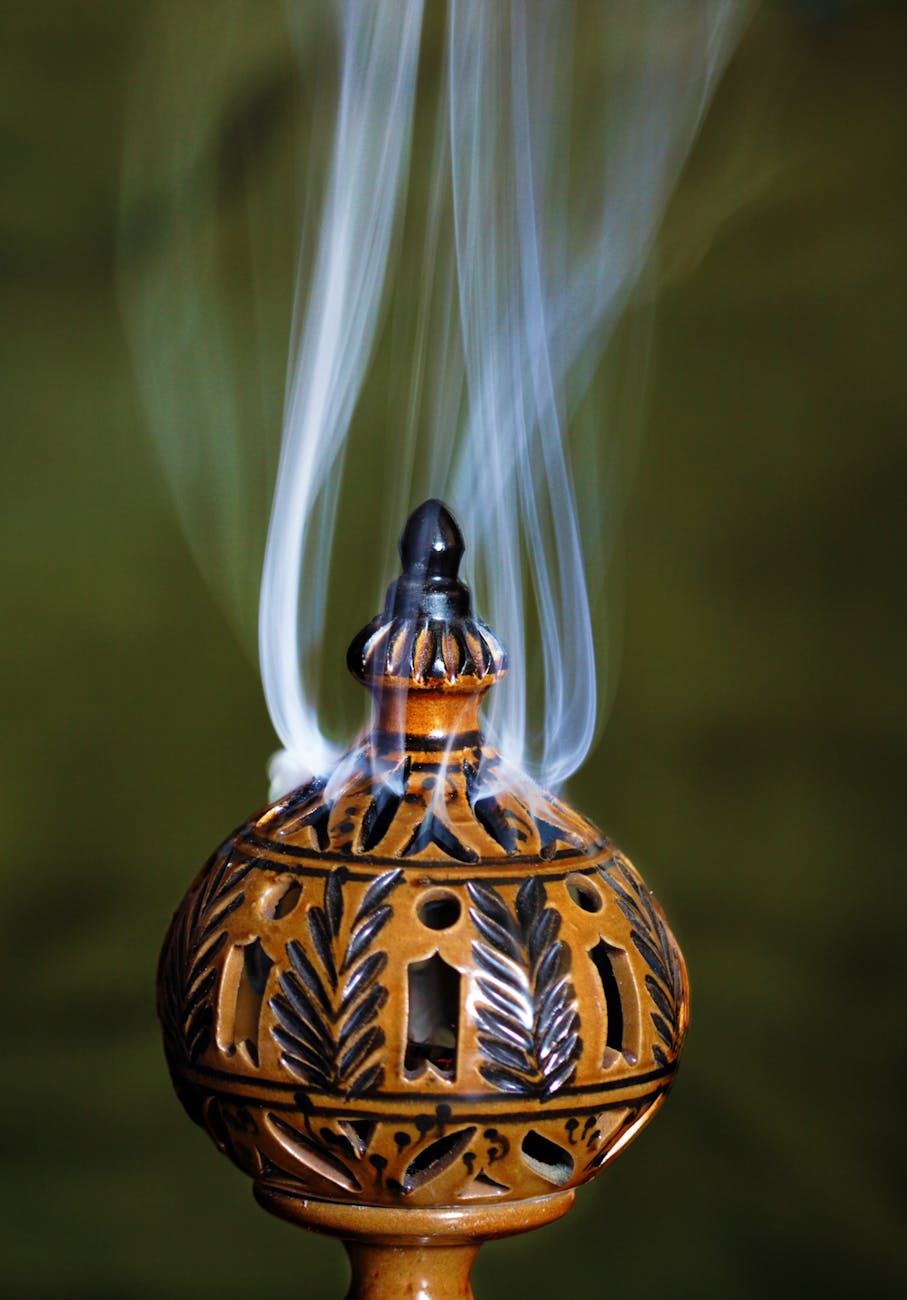
First, let me say, we don’t know for certain what the Minoans did with the remains of perishable offerings. We know they made these sorts of offerings, but we have to decide for ourselves how to deal with those remains in our modern spiritual practice. We’ve developed some basic traditions regarding how to deal with cleaning up offerings, especially perishable ones.
When we make the offering, we leave the item on the altar for however long feels right to us: a few hours, overnight, a set number of days, until the next full moon, or some other span of time. This choice should take into account the perishability of the item as well as any intuitive messages you might receive from the deity or deities you’ve given the offering to. Milk will spoil quickly, for instance, so leaving it out for long isn’t a good idea. But the worst that’s likely to happen to fresh flowers is they’ll wilt, so they can stay a while.
In general, food offerings should be removed from the altar before they spoil. If you have access to a compost pile, that’s the most respectful way to dispose of food offerings. Fresh flowers can be set outdoors to return to the earth. But food offerings should be disposed of in a way that protects wildlife from eating them, since many human foods can harm wild animals. If you don’t have access to a compost pile, food offering remains can be placed in the trash. But the compost is preferable if it’s available.
Liquid offerings poured outdoors disappear into the ground. But if you’ve poured an offering into a container, you’ll need to dispose of it afterwards. The preferred choice is always to pour it onto the ground outdoors, in a location where any insects it attracts won’t cause problems. If that’s not possible, you can pour it down a drain. But outdoors is always preferable.
Let me say here that we rarely offer large amounts of food or drink at any one time. The typical offering size is what you might call a generous single serving size: a thick slice of freshly-made bread, a full cup of wine, a perfect piece of fruit. If you’re dedicating an entire meal to sacred purposes, such as a dining rite to honor the ancestors, your offering should be a small portion of the food served on its own plate specifically for the ancestors and/or the deities. The rest of the meal is for the humans.

For more details: https://www.collectiveinkbooks.com/moon-books/authors/laura-perry
Laura Perry is the founder and Temple Mom of Ariadne’s Tribe, a worldwide inclusive Minoan spiritual tradition. In this role, she also leans on her experience as a Wiccan priestess, a Reiki Master, an artist, and a longtime herbalist and fiber artist. She has been writing all her life, but her first book was published in 2001. She writes pagan and magical-themed fiction and non-fiction and has also created a Minoan Tarot deck and coloring book. Her articles have appeared in The Magical Times, Indie Shaman, SageWoman and Pagan Dawn magazines, among others. When she’s not busy writing, painting, or leading rituals, you can probably find her digging in the garden or giving a living history demonstration at a local historic site.
Website: https://www.lauraperryauthor.com/


 The Pagan Collective
Leave a comment