
Where you are in the world will greatly affect the birds you see around the time of Imbolc in early February, or Lammas/Lúnasa if you’re in the Southern Hemisphere. In Yorkshire, where I live, there’s a mixture of birds that stay all year round and some winter migrants that head here from cooler climes.
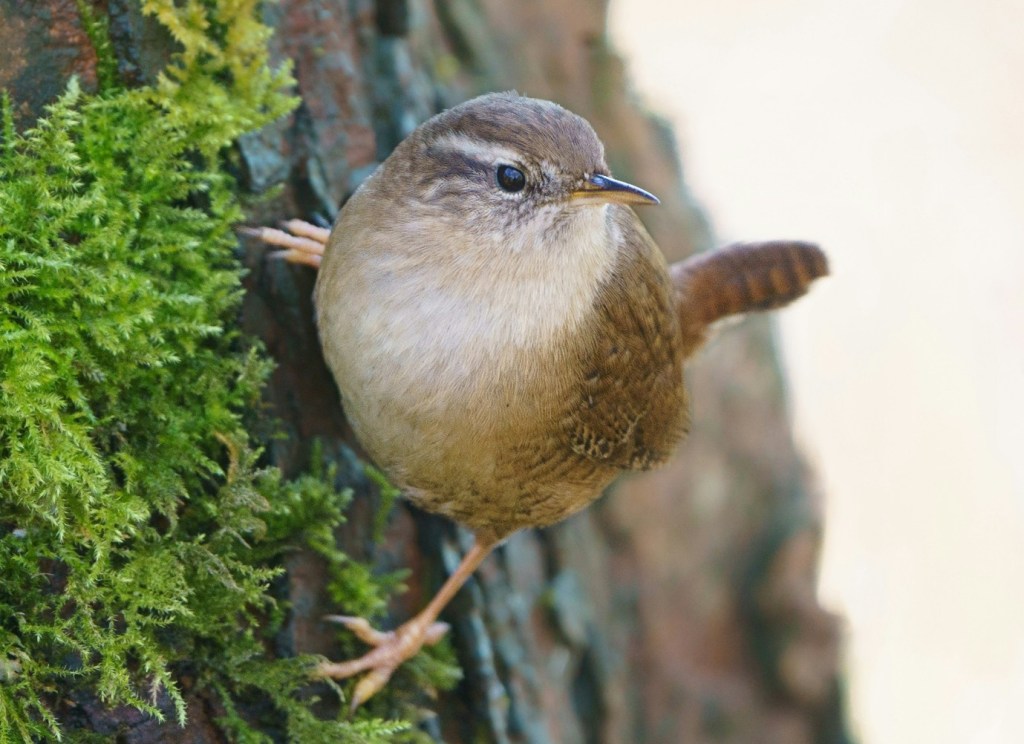
I was lucky enough to be out and about in the rural countryside recently and was treated to the sight of several wrens tacking across the road from hedgerow to hedgerow, artfully dodging cars. These tiny birds are perfect symbols of not judging something or someone by their size!
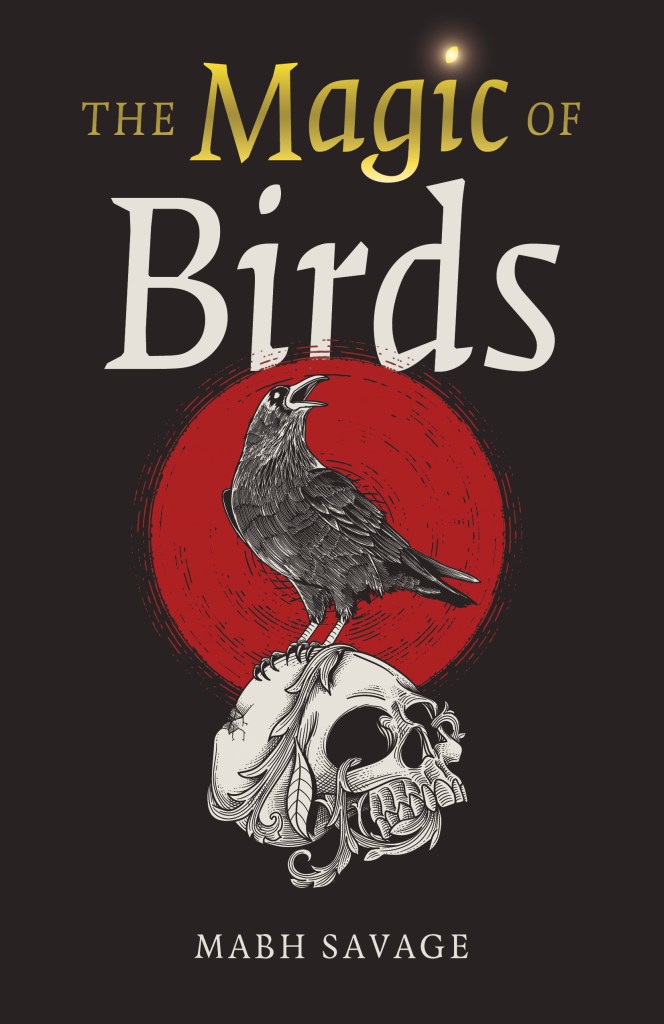
From The Magic of Birds:
“I’m always astonished by the sheer volume of the wren’s voice. If one happens to be in the birch tree when I step into my back garden, the sharp scolding I receive is completely at odds with the bird’s tiny size. Even the cats look concerned when the wren starts on them. The wren is a symbol that we are all capable of great things, even those that may seem impossible to others. This reminds us not to let others put us down, or to listen to nay-sayers. If you want to do something, just go do it.”
So, if you’ve been waiting for the inspiration to go for a new opportunity in 2026, seeing or hearing a wren could be your sign this Imbolc!
Crows are another common sight at any time of the year, including early February. You may see crows calling and bowing to each other from rooftops and treetops as they go into courtship mode, or existing pairs carrying sticks that seem way too big in their powerful beaks.
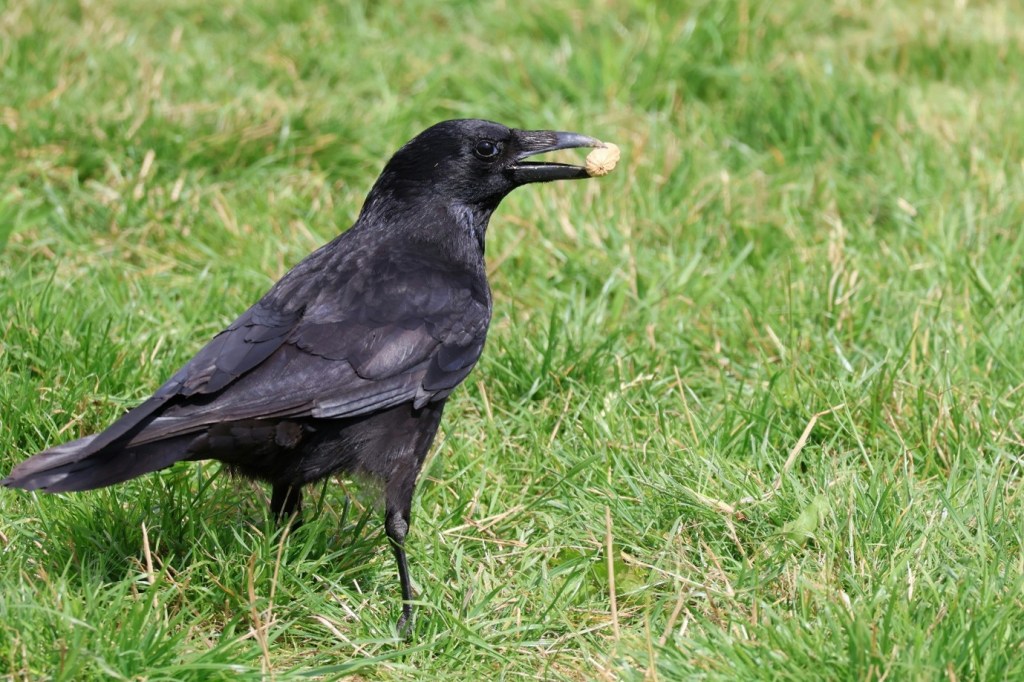
Crows mate for life, so if you’re celebrating Valentine’s Day this February, the crow can be an unlikely symbol of lifelong romance!
Crows gather in pairs and nurture small family groups, while rooks, their slightly larger, grey-beaked cousins, congregate in huge colonies known as rookeries. If you glance up at tall trees and hear croaking, raucous calls and see numerous, unwieldy-looking nests, you could be in the presence of a rookery.
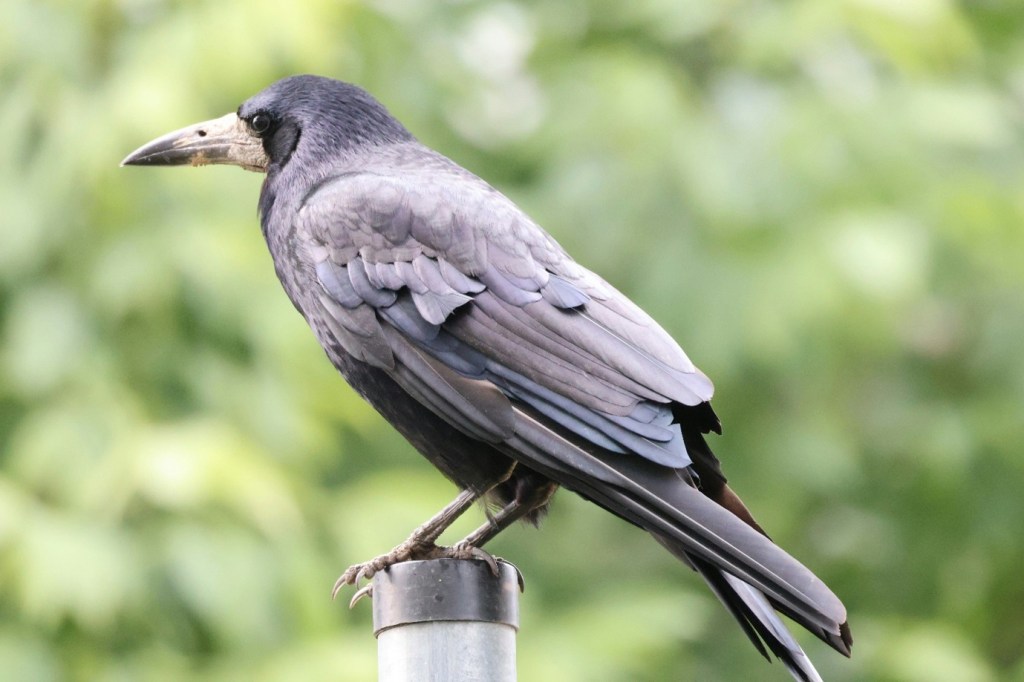
Rooks can represent community, togetherness, and toughness, and are associated with An Mórrígan (often anglicised to The Morrigan) and Badb, as are other black corvids.
Pigeons are another group of birds present all year. You can see them wobbling precariously on thin branches that seem too weak to take the weight of these bulky-looking birds. However, like most birds, pigeons are a lot lighter than they look.
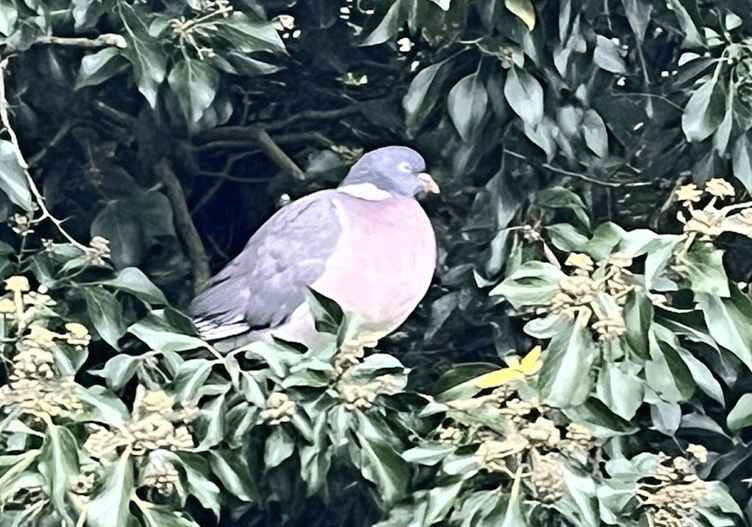
Around here, we have large, grey and purple wood pigeons, and grey collared doves. They both visit regularly, clearing out the bird feeders, and around Imbolc, they start to nest noisily at the top of the garden in the bird cherry trees. Pigeons can be omens of both good and bad luck, so at this time of new beginnings and growth, where you may be setting new goals, remember to keep an open mind and look at things from all sides.
A final magical bird for Imbolc is the magpie. When researching The Magic of Birds, I was so surprised by how many people cite magpies as their favourite bird. Although they have a bad reputation as cullers of baby birds and thieves, they’re very social, very intelligent birds with many fascinating behaviours.
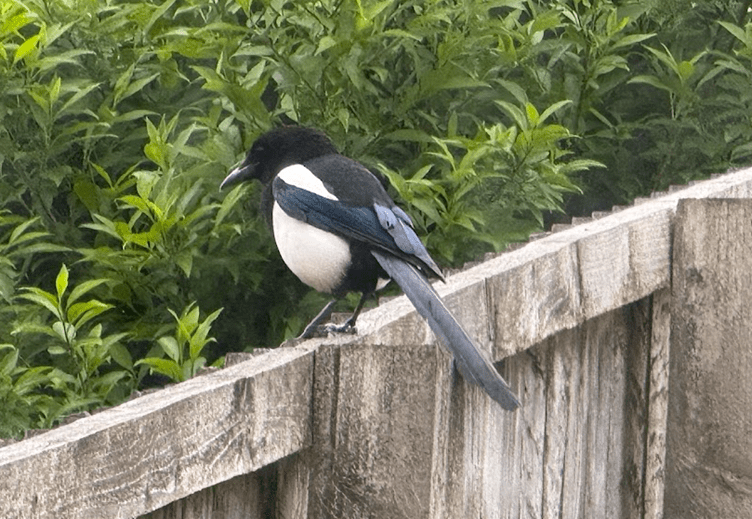
Their cheeky demeanour and bobbing movements have clearly won them many fans. They’re also associated with predicting the future and fortunes, both good and bad, so remember to salute your local magpies while you’re planning for the year ahead.
Next time you’re out and about, pause and have a look around. Listen for bird calls or song, and take a note of which feathered friends are your nearest neighbours. There may be more magic nearby than you realised.
For more details: https://www.collectiveinkbooks.com/moon-books/authors/mabh-savage
Mabh Savage is a Yorkshire Witch, Pagan author, and musician with a particular interest in Irish spirituality, and folklore from all across the U.K. and Ireland. She’s also a member of the global Covenant of Hekate and has assisted in some fascinating collaborative projects such as working with members all over the world to create a song for Hekate.
Mabh is the secretary of the Pagan Federation Children and Families Team, a group that aims to make life easier for Pagan families in England and Wales. She’s also the current editor of Aether, the magazine for Pagan families.
She’s been a member of the UK Green Party for many years, and believes firmly that it’s possible to reverse the damage being done to our planet with the right focus and action now.
Wren photo by Amee Fairbank-Brown on Unsplash
Crow photo by Andrey Larionov on Unsplash
Rook photo by Andrey Larionov on Unsplash
Pigeon photo copyright Mabh Savage, 2024, all rights reserved.
Magpie photo copyright Mabh Savage, 2025, all rights reserved.
 The Pagan Collective
Leave a comment