

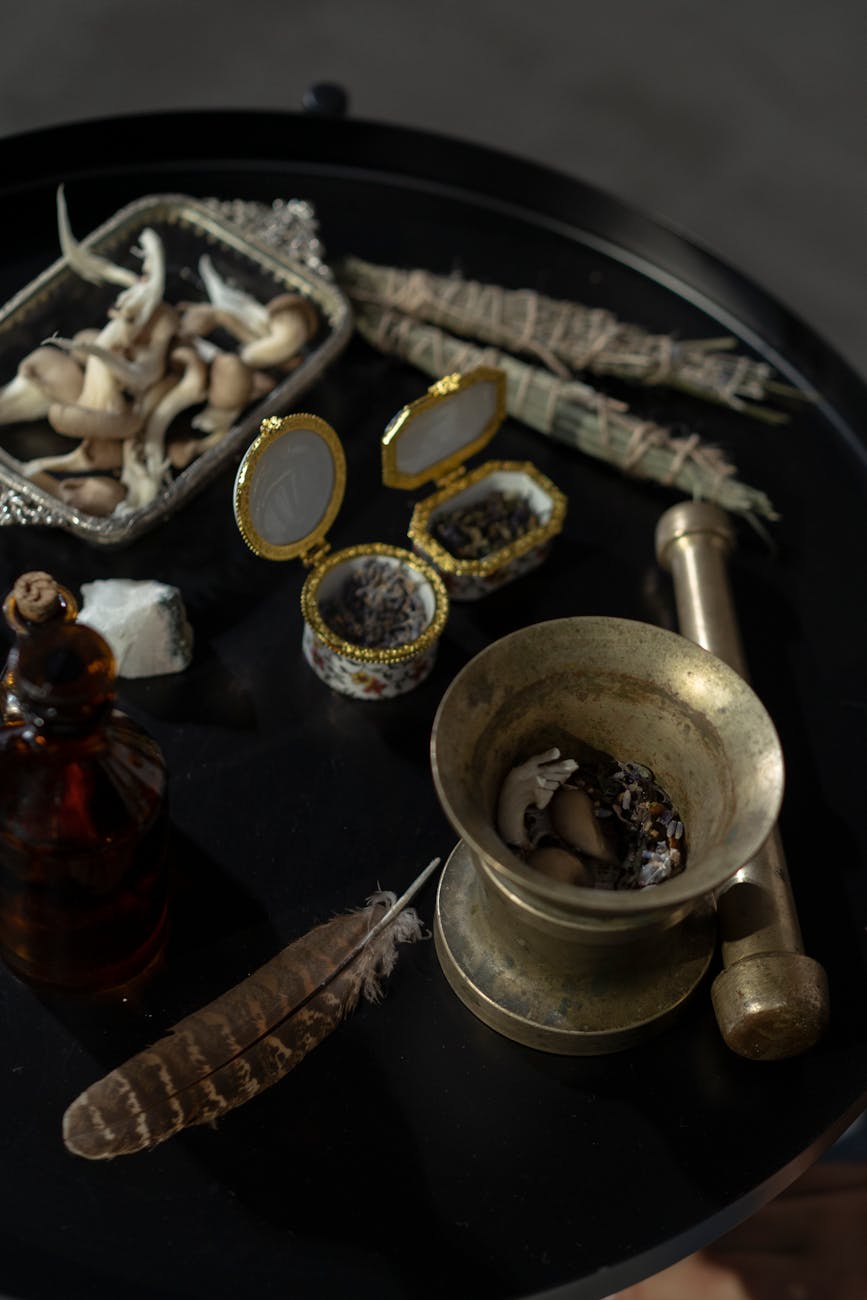
We live in a culture of commercialized spirituality. Social media and its comparison games, profit-oriented Internet algorithms, and celebrity “spiritual leaders” all contribute to the idea that our spiritual practice must look a certain way. This is especially true of witchcraft, which has become the center of controversial Internet subcultures like WitchTok. One could be forgiven for thinking that being a witch means being willing to spend huge amounts of money on crystals and elaborate altar setups.
The good news is that this is not true. Modern witchcraft grew out of folk magic practices that were very much based on people using what they had on hand. Some of the most powerful magic can be done with nothing more than words, gestures, and will.
Below are a few suggestions to help you make the most of your magical practice, even on a tight budget.
1. Use what you already have.
We’ve all done it. We click “add to cart” without checking our cupboards to see if we already have what we need. Or we decide to buy an expensive item so we can perfectly follow a spell from a book, without thinking about whether we have something on hand that would work as a substitute. Or we pay a hefty price for something from a metaphysical shop or online retailer without considering whether we could get it for much less at a grocery store.
For the record, I think it’s wonderful to support small, witch-owned businesses if you can afford it, but this isn’t always an option for witches on a very tight budget.
You might be surprised by how much money you can save on ritual supplies by simply asking yourself if you already own something that might work. Make this a part of your ritual planning process. Once you choose your intention, look at what you already have available that could support that intention.
Once you get into the habit, it becomes natural to build rituals based on what you have at home. A lot of my spells use spices from my kitchen pantry. My altar to the goddess Vesta includes a hand-me-down cast-iron pan as an offering vessel. I’ve cast successful spells with scented candles from the dollar store. You get the idea.
2. Forage for ritual materials.
The word “foraging” can sometimes be intimidating. It might bring up images of trekking through the bush, hunting for exotic materials — but foraging doesn’t have to be intense, or even particularly outdoorsy. If you’ve ever picked a dandelion from a crack in the pavement, this is also foraging.
Foraging for ritual materials not only saves money, but it also allows us to create a deeper connection with the items we use in our practice. I feel a much deeper connection to the roses I picked myself from the bush outside my building than to a plastic bag of dried roses I ordered online. This can even be an opportunity to get to know your local nature spirits and make offerings to them, if that is part of your practice.
Witches can forage for more than just plants. Many folk magic traditions use dirt from various locations, such as a crossroad or a graveyard, in rituals. Collecting this dirt is another example of foraging for ritual items.
Two warnings about foraging before you head out to the local public park with a pair of shears and a basket: first, make sure you are practicing proper foraging safety and ethics. The last thing anyone wants is to poison their covenmates with misidentified plants! Second, make sure you are following your local laws regarding foraging on public property, whatever those laws may be.
3. Invest in items that have multiple uses.
When we do have money to spend on our practice, we can make the most out of it by purchasing items we’ll be able to use more than once.
I save money in my practice by reusing the same sabbat decorations each year. I’ve made it a tradition to add one or two new items (many of which are foraged or were gifts) to my Yule display each December, so that over the years I can build a collection that’s deeply meaningful. In our modern, commodity-driven society, we sometimes forget that it’s normal to reuse things.
This may be controversial, but some witches also choose to use items for both magical and mundane uses in order to get their money’s worth. I use the same dishes for ancestor offerings that I use to serve food to guests in my home. My coffee table doubles as a spellwork altar. As previously mentioned, many of the spices I use in cooking also find their way into my ritual incense and oil blends. When you live in a small space and have a tight budget, you learn to make the most of what you have.
Witchcraft doesn’t have to be expensive. When we let go of the idea that we need certain tools or materials to work magic, we are free to create a practice that is more powerfully authentic to us.

For more details: https://www.collectiveinkbooks.com/moon-books/authors/sam-wise
Hailing from the foothills of the Appalachian mountains, Sam Wise (she/they) is a Reclaiming witch and eclectic pagan with years of experience combining magic, activism, and queer culture. Sam is a member of AIRA (the Ableism-Impacted Reclaiming Alliance), where she serves as the current representative to BIRCH (Reclaiming’s decision-making body). They are also a member of the Fellowship of Fire and Ice, where they are part of the ritual team. Sam has a passion for combining folk traditions with modern practices to create accessible, affirming magic.


 The Pagan Collective
Leave a comment