

I believe very strongly that creating more inclusive, accessible pagan spaces is a group effort and requires top-down changes. It is not enough for individuals to be aware of their own unique needs. Those of us organizing rituals and classes need to be doing the work of eliminating barriers to access.
When we talk about access barriers, we’re talking about obstacles that prevent someone from fully participating in a given event or community. These can be physical barriers, like a lack of ramps and elevators making spaces inaccessible for wheelchair users, or they can be more abstract.
Access barriers are most often brought up in discussions around disability, but these barriers can come up in other areas as well. For example, as the cost of living continues to increase, more and more communities are being forced to address financial barriers to access.
I cannot speak for every pagan community. I cannot give you a universal fix that will make every community event accessible for everyone. What I can do is share what has worked for the communities I am a part of. The insights in this post are specifically based on my work with AIRA (the Ableism-Impacted Reclaiming Alliance) and the Fellowship of Fire & Ice.
Below are a few guidelines I find helpful when planning group rituals.
Know who is in the room
Remember that you are not planning a ritual for the entire world: you are planning a ritual for your community. For example, a sign language interpreter is a wonderful use of resources if we have deaf or hard-of-hearing people in our community, but if that isn’t a need our community has, those resources may be better utilised elsewhere.
Instead of trying to plan for every access need someone could theoretically have, think about the actual people in your community. What do they need to be able to participate fully in ritual?
Of course, there are times when we don’t know ahead of time who will be in the room, especially in public rituals. In these situations, we can follow general accessibility guidelines like those created by AIRA to accommodate a wide range of potential access needs.
Make it easy for people to express their needs
Marginalized people should not have to jump through hoops to ask for accommodation. Complicated or confusing processes for requesting help can be a barrier to access in and of themselves. As community organizers, we have a responsibility to create a clear, straightforward process for requesting accommodation.
We can start by making it clear who members of our community can go to for help with access needs. This person’s contact information should be included in advertising for a class or ritual, with a note that they can be contacted for help with accessibility.
It may also be helpful to create an official process for access requests, such as filling out a form or sending an email to a member of the ritual team. This process should be easy to navigate. Remember, the point is to encourage people to ask for help!
Prioritize function over aesthetics and vibes
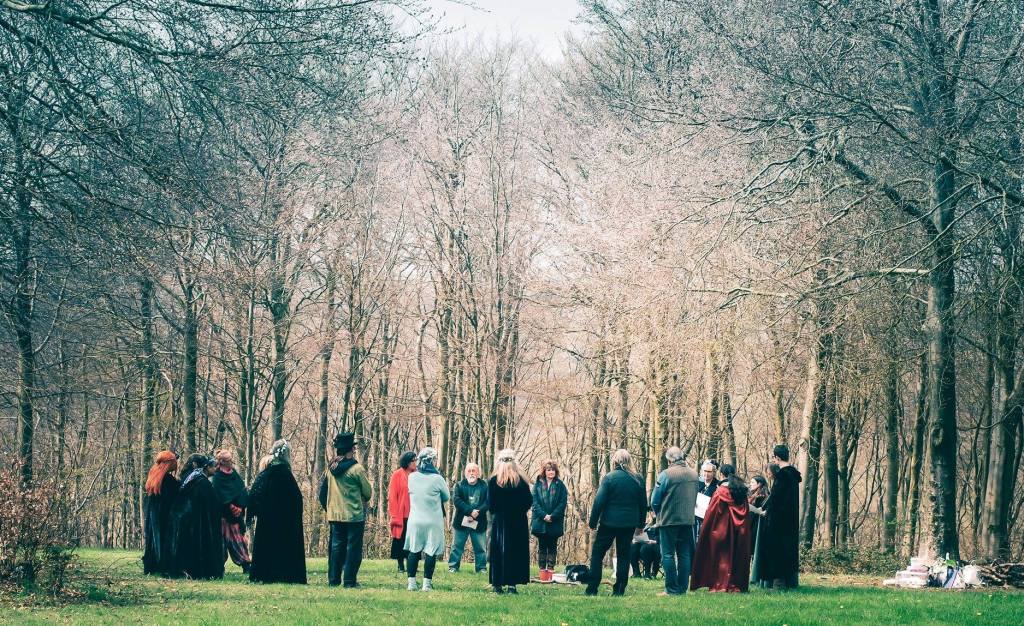
Sometimes, to make a ritual accessible, we need to let go of the vision we had in our heads. That might mean making a circle of folding chairs instead of expecting people to stand. It might mean not using incense, oil blends, and other strong scents. It might mean holding a ritual indoors instead of outside.
When we’re planning rituals, these access requirements can feel like limitations, especially if we’re trying to create a specific mood. But personally, I feel like I grow as a priestex when I have to get creative in my ritual crafting. The end result is always a ritual that has more depth and magic than what I had originally planned.
Schedule frequent breaks
There are many, many reasons someone may need to take a break from ritual. Some of us need to take medication at specific times or at specific intervals. Some of us need frequent bathroom breaks. Some of us can only sit or stand for so long before we need to lie down and rest. Whatever the reason, we all deserve to have our need for rest honored and respected.
As a general rule, any time I am planning a ritual that will go for an hour or longer, I plan for at least one break. If I know that the people present may need a break sooner than that, I adjust accordingly.
It is important to make sure our breaks are long enough to be truly restful. How long this is depends on the circumstances. A 10-minute “bio break” might be plenty of time if the bathrooms are just in the next room, but if it takes five minutes to walk there and five minutes to walk back, 10 minutes doesn’t actually allow enough time for people to use the facilities. Consider these factors when planning breaks.
No matter how frequently we schedule breaks, people will sometimes need to step away or take a rest outside of structured break times. We should make it clear at the beginning of the ritual that everyone is not only allowed, but encouraged to listen to their bodies and take breaks if needed.
Every community is different, and every community’s needs are different. Creating more accessible spaces is an ongoing process that requires cooperation and accountability.
For more details: https://www.collectiveinkbooks.com/moon-books/authors/sam-wise
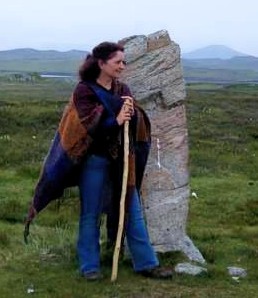
Hailing from the foothills of the Appalachian mountains, Sam Wise (she/they) is a Reclaiming witch and eclectic pagan with years of experience combining magic, activism, and queer culture. Sam is a member of AIRA (the Ableism-Impacted Reclaiming Alliance), where she serves as the current representative to BIRCH (Reclaiming’s decision-making body). They are also a member of the Fellowship of Fire and Ice, where they are part of the ritual team. Sam has a passion for combining folk traditions with modern practices to create accessible, affirming magic.

 The Pagan Collective
Leave a comment