

Divination, Dreaming and Glamourbreaking
These Pagan Portals are all current works in progress, serialised here on the Pagan Collective blog with each chapter being open for comment. In due course the entire script will be published as a Pagan Portal book.
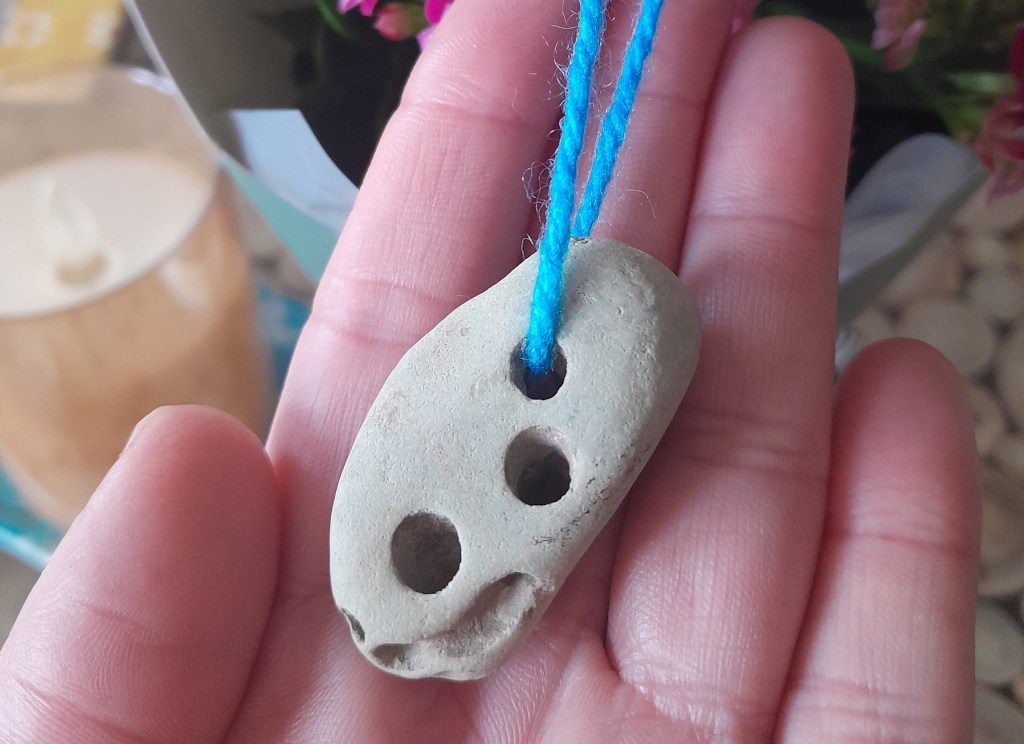
Traditionally, to peer through a hag stone was to glimpse what lay hidden – the Fair Folk on the hillsides, treasure glistening underground, the shape of events to come, etc. In this chapter, we move beyond the hag stone’s uses in daily magic into the realms of trance and vision. Again, the hag stone acts as a threshold tool, this time for divination, dream travel, and glamour piercing. Whether you identify as a witch, warlock, shaman, or something else, these are all very useful skills to master.
Scrying Through Stone
As we have seen, the hag stone lends itself naturally to the form of divination known as scrying. Its hollow focuses the eye whilst blocking peripheral distraction. This narrowing of sight induces a trance-like state, quieting the rational mind through focus so that subtler perception can surface.
Water as Mirror
Water amplifies scrying. Fill a dark bowl with rainwater or seawater (tap water works if blessed, energetically cleansed, or moon-charged). Float your hag stone so that its hole rests on the surface. Place a candle behind the bowl so that the flame reflects through the stone’s aperture onto the water.
Gaze softly at this arrangement. Don’t stare too hard; relax, and let your vision blur a bit. Watch the candlelight, water, and stone interact. You may see shapes forming; some of you might receive impressions, feelings, or a sense of sudden knowing. Flashes of imagery, story fragments, or simply clarity about a situation could arise.
This exercise works well during liminal times: dawn, dusk, and midnight. Moon phases can assist: a waxing moon supports questions of growth; a full moon encourages revelation; waning works to reveal hidden knowledge; a dark moon is best for shadow work and ancestral connections.
Pour the water onto the earth when you’re finished, or save it for cleansing your tools. The hag stone may feel warm or ‘charged’ afterwards. Let it rest in the moonlight following this.
Scrying the Land
Take your hag stone with you on walks. Pause wherever you feel called – at a particular tree, a fork in the path, a slender sluice of brook. Hold the stone to your eye and peer through.
What shifts when you do this? Do colours intensify, or light quality change, or do details previously missed now seem vivid? These small acts of focused seeing train our perception. Over time, your vision may shift even without the stone, because you’ve learned its way of seeing.
Fairy Glamour and Breaking Illusion
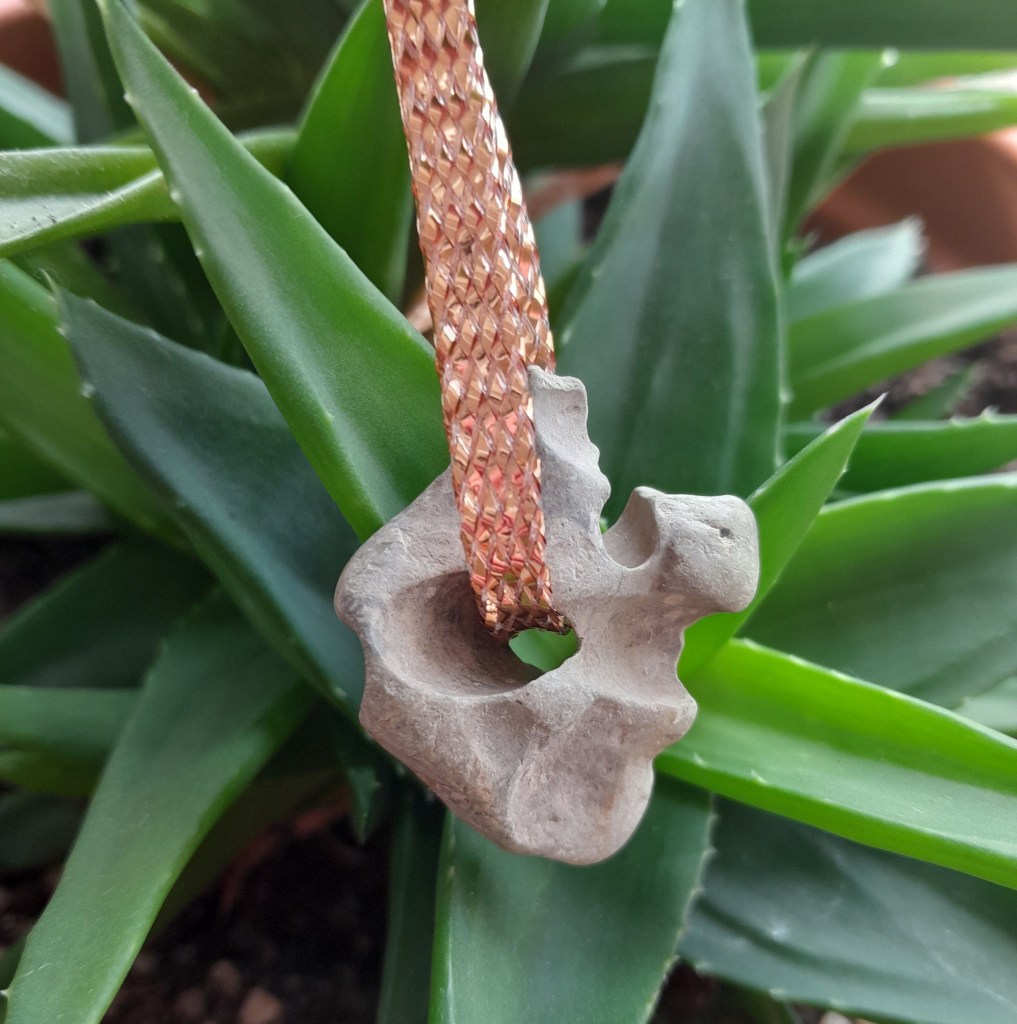
In Celtic lore, fairy glamour is an enchantment that makes things appear other than they are. A feast might really be a pile of autumn leaves; a palace, a hollow hill. Whether or not we believe in literal fairies, the art of glamour remains potent. We’re surrounded by illusions – the masks people wear, the stories we tell ourselves, the general cultural conditioning that shapes what we see. The hag stone assists us in cutting through all of these. In respect to other people and ourselves, it acts as a lie detector, propelling us to pierce through the mechanisms of personality/ego.
Seeing True
To use the hag stone as a glamour-breaker, first name what you wish to see clearly; for example:
- a relationship where something feels wrong, but you can’t identify what it is,
- a decision clouded by others’ expectations,
- patterns in your behaviour that you struggle to recognise,
- the true nature of a situation obscured by hope or fear.
Hold your hag stone, breathe intentionally, and name what you want to view. Lift the rock to your eye and look towards the person, place, or situation you’ve spoken about, whether they are physically present or held in your mind’s eye. Ask: “Show me what is true” or similar.
What arises might be uncomfortable. The hag stone is an unwavering teller of truths. But there is freedom in clear sight, even when difficult. The alternative – remaining under a spell of enchantment – ultimately costs us more.
You might like to keep a hag stone with you specifically for this purpose, using it only for breaking glamours. In that case, wrap it in black cloth when not in use, or store it with obsidian, a crystal associated with truth, clarity, and detachment.
The Evil Eye and the Mythic Eye
In some traditions, the hag stone protects against the evil eye – harmful intention directed through someone’s gaze. These stones deflect such energy, turning it back or letting it pass harmlessly through the hollow.
However, hag stones also represent the eye of wisdom; that is, the third eye, or inner eye – our seat of intuition and spiritual sight. This rock’s aperture mirrors our physical eyes; additionally, this invisible organ.
To activate the connection, rest a hag stone gently on or against your forehead between the brows. Breathe slowly, and imagine light flowing through the hollow into your third eye. Sit receptively for a few minutes, feeling into this spot and any energies as they shift. This practice can heighten intuition and help to clarify psychic perception.
Dream Sight and the Sleeping Eye
Dreams are the realm where the unconscious speaks, and spirit pays us a visit. But dreams can be elusive, often forgotten upon waking, or arrive as confused fragments without any clear meaning.
The hag stone, placed beneath a pillow or beside the bed, acts as an anchor for dream recall. Its hollow becomes a tether between sleeping and waking, ensuring that what you experience doesn’t slip away completely.
Creating Dream Amulets
A dream amulet is a hag stone dedicated to the work of sleep-seeing. Kept close to the dozing body, it acts as a gentle anchor between worlds, helping dream memory ‘catch’ in your consciousness on waking, encouraging clearer symbolic messages, and creating a sense of protection whilst the psyche roams.
Some find that a dream amulet brings dreams into sharper focus, making for more vivid colours, better coherence, or a stronger emotional thread running through dreams that can be followed again upon waking. Others notice less in terms of spectacle but more by way of usefulness – dreams come to act like an advisor, offering another perspective, a warning, or just some timely guidance. In either case, the hag stone’s hollow serves as a tether, so that what rises from the deep is less likely to vanish upon waking.
A dream amulet may be placed beneath the pillow, rested beside the bed, hung nearby, or worn during sleep if comfortable. Its power grows through repeated use; the more consistently you work with it, the more it becomes attuned to your particular dreaming mind. When you feel ready to make one, the ritual later on in this chapter will guide you through the process.
Dream Types and Hag Stone Work
Different intentions require different approaches.
If you are seeking prophetic dreams, then prepare your stone during a waxing moon. Hold it to your third eye stating your question clearly. Then, place it under your pillow. Before you sleep, gaze through the hole three times, repeating your question. Your subsequent dreams may carry direct insight or speak to you through symbol and metaphor.
For healing dreams, choose a hag stone that feels soothing. Cleanse it if required, then hold it to your heart. Speak aloud what needs healing – grief, trauma, confusion, or something else. Breathe this hurt into the stone, imagining it flowing out of you, through the rock’s hollow, then away. Ask the stone to further support your healing through dreams.
Then, put the pebble under your pillow. As a guide, I like to put stones and crystals just at the lower corner of my pillow, rather than right in the centre where they might disrupt rest. Before you doze, rest your hand on the stone, visualising golden or silver light flowing from it and surrounding you. Subsequent dreams may contain ancestors, guides, or symbolic journeys offering comfort. Be open to these and to anything else that might appear.
To try lucid dreaming, carry your hag stone during the day. Regularly look through it, asking: “Am I dreaming?” This habit then continues into sleep; it is a version of a popular lucid dreaming technique in which you look at your hands throughout the day, asking this same question; in another version, you ask the question every time you enter through a door frame. The hag stone acts as a portable door frame/hollow, allowing you to practice this latter technique, with a more likely end result.
When you dream of looking through the stone – and if you ask the question enough by day, you almost certainly will – this question then arises naturally. Recognition will thus trigger dream lucidity.
Dreams may also be used for any “creative problem solving and decision making” (Laberge, 2009). Simply speak your issue into the stone, and set it beneath your pillow as before. Make a note of the images, sounds, symbols, etc. that you receive within the dream-reply.
Spirit Vision Tools
The hag stone’s connection to spirit sight extends beyond dreams and doorframes. It can assist us in opening other doorways to guides, ancestors, and spirits of the land.
Meeting Spirit
Create a small altar with your hag stone as the centrepiece. Place a candle and offerings of water or flowers. Light the candle and sit comfortably.
Hold the rock to your eye, and gaze at the flame through it. As your vision softens, open yourself intentionally to presence. Don’t demand or command; just make an invitation. I would normally tend to invite beings of light who are aligned to my highest good and the highest good of all, but see what feels right to you. Words might be thought or spoken: “I am here. If any wish to meet me, be welcome”.
What arises might be subtle – warmth, an energy shift, an impression or a sense of presence. You could receive colours, symbols, or images. Some of you might feel a hand on your shoulder or hear whispered words. Whatever occurs, trust in your experience.
When the connection feels complete, thank any and all who came. Lower the hag stone, thanking it too; then, ground and centre back into your body, conducting a conscious grounding with earth energy if you feel so inclined. Extinguish the candle and record your experience.
Listening to the Land
Hag stones found in particular places carry that landscape’s signature. Return with the stone to the spot of its finding – or a similar one – and it automatically transmutes into a tool for deeper listening.
Find a spot where you can sit quietly. Hold your hag stone, close your eyes, and tune into the sounds, scents, and sensations around you. Then, open your eyes and look through the stone, slowly panning across the landscape. Do certain places glow, or shimmer? Do you feel drawn to particular trees, rocks, or other landscape features? Follow that feeling.
When you find the right place, sit with your hag stone pressed to your heart and listen. Not with ears alone but with full awareness. What does this place feel like? What can it remember? Is it offering anything to you, freely, or as an exchange?
This practice develops your relationship with the spirits of place and, over time, these connections strengthen and deepen. You will become recognised by the spirits of the land when you walk out amongst them. The humble hag stone facilitates this special bonding.
Ancestral Sight
For connecting with ancestors, choose a stone that feels weighty and patient. Hold it during meditation, asking your ancestors to make themselves known. Again, be open to what arises, whether that’s images, sensations, emotions, or sudden knowledge. I have also received commands, instructions, and even poems from ancestors, so do keep your awareness – and expectations – open.
For a more ritualistic practice, place the stone on an altar alongside any ancestor photographs, heirlooms, and offerings. The stone’s presence looks to honour sight across generations – our ancestors see us, at this juncture, and we may see them. The hollow in the stone represents the space between the living and the dead, and the threshold they cross to visit us, which we might also – in meditation, vision, journey, etc. – cross to meet them.
Ritual: Crafting a Hag Stone Pendant for Dream Recall
This ritual brings together the practices explored here into one single, ceremonial act of making.
A dream amulet is an easy object to fashion. The most important thing you’ll need is your intention.
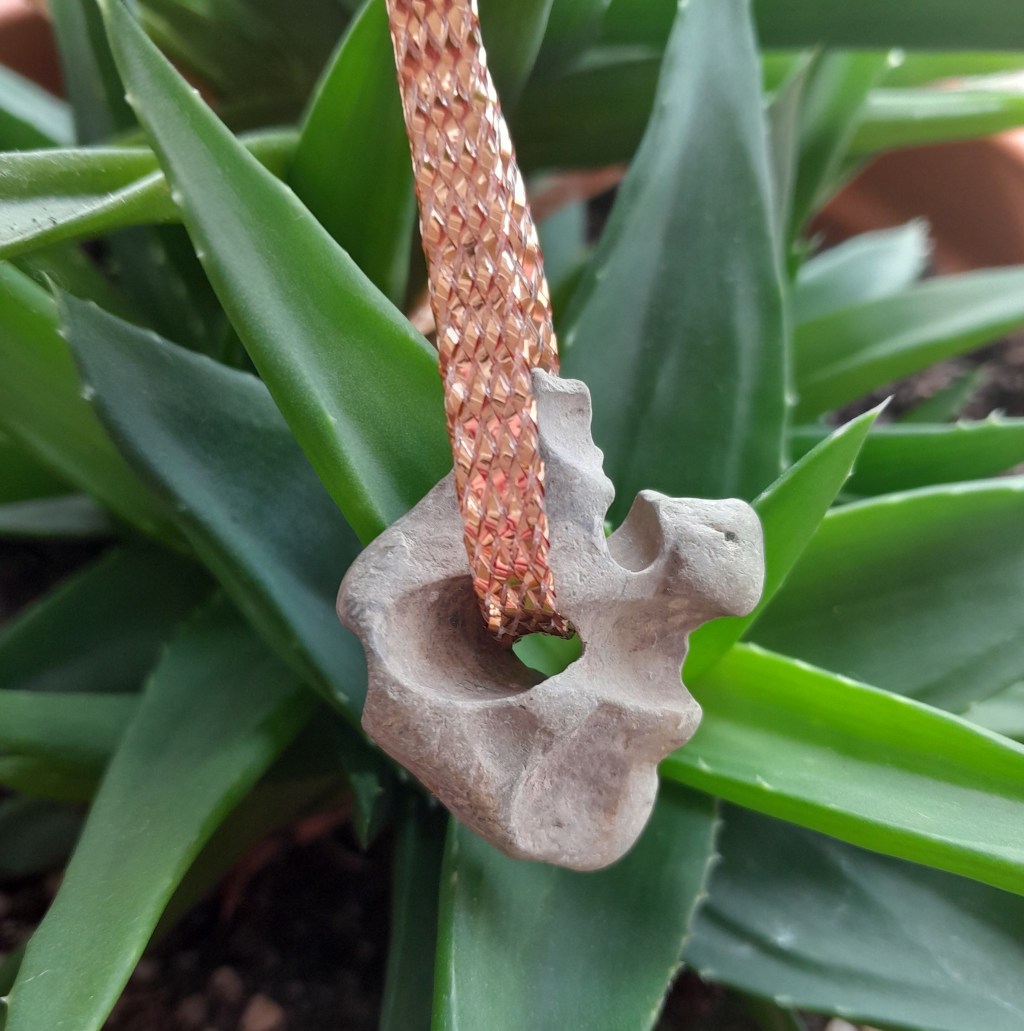
Beyond this, you’ll require a hag stone with a hole large enough to thread, and some cord or ribbon. Silver, deep blue, or purple are considered colours that evoke the concept of dreaming. You will also need:
- A white or silver candle
- Mugwort or lavender (dried) in a fire-proof dish, or some incense
- Something to light the herbs/incense
- A small dish of water (moonlight-infused or rainwater preferred)
- Your journal and pen
Timing:
Perform during a waxing or full moon, ideally at dusk or at night. Choose a time when you feel rested, relaxed, and receptive.
The Ritual:
Create a sacred space in whatever way feels right to you. Cast a circle, call the directions, invoke a deity, or simply light a candle and take three deep breaths in order to centre yourself.
Place your hag stone in the dish of water and let it sit for a short while. As it rests, begin to set your intention, in words or in writing, as seems fitting to you.
Remove the stone from the water, hold it to the candlelight, and look through the hollow. Notice how the flame appears through the stone’s aperture. Focus, rather than letting your vision soften; affirm again your intention, that this hag stone enables your vision from dreams to remain sharp, clear, and coherently recollected.
Dry the stone and place it before you. Take your cord, hold it in both hands, and breathe with measured, mindful awareness. With each breath, imagine intention flowing into your amulet – the desire to remember, to see more clearly, and to recall your dreams.
Take your cord. Before threading, breathe on it three times, imagining that each breath carries your intention into the fibres. Then, pass the cord reverently through the hag stone’s hollow. As you do so, speak aloud or silently:
“Threading stone, weaving dream;
Hold my vision, bridge the seam;
Between the worlds, this stone will keep
All that’s seen when I’m asleep.”
Or use your own words – sincerity matters more than making a neat form. I am a poet, but your words don’t necessarily need to rhyme; they just need to be spoken from the deepest, truest place within you.
Tie the cord so that the pendant rests naturally at your throat or heart. As you tie each knot, name what you’re binding in – remembrance, clarity, coherence, vision, understanding, etc. You might feel called to tie a specific knot at this point – three for the triple goddess, seven for the planets in our solar system, nine to represent completion. But, if you are not, that’s fine too. Don’t overthink it, just do as you feel, with trust in your own unconscious knowing.
Hold the finished item over a candle flame (high enough that it won’t burn), and speak:
“By fire blessed.”
Pass it through the incense smoke (if you’re using it), or burn the mugwort and lavender in their dish and pass through the resultant fumes. As an alternative, simply breathe on the item again:
“By air blessed.”
Sprinkle with water droplets:
“By water blessed.”
Touch to your forehead, throat, and heart:
“By earth blessed.”
Finally, breathe as if through the hag stone’s hollow three times, imagining that each breath seals your bond with the pendant. Place this now around your neck or beside your pillow. Extinguish the candle and close the space in your usual way.
That first night, place the hag stone under your pillow. Hold it briefly before you settle to sleep, setting the intention: “I will remember my dreams”. Keep a journal and pen beside the bed; a small torch or night light might also be practical. Upon waking, reach first for the pendant, then write in your journal, recording fragments or images before they fade.
Over time, dream recall will improve. You may also find that your dream quality changes; that they become more coherent, carrying clearer messages, and are often spiritually significant. I have found that particular of my guides also work to amplify this sort of dream work, if they are present at the time or ready to be called forward. Your pendant, also, may feel charged, warm, alive – as if it is carrying a message. These are signs that the magic is working and that you and the stone are learning each other’s language.
Expressing Thanks
Before you leave any work with your stone ally, hold it in your palm and say whatever simple words of thanks come to you.
Then, put the stone in your pocket, or on the sill, or back beneath the pillow. Magic might be held, focused, and amplified within a ritual, but it’s also in our every breath and action; in every “thought, word and deed” (Mascaró, 2015). The “beneficial outcomes” (Newman, Gordon and Mendes, 2021) of gratitude are too many to mention here, but I believe our magical work becomes more powerful if we embed it in our lives and practice it often. It further reinforces that our holey rock is not a ‘thing’ to be used, but a friend and ally, and this is important in hag stone work.
For more details: https://www.collectiveinkbooks.com/moon-books/authors/mab-jones

Mab Jones is a “unique talent” (The Times) who has read her work all over the UK, in the US, France, Ireland and Japan. She is the winner of many awards and accolades, including the John Tripp Spoken Poetry Audience Award, the Word Factory Neil Gaiman Short Story competition, the Wolverhampton Literature Festival Poetry Prize, the Aurora Poetry Prize, the Rabbit Heart Poetry Film Festival Grand Jury Prize, and the Geoff Stevens Memorial Poetry Prize, amongst others.
Mab has made and presented several BBC radio programmes with a poetic theme, and has also appeared on BBC television. She has written for the New York Times, was coordinator of International Dylan Thomas Day, and was, for a time, the social media manager for world famous writer Wilbur Smith. As a poet, she is the author of three published collections and three pamphlets. She additionally runs two small presses, and has been publishing since she was a teenager.
References:
Laberge, S. and LaBerge, S. (2009). Lucid Dreaming. ReadHowYouWant.com.
MascaróJ. (2015). The Dhammapada. London: Penguin Books.
Newman, D.B., Gordon, A.M. and Mendes, W.B. (2021). Comparing daily physiological and psychological benefits of gratitude and optimism using a digital platform. Emotion, 21(7), pp.1357–1365. doi:https://doi.org/10.1037/emo0001025.

 The Pagan Collective
Leave a comment