
My February piece was about how a balanced Wheel of the Year does not really apply to Scandinavia because winter is disproportionately long (and more so the further north you go). Today I will write about spring and the seasons as the Old Norse people perceived them.
I was born in the Netherlands on March 20th. My mother often called me “the Herald of Spring”. In childhood, I was taught in school that spring starts on March 21st and that autumn starts exactly half a year later, on September 21st. However, exactly 59 years after my birth, the spring equinox will fall on my actual birthday, March 20th.
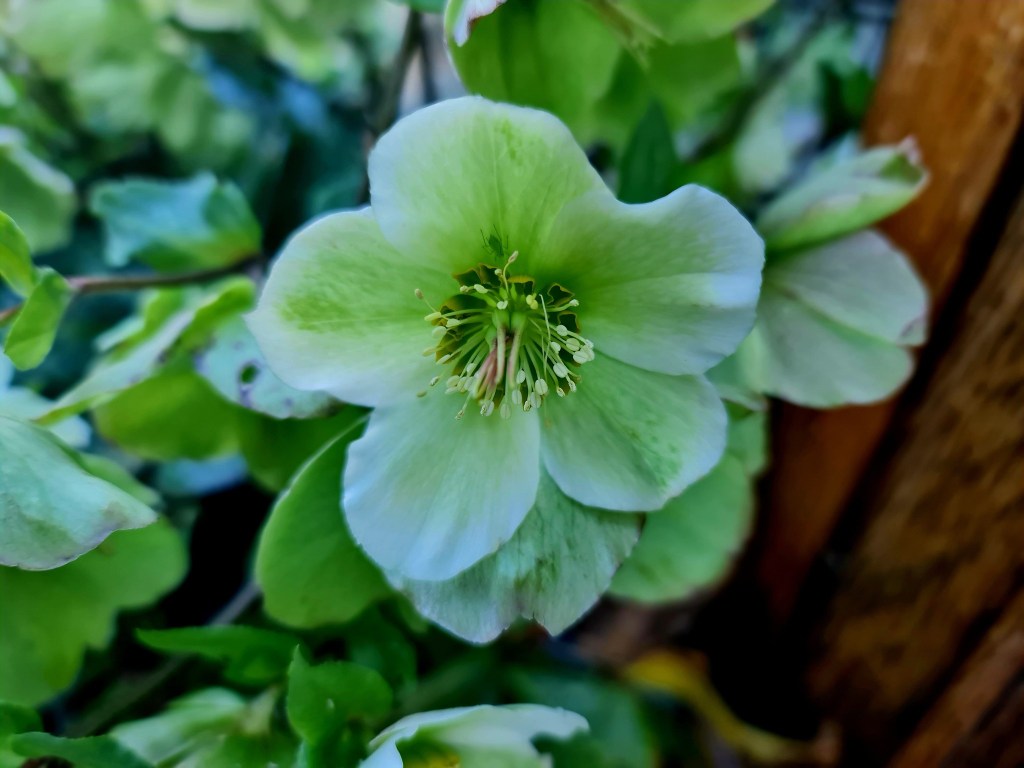
Western Europe has a very temperate climate due to the Gulf Stream delivering warm air. Just look at the same latitudes in the United States or Eastern Asia, and you will see the difference, but spring remains a bit of a movable feast over here. Some years we have enjoyed some gorgeous spring days in late February, but other years we make it to early April before it truly feels like spring has arrived. Right now we have snowdrops and primroses. In early March, we will have daffodils, and the magnolia tree in our front garden will flower in its full glory.
What is spring, scientifically speaking?
An equinox marks the exact moment when the Sun is directly overhead, meaning that the equator and the Earth’s rotational axis is tilted neither toward nor away from the Sun. In technical terms, this means that at the exact moment of the equinox, the Earth’s celestial equator, which is the equator’s imaginary projection into space, intersects with the centre of the Sun. In any given calendar year, this event happens twice, during the Spring Equinox and Autumn Equinox.
How did Old Norse people view the seasons?
Cycling back to the Viking Age, the era of the Old Norse people, our understanding is that they divided the year into two periods (or halves, if you like). The period of darkness (and long nights) was named “Skammdegí” (the Dark Days), and the year’s brightest period was called “Nóttleysa”, literally the “loosening of light” or “dissolving of light”. I have seen this word translated as “insomnia”, but that is not the literal meaning. However, I will admit that the midnight sun messes with your circadian rhythms (the cue of approaching darkness disappears), and sleep is often elusive during Scandinavian summer nights!
My mother reported that I almost never slept as a baby. Insomnia has been my faithful companion for nearly six decades. I have a tricky relationship with summer because my favourite seasons are autumn and winter. My sailor husband cannot begin to comprehend this!
I always block out January for what I call Hibernation: a period of deep solitude in our forest house in Sweden. This year (January 2026), there was a crazy amount of snow, and I literally dug myself a den in the snow. I also put on my polar bear suit and practiced shape-shifting. I went for long walks and even found myself running in the snow with our local herd of deer (who do not quite accept me as an antlered woman, because they sense my polar bear nature!)
Our time of birth (as well as the date and month) is of extreme importance in astrology, but in everyday life, we don’t often reflect on this (unless we are astrologers). How is the energy of a spring baby different from that of a winter baby or a summer baby? Our eldest son is a winter baby, and he started his life bundled up in layers of clothing and a padded pram suit. Our middle son was a Hallowe’en baby (so you can guess what he ended up wearing!) Our third son was a late March baby. Of course, all were born with unique personalities, but all three of them also have seasonal characteristics and preferences.
Taking a short break from the Viking era, I would like to suggest another way of working with spring. It involves asking ourselves about stories or myths which hold a strong (lifelong) resonance for us. I have always felt a strong connection to Persephone, who was the daughter of Demeter in classical Greek mythology. The most common version of her story is that Hades, the god of the Underworld, abducted her (one day, when she was picking flowers) and forced her to come live with him in the Underworld or Great Below. Because she eats six pomegranate seeds in the Underworld, she is forever changed by, and committed for life to, a life deep below the Earth.
Her Mother, Demeter, grieving madly for her daughter, stops plants from growing in the Great Above, which is the everyday world of sunlight, the living, growth and sap rising. Eventually, Demeter and Hades hammer out an agreement: Persephone is to spend half the year in the world of the living, and the other half of the year she will take her place as the Queen of the Dead in the Underworld. This division explains how our seasons came into being.
There are other versions of this famous myth and discuss on in a Substack essay from March 2024: https://open.substack.com/pub/imeldaalmqvist/p/persephone-lives?utm_campaign=post-expanded-share&utm_medium=web .
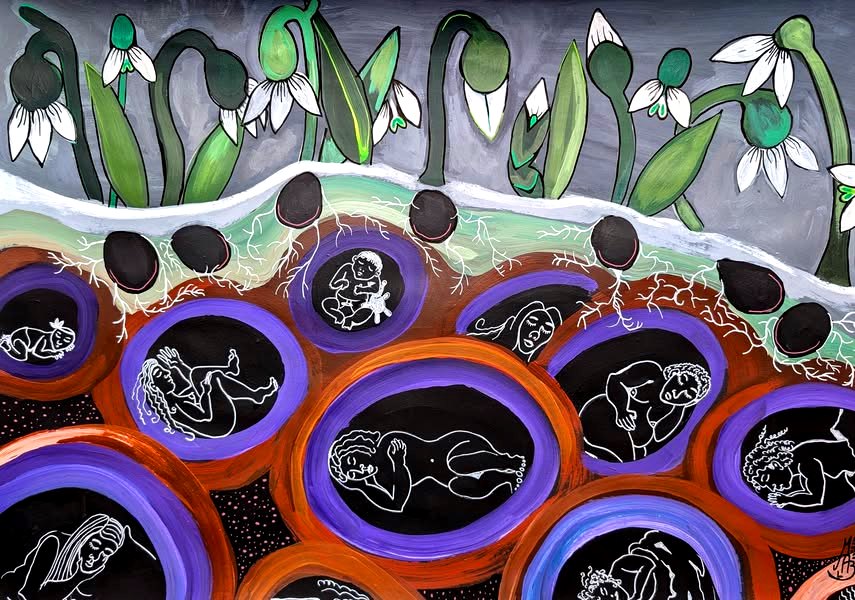
My art students and I have ceremonially re-enacted this myth and thus discovered that Persephone wanted to explore the mysteries of the Land of the Dead! She wanted to leave her mother and have sex with Hades. (There are many remarkable connections between Death, Sex and Ecstasy – but that material falls outside the scope of today’s blog). It seems obvious that most young women want to leave home, meet a life partner, make their own way in the world and perhaps start a family of their own. This is the natural order of things.
While we are on the topic of spring goddesses, some online sources claim that Ostara is a Norse spring goddess, but that is not quite right. She resided further south. She was a Germanic goddess, brought to our attention by the philologist Jacob Grimm, who cited evidence for her reconstruction. She has become ubiquitous today.
I will finish with some questions today:
- In which season were you born? Do you feel a strong connection to that season or not?
- Under which sun sign were you born (in astrology)? Does that hold meaning for you or not?
- Have you ever embarked on a quest to find out if there are any deities related to your day or general season of birth?
- What are your favourite flowers, plants or trees? Is there a seasonal dimension to those?
My husband loves daffodils (and fills our house with them) because they are his heralds of spring. However, when I was a teenager, my father (a professionally trained horticulturist) once asked me to describe my favourite garden. I did, and he said: “You have just described a graveyard!” Oops! That was Persephone speaking through me.
For more details: https://www.collectiveinkbooks.com/moon-books/authors/imelda-almqvist
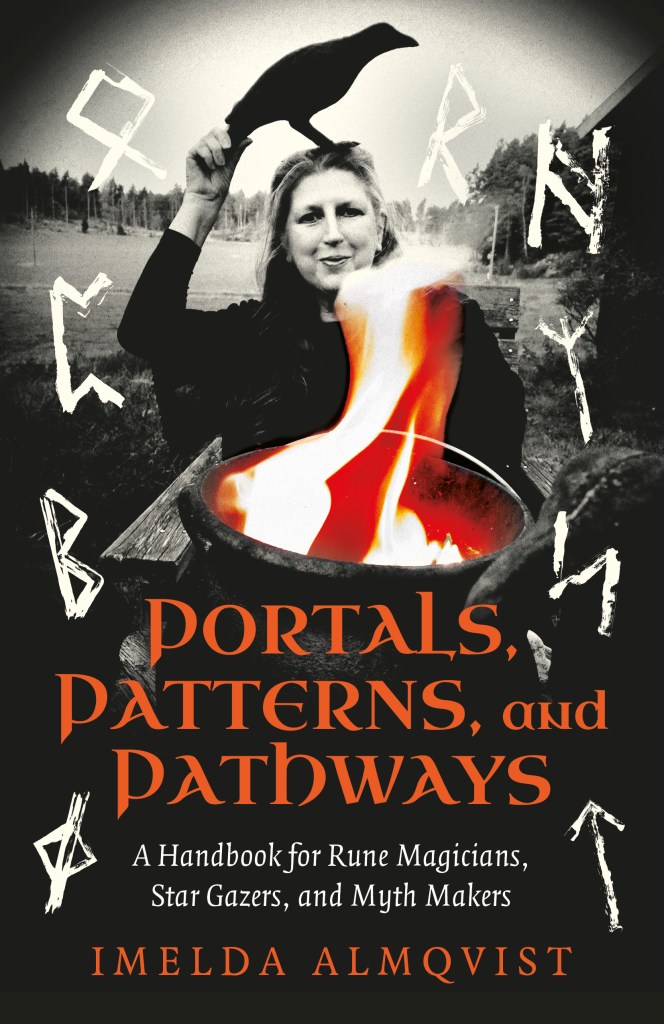
Imelda Almqvist is an international teacher of Sacred Art and Seidr/Old Norse Traditions (the ancestral wisdom teachings of Northern Europe). She has published three books: Natural Born Shamans: A Spiritual Toolkit for Life (Using shamanism creatively with young people of all ages) in 2016, Sacred Art: A Hollow Bone for Spirit (Where Art Meets Shamanism) in 2019 and Medicine of the Imagination – Dwelling in possibility (an impassioned plea for fearless imagination) in 2020. She has presented her work on both The Shift Network and Sounds True. She appears in a TV program, titled Ice Age Shaman, made for the Smithsonian Museum, in the series Mystic Britain, talking about Neolithic arctic deer shamanism. Her fourth book, about the pre-Christian spirituality of The Netherlands and Low Countries, has just gone into production. She has already started her fifth book: about the runes of the Futhark/Uthark. In response to the 2020 pandemic she has opened an on-line school, called Pregnant Hag Teachings, to make more of her classes available on-line.
Website: http://www.shaman-healer-painter.co.uk
 The Pagan Collective
Leave a comment