

We are small creatures, really. We might walk tall and speak loudly, but there is that in most of us that craves easily manageable spaces and smaller groups where we can foster familiarity and trust. We live in large groups, but we operate in smaller cliques. We move in circles – friendships, networks, family. And this is a natural part of the human condition, even in the biggest cities.
Living in a larger urban space can be daunting. Coming from a smaller city like Dublin to the likes of Shanghai or New York, I used to wonder how anyone could thrive, an ant in a large nest. Years ago, on a tour of New York with my husband, I got an answer.
Our tour guide was asked by someone, “How can anyone live in such a huge sprawling city?”
The guide laughed and shrugged. “I don’t live in the huge city of New York,” she replied, “I live in a neighbourhood. We all live in neighbourhoods.”
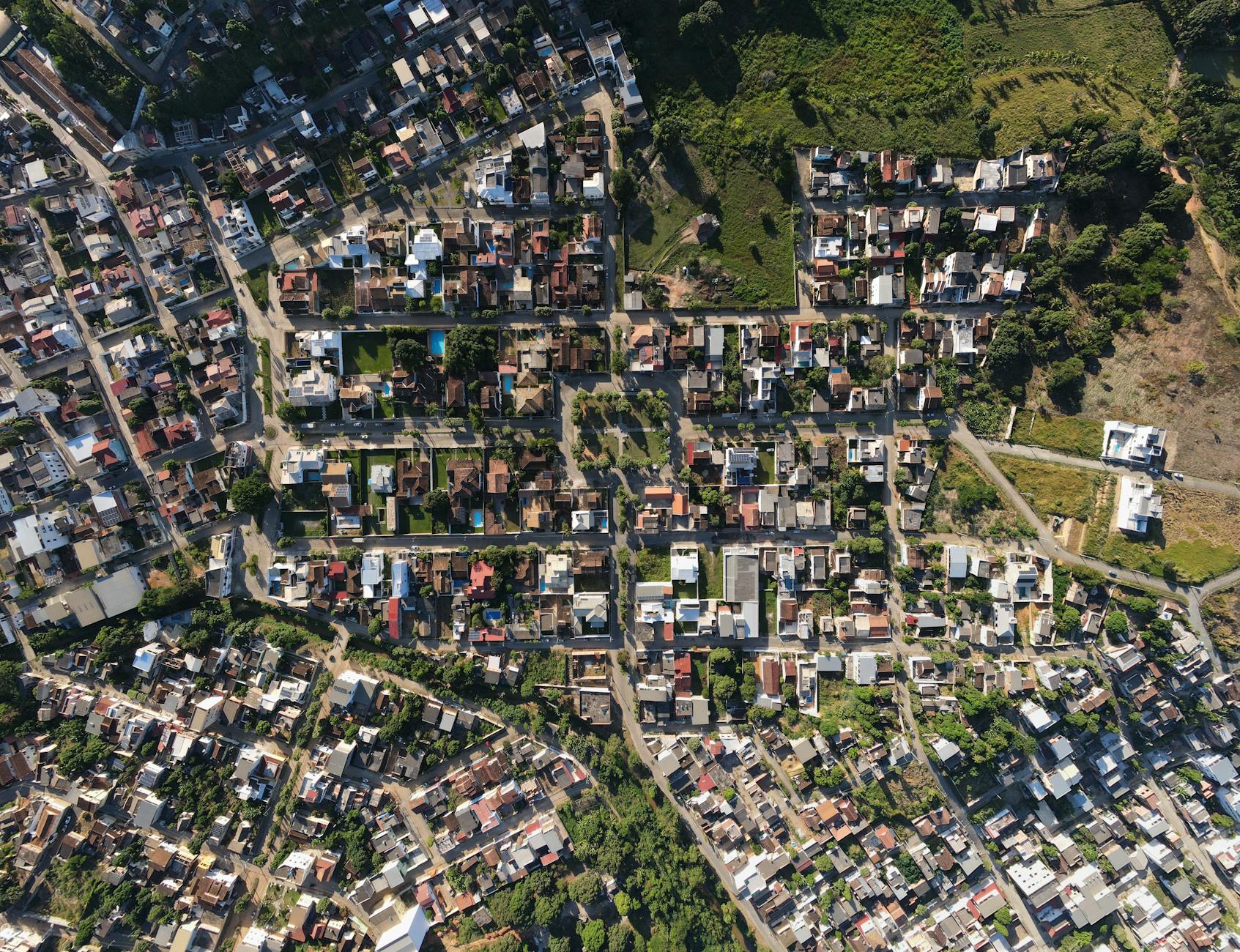
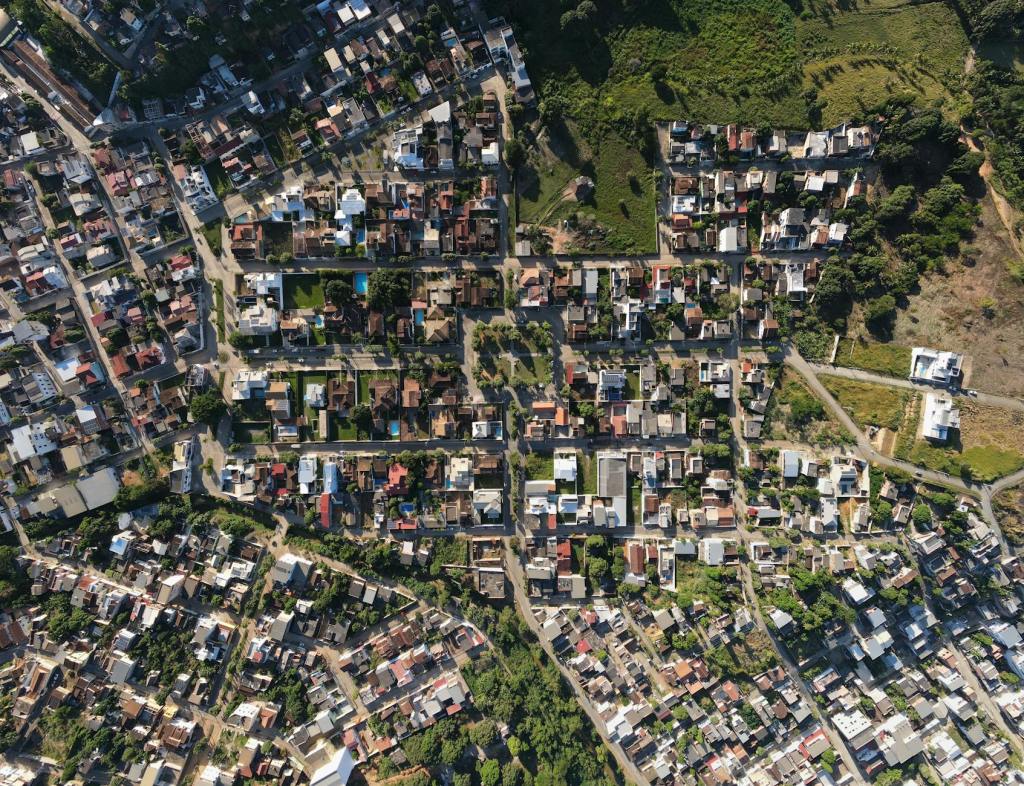
This, for me, summed it up. Whether you occupy space in a small village, a large town, or a giant metropolis is largely irrelevant. That larger territory is absolutely part of your identity, but you live in a small enclave within it. Your neighbourhood may be a street, a suburb or a postcode; it might be a strip between your home and work. It may be where you socialise, or where you grew up. But it is the space that offers you shelter, a sense of belonging.
In the teeth of sprawl, disconnection, and modern isolation, Urban Paganism carves out smaller communities, physically and spiritually. Connection is a sacred communion, a promise we make. People reach out to each other, to the energy around them, to the vibe, feel and mood of their community. Unchecked, energy runs through the streets like a river overflowing its banks. Untended, it can become dangerous – whirlpools and tidal waves, flash floods of resentments and fears.
As Urban Pagans, we have a duty to be a guardian to the city, to nurture it. This can take many forms, from helping the environment to participating in the local community, but it is nowhere so powerful as in the practice of “walking the boundaries.” This is the practice of seeking the natural outer limits of your area, finding touchstones along the way, and then regularly tending to and reinforcing this boundary.
This has its roots in several different practices. Like pilgrimages of old, it requires physical effort in the pursuit of spiritual gain. I could have walked the Camino Way ten times over if I added up all the time I have spent trudging around the boundaries of my own little kingdom, in good weather and bad.
Like the Ogham stones that were erected to announce the territory of a clan, we are creating a physical space that is under our guardianship. I don’t recommend painting your name on a wall; it gives the wrong impression to the neighbours, but you are nonetheless laying down a claim to sovereignty and belonging.
The act of treading the same path, in the same way, stopping at the same points, offering devotion or creating wards along the way, is a form of ritual in itself. It is, in fact, ritualised meditation, as you concentrate on renewing the invisible borders that enclose your locality. In another life, I am sure I had a lot of land and a large labyrinthian path to walk while meditating upon the deepest questions of existence, but in this life, I have pavement and a favourite tree, and a regular “walk around the block.”
Sometimes the boundaries are easy to spot – a river perhaps on one side and a park on the other, a village on a hill or a suburb bordered by main roads. In my own city, over 130 rivers and streams form natural boundaries through housing estates, through business developments, underground and overground.
Sometimes it is harder to feel those edges, and you must search for intuition as you walk. You might look at the history of your area to see where traditional lines were drawn. You may have to temper your work to match your physical abilities – better a few roads well-tended than an overambitious expanse largely neglected.
Respect that which came before – the old tree, the ancient wall, the wild space. Don’t fix rigid barriers in your mind; allow the city to show itself to you. When you recognise a touchstone, a fixed point that marks the edge of the boundary, acknowledge it. Offer it a token, look at its needs. If it is overgrown, in danger or in disrepair, then here is your first task. Do what you can to renew its power, bring it back to life.
Draw a map for yourself. It can be as out of scale and poorly defined as a child’s drawing; what matters is the intent. Make sure you know the extent of your duties, the points at which to stop and reflect. Ensure it is within your ability to walk it regularly, to offer it consistent and mindful care.
You are entering into a contract, protection and security in exchange for effort and devotion.
When your boundaries are established, you have a new task. You must get to know this place, this enclosure you have helped to establish. What is its energy? How does it sing? How does it reflect the people living within? What are its needs, you ask yourself…how do I maintain balance and peace within it?
An urban environment has many faces. You can travel from opulence to poverty in the space of a few streets. You can move from cheerful residential areas to bustling commerce or from terraces and cobblestones to sprawling Industrial warehouses. An area may be homogenous or mixed; it may be firmly rooted in one economic bracket or span several. All these things are important to understand and take into account.
As we walk the boundary, we ask ourselves what it is we hope to keep out, and what are we fostering within? As our ancestors built ramparts, ditches and palisades to keep out unwanted forces, we try to keep peace within and unrest without. More than anything, though, we are creating a space that fosters community. We use words like shelter, protect, include, and welcome. It’s not just lip service; we are supposed to carry that work into daily life.
But we start by reinforcing and strengthening the boundaries, step by step.
For more details: https://www.collectiveinkbooks.com/moon-books/authors/geraldine-moorkens-byrne
Geraldine Moorkens Byrne is a well-known poet and writer, as well as an educator in Irish Folk Magic Traditions and Ceremony writer; she was a founding editor of the Pagan Poetry Pages. She has facilitated workshops and creative writing groups. Her work has been published in a variety of media from print anthologies to Ezines, including Poems from a Lockdown, and her poem “Where Once Were Warriors “was the title-piece of Asia Geographic Tribes edition. Several poems have been performed as theatre in Ireland, the UK and USA. She was a prizewinner in the Inaugural John Creedon Listowel Writers Festival Competition. Her short story “A Stranger Among Friends,” was a winner in the Cunningham Short Story Competition. She is also the author of a popular series of mystery novels. Her collection of poetry “Dreams of Reality” is available now.
She was the fourth generation of Byrnes to run the famous Charles Byrne Music Shop, in Stephen Street Dublin Ireland. This was a landmark business in the city of Dublin and an integral part of Irish classical and traditional music for 150 years.

 The Pagan Collective
Leave a comment