

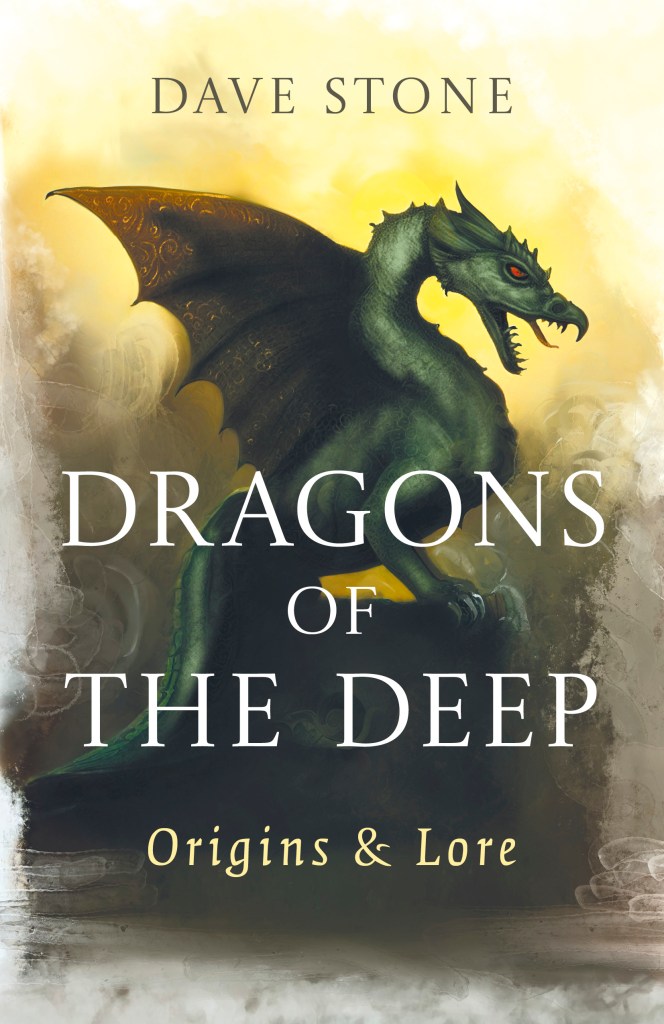
Given the ample evidence documented in my book, Dragons of the Deep, I thought it might be interesting to flesh out one of the threads mentioned there. There is a section of the book in which I document stories that tell of islands in the ocean where women priestesses held counsel. Often serpents and dragons are linked to this mythos (I cite a couple of examples here, but there are many more in the book). Although I make mention of the island-dwelling Gorgons in the text, another thread spiralled from their myth, which I didn’t cover in the book.
In Cornwall, Tregeseal Stone Circle is known as the Dancing Stone or Nine Maidens, Boscawen Un is also known as the Merry Maiden, and it shares its name with another in the region. East of Edinburgh, upon the heights of the ancient oppidum known as Trapain Law, is the peculiar Maiden Stone, associated with folkloric fertility rites. In fact, there are plenty of sites across the country in whose names, or the customs around them, feature maidens or a maiden. Another that comes to mind is Long Meg, who is accompanied by her daughters. There are also a number of maiden’s wells and kirk maidens in Scotland. From the Isle of Whithorn comes the peculiar legend of St Medan: a young girl of royal birth after whom a knight gives amorous pursuit. Refusing to succumb to his advances, Medan climbs up a tree, plucks out her eyes and casts them at the young man’s feet. From that very spot, the ground opens and fresh waters issue forth. Medan’s well is located on the rocky coast, where a circular rock pool is fed by a fresh water spring that flows down the rocks. It was reputed to have healing properties, especially as regards the eyes. If you were to clamber into a boat and head due west from that very beach, you’d not be long in reaching the shore of the Mull of Galloway. Here there is another Medan’s well, again located on the rocky coastline and said to cure eyes. Nearby, a small rocky cove with a stone facing is named Medan’s Chapel.
I have previously examined Medan (Medana) and her tale is very similar to many other guardians associated with eyesight and water. Brigit is said to have created a well after casting out her eye, too. Older stories confirm the archetypal pattern: the tales of Sinan and Boand, who both become eponymous goddesses of the river, to which they lend their names (The Shannon and the Boyne), attempted to gain knowledge from a sacred well. They were seeking wisdom and yet paid a heavy price, being maimed and then drowned (absorbed within the waters as their goddesses). In these older myths, we seem to have the imprint from which Christianity appropriated the idea.* Kirk Maiden is the Church of Medan, and, like Brigit, she is a saint who appropriated an earlier name: a goddess that had shrines and sanctuaries around the country. These were most often associated with oracular powers and healing. We find the same idea in Gaul, with the sanctuary of Sequana yielding small representations of body parts that required healing.
Given the link between the name Medana and maiden, I wonder if the references to maiden’s stones and the like refer to the same character. Did some stone circles gather about them similar notions as did sacred wells? Do these names hint at vestiges of some rite carried out there long ago? Like the many references to islands and their priestesses, could these sites also have possessed their priestesses and a cult that was powerful enough to impress itself within folklore?
There’s a story told in the temperate climes of SE Europe in which three sisters, Eurydale, Stheno and Medusa dwell on an island surrounded by the petrified forms of their victims. These are the Gorgons with their famous snaky-locks. Serpents are evident in their imagery. Their abode shifts around the Classical world. Some writers say that their abode is found in Libya or beyond the straits of Gibraltar, near the Atlas Mountains, or even at the edge of the world where Oceanus dwells in the deep. Sight is their main power, and Medusa possesses the ability to turn men to stone with a glance. Interestingly, their neighbours, the island-dwelling sisters known as the Graiae, also share a single eye between them.
In Greece, we find tangible links between the ideas of vision, serpents and water. Sometimes these are island dwellers. Other times, they repose by wells and are, in fact, their priestesses. Often, they are referred to as Drakonae. This reference to dragons and serpents persists and permeates the ancient tales. The Lydian queen, Tudo-Nysia-Habro, was regarded as the Omphale of Lydia.** It was said she had a double iris, and her sight was so powerful she could see her husband, Gyges, even as he wore his ring of invisibility. As an oracle, she possessed a dracontia, or dragon-eye stone. These were powerful gems believed to be a dragon’s eye.
Taken by themselves, such myths are but a whisper, but when laid bare and looked at, this whisper becomes a chorus weaving through the lap of time. Medusa the Gorgon, one of three sisters with the ability to use their sight to turn people into stone. It puts me in mind of places like Long Meg where, perhaps, priestesses of a cult of oracles practiced their rituals within a circle of megaliths. Later myths turned them into stone, where they remain unbounded by time.
*It might also be that they just imposed their saints upon the site.
**This term of reference links her to the Omphalos of Delphi – another sphere of interest investigated in Dragons of the Deep.
For more details: https://www.collectiveinkbooks.com/moon-books/our-books/dragons-deep-origins-lore
Since the 2003 I’ve run a small craft business carving stone. In this time I have researched the historical and mythological subject matter from which I take my inspiration (Celtic, Norse, Old Europe). I have a humble following of 37 K on Instagram, where I promote my stoneware and sell my creations on Etsy. For a year now I have been writing weekly articles on a Substack page, in order to siphon some of that traffic towards my writing. I’ve also self-published a book about Celtic Gods and Goddesses.
 The Pagan Collective
Leave a comment