

By Rachel S Roberts
“Let Earth and Ceres, mother of the crops, be propitiated with their own spelt, and with the entrails of a pregnant cow. Ceres and Earth maintain a joint duty: one gives the crops their origin, the other their place”.
Ovid, Fasti, Book 1. 671
Who is Goddess Ceres?
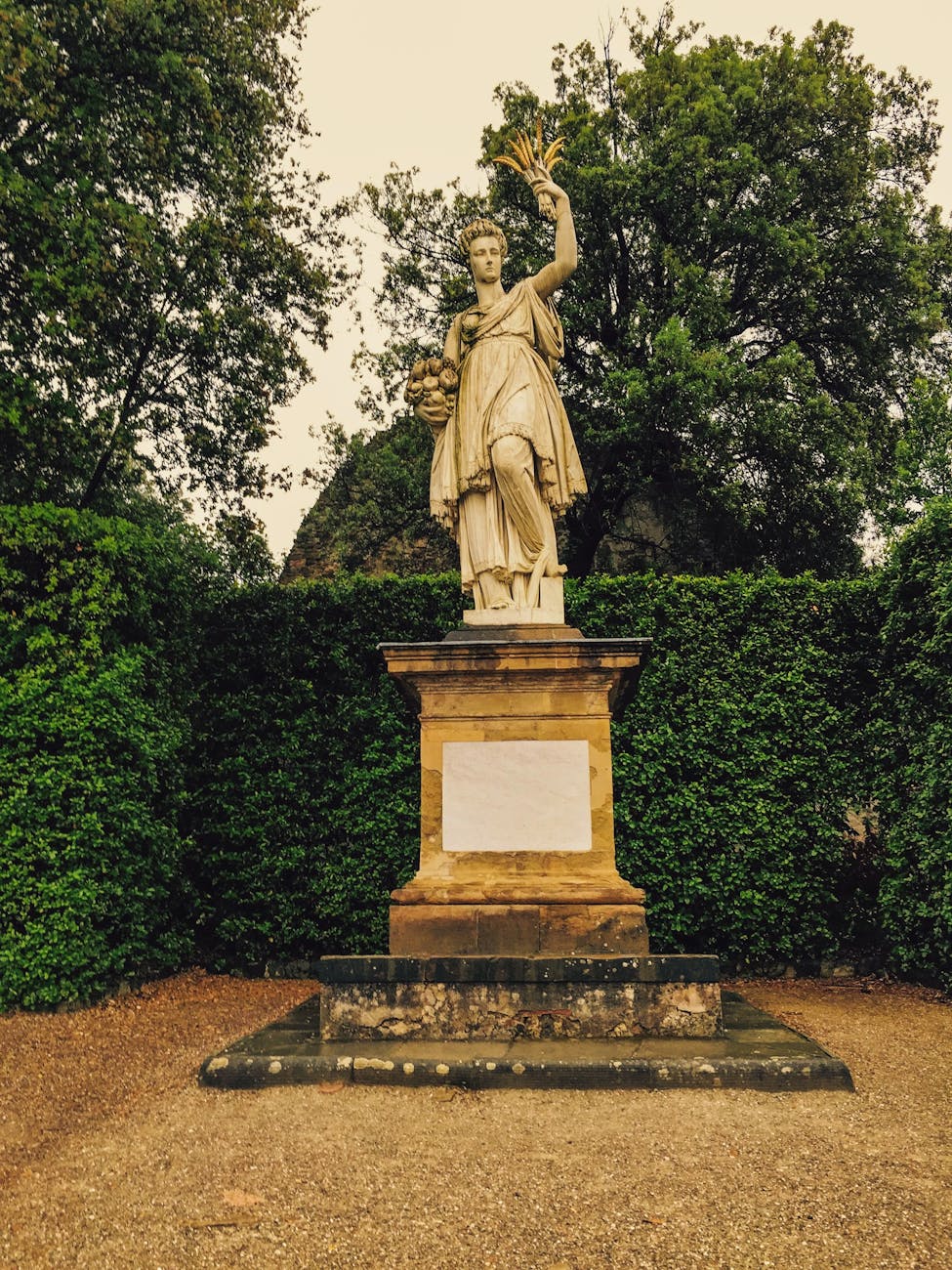
Goddess Ceres is an Ancient Roman agricultural deity who represented the regenerative power of nature. She is a goddess of cereal crops who particularly governs the growth of the crops. Her name is derived from the word creare, which literally means ‘growth’. She was believed to work in union with Ops, the goddess of sowing and Tellus Mater, Mother Earth. She was considered a Plebian Goddess and a primary goddess of the ancient Roman plebs (the working or agricultural classes), and her temple was a centre for plebian community activities and festivals. The corn-measurers in particular are a group in society that is known to pay special worship and dedications to Goddess Ceres.
She was considered an earth goddess, and as such, she was sometimes considered an underworld deity (the earth being the container of the underworld). This connection is demonstrated in the way that a sacrifice to purify the house was offered to her after a funeral.
She was part of two triads, the first being the Plebian or agricultural triad, along with Luna and Flora. The other was the Aventine Triad which she formed with her two children, her son the God Liber and the Goddess Libera (her daughter or sometimes daughter-in-law). There was a temple on the Aventine Hill in Rome where three deities were worshipped together.
Ceres had her own Flamen, meaning priests, the flamen Cerialis. At the time of the Republic, there were fifteen flamines, which were assigned to thirteen deities. These deities and flamines were considered the oldest cults of ancient Rome, with origins far before the republic, and they had their own priestly dress and social and dietary rules. The wives of the priestly flamines, the flaminica, would also have been expected to adhere to same dietary and social restrictions as her husband, conduct certain activities, ritual obligations and religious observance to Ceres. Ceres also had priestesses who conducted rites in her honour and had male and female attendants who worked at her temple. Ovid tells us that these priests and priestesses abstained from sexual activity for the nine nights surrounding the festival of Cerialia. Ceres’ son, the God Liber, also had his own priests and priestesses who would have been associated with the temple that he, his mother and sister shared.
Ceres’ priests and priestesses would have made offerings and sacrifices to Ceres at her primary temple in Rome, which was located on the lower slopes of the Aventine Hill, near to the Northern end of the Circus Maximus and the Forum Boarium. This temple was dedicated in 493 BCE by the consul Spurius Cassius, the building of this temple was initiated due to famines and a grain shortage in the years 499 to 496 BCE. The temple served several functions; it was from here that the government ran a food distribution system to the poor, it was also a repository for archives, and it was one of only a few places in Rome that offered the rights of asylum.
This temple was also the headquarters for the plebian aediles (aediles being the magistrates who oversaw the temple management and administration and the organisation of public games), who were primarily connected to the Goddesses Ceres, Flora and Luna. Her aediles, named the aedile Cereris, were the original two aediles, the growth of crops being of primary importance to the farmers that made up the majority of Rome’s earliest population, with the roles of aediles for other deities being created in later years and centuries.
Her primary festival was the Cerialia, though she was also worshipped during the Sementivae and the Ambarvalia festivals. The sacrificial offerings given to her at these festivals included a cake made from spelt and the sacrifice of a pregnant sow on the second day of the festival (the pregnant sow symbolising motherhood and fertility).
The festival of Cerialia was held annually 12th to 19th April in honour of Ceres and organised by the plebian aediles and conducted by her priests and priestesses. The festival included the sacrifices of spelt cakes and rituals that had their roots in ancient practices and folklore such as the letting loose of foxes with burning torches tied to their tails, on the last day of the festival. The last day of the festival also saw games (activities such as chariot racing and gladiatorial fights) in the Circus Maximus. There would also have been feasts and banquets throughout Rome.
Later in the year, there was a fast held in honour of Ceres (the ieiunium Cereris), which was held on the 4th of October. Fasting was highly unusual for the ancient Roman, who often accompanied religious celebrations and festivals with great banquets and feasting.
Why and how to connect with her?
As a goddess of growth, Ceres can support you in strong and healthy growth of all kinds, whether that be land-based, such as the growth of your own crops and produce, with relationships, projects, children or your own spiritual or emotional growth. Every growth needs support, encouragement and presence, so call on her as a guide in teaching you about what it is that you are meant to grow and how best you can go about it.
She is also a great ally for times when we feel we are experiencing metaphorical famine, such as feelings of lack, loneliness, dissatisfaction, tunnel vision or stubbornness that keeps you clinging to that which is past, decayed or no longer fits. She is a goddess that will guide your heart in its return to appreciating or manifesting abundance, prosperity and gratitude or will help you make different choices, look forward or act on behalf of the hopes or dreams you have for change and new beginnings.
Here are some ways to begin connecting to her:
~ Connect to and work with the archetype of Mother, within yourself and explore it in the world around you. Where does it need tending, cultivating, representing or healing? Also reflect on what you are growing, maybe journaling around questions such as: is this growth in alignment with my highest and greatest hopes, dreams and aspirations? How, when and why does this growth need my devotion, dedication and discernment?
~ Create one of her symbols to use in a ceremony, ritual or meditation or to decorate your altar/clothing/home/garden. Symbols include her sacred animals’ pigs and piglets (also foxes, field mice and other seed eaters), an ear of wheat, a cornucopia and a torch (you could use a candle or Roman-style oil lamp). Her colours are gold and white.
~ Practice regenerative and organic farming or gardening
~ Connect to her during her festival of Cerialia and give thanks for crops!
~ You may want to make offerings, such as giving a portion of every loaf/cereal you eat to the earth or with one of the items suggested by the ancient Roman writer Virgil:
“All the farm hands should pray to Ceres and make her an offering of milk, honey and sweet wine.” (Georgics, 1.388)
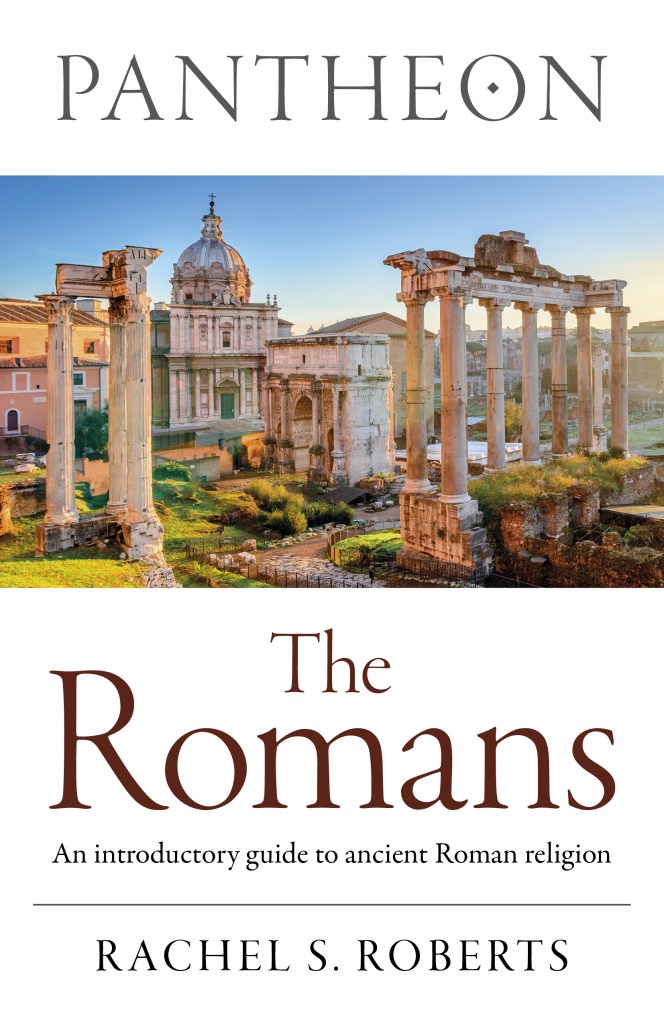
I hope you have enjoyed learning more about Goddess Ceres! Any questions or anything you would like to know more about, please do let me know. You can find out more about the Gods and Goddesses of Ancient Rome and their priests, priestesses, rites and festivals in my book ‘Pantheon. The Romans’.

For more details: https://www.collectiveinkbooks.com/moon-books/our-books/pantheon-romans

 The Pagan Collective
Leave a comment