

Floriography has long been relied upon to articulate the language of the heart when words prove insufficient. Each flower demonstrates a unique and timeless connection to the senses beyond aesthetics, invoking awe and reverence for the infinite creativity of the Earth. Yet one in particular has prevailed throughout history as the embodiment of passion and sensuality, with a scent so heavenly that many a poet has succumbed to its crimson charm. This is no other than the iconic red rose.
With Valentines Day approaching and swarms of people diligently organising the perfect Netflix and chill session with their beloved, the world can expect to see an estimate of 250 million roses sold to mark the occasion1 This repetitive, annual exchange has, however, caused the rose to be somewhat underappreciated, with the queen of flowers considered nothing more than a standardised gift. Even some tattoo artists tire from their multiple eye rolls caused from the request of the popular rose design without any form of personalisation. Yet she cannot be confined to regularity, for her unrivalled beauty and her ability to symbolise the complexities of physical and spiritual pleasure are deeply rooted into the collective consciousness of humanity. With each unfurling petal, the rose reveals the route to divinity, and every inhale of her scent carries a reminder of the blood and tears shed in the name of love.
For as long as life has been shaped by the hands of time, the rose has stood witness. Fossil records reveal the ancestors of the Rosaceae family first bloomed 35 million years ago, but its cultivation as an ornamental flower began in ancient Persia and China2. Through trade and exploration, the rose flourished in a variety of gardens across the globe, spreading into the mythological underpinnings of several Goddesses renowned for their generative power and association with love. One of these is the seafoam born Goddess Aphrodite who, according to Hesiod’s Theogony 3, emerged from the castrated genitals of Uranus after they were cast into the primordial ocean. As the waves caressed the shoreline, carrying Aphrodite to land, white rose bushes sprung forth as an everlasting symbol of her purity. This was said to have occurred near the Island of Cytherea or alternatively Cyprus, famous for the coastal city of Paphos which thrived as the centre of her worship and adoration 4.
Within later classical literature, the rose continued to be a manifestation of divinity with the ancient Greeks utilising its aromatic fragrance on their bodies and altars. This was heavily influenced by earlier Cretan and Cycladic cultures with archaeological evidence emphasizing the role of rose oil in cultic practices 5. Focusing particularly on the cyclical nature of life, Aphrodite and rose oil were further mentioned in the 8th century text of Homers Iliad. The Trojan prince Hector was anointed in order for his body to come under the protection of the Goddess, tying the rose not only to the presence of life’s vitality but also to its cessation. The flower also took prevalence in sacred garlands worn by devotees as well as those used to signify everyday moments within the community such as marriage, death and other festivities in the name of the Goddess 6.
However, the red rose in all her passionate ardour is also coupled with grief and anguish, with her thorns illustrating the heavy price of having the ability to love. Bion and other classical authors allude to this with varying tales of Aphrodite’s lamentation for her mortal lover Adonis. While out hunting Adonis was wounded by a wild boar. Unable to revive him, the Goddess’ psain dispersed throughout the natural world, with her tears mixing with his blood to give birth to the red rose as the eternal symbol of their love 7. This poignant tale magnifies the virtue in its fleeting nature; a dual aspect of love illustrated with the roses petals painted red both for the pain that awaits its loss as well as the beauty of its remembrance,
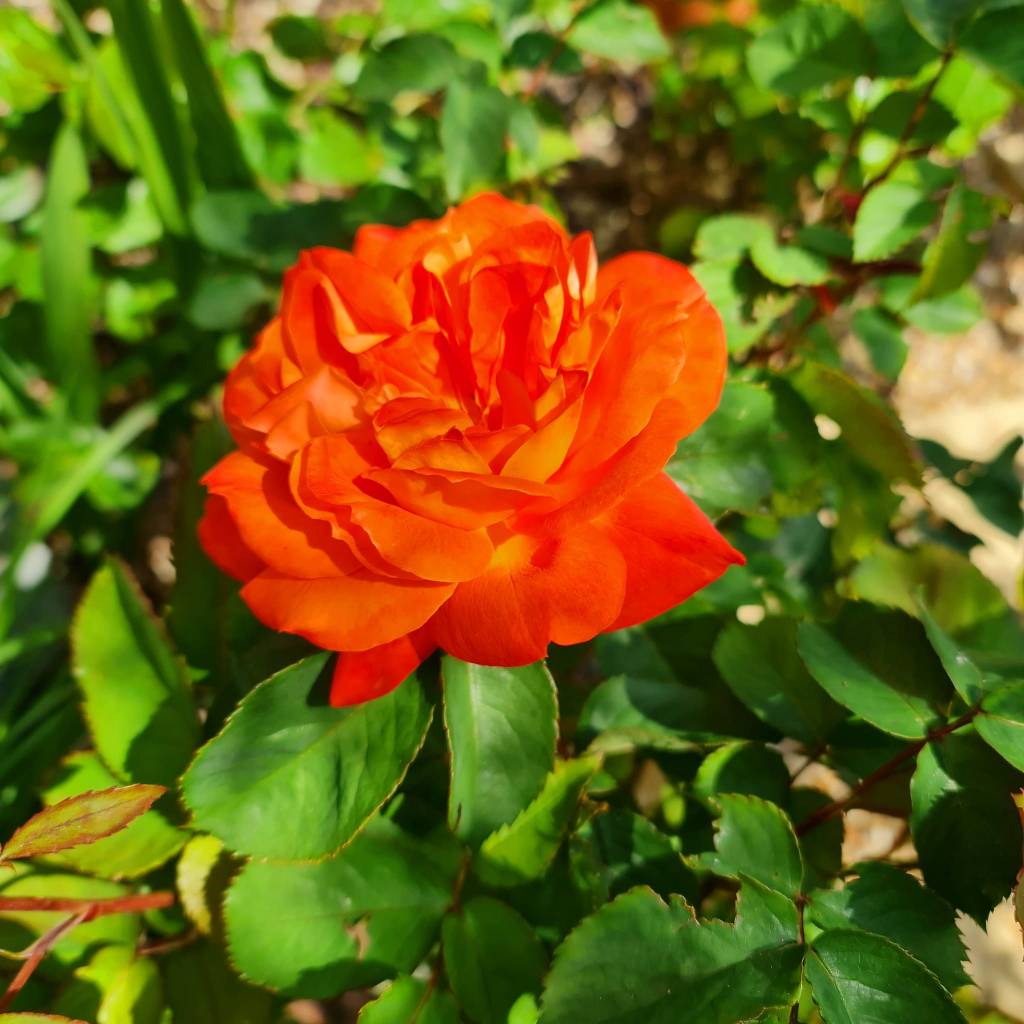
Of course, Aphrodite does not have a monopoly when it comes to the rose, for the flower was associated with a wide variety of Goddesses from different regions. This includes Cybele, the great mother Goddess of Anatolia who was adorned with rose petals and incense during the Megalesia festival to celebrate her arrival into Rome 8. Roses also blossomed in Egypt during the 4th century after its introduction through Alexander The Great, whereby they were used in funerary rites, perfume, as well as in the depictions of the Goddess Isis, especially within the expansion of her cult across Rome 9. Inevitably the power of the rose and its inspiring qualities took precedence within the medieval mind and was incorporated into the cosmology of Catholicism while its pagan expressions lay dormant.
Yet the initial reaction to the rose was one of abhorrence in early belief with the flower associated with carnality, vanity, and indulgence, all of which were corruptions of morality 10. Despite this, the rose managed to sustain its divine relevance as it later served as one of the traditional symbols of the Virgin Mary. Throughout many religious texts, the earthly and spiritual love expressed by the Queen of Heaven attained a prominent position in Catholic devotion, with Mary gaining various epithets including “Mystical rose” in the Litany of Loreto, as well as “Our Lady of the Roses” to symbolise her maternal sanctity and beauty. Furthermore, use of the rosary, which were often made from roses, became implicated as an object of value to call upon her intercession. Texts such as M. De Vos’ ‘The Rosarie of our Ladie’ in 1600, ascribed the Marian mysteries of joy, pain, and sorrow to the white, red, and damask roses as a way to recall her participation in the salvation of the soul 11.
Although the celebration of Valentines feast day was declared by Pope Gelasius I at the end of the 5th century, the gifting of roses was a much later addition towards the end of the 17th century. This marked a transition from the more open, public expressions of romance such as Valentines lotteries and tokens to a more private affair 12. Even before its attachment to St Valentine, throughout the centuries, the flower remained a vital ingredient in many spells and divinatory practices aimed at procuring love. When it comes to specific folk practices in Britain, the rose does not feature as prominently as other plants such as rosemary, possibly due to its short blooming period. But one common practice from my home in the Welsh Marches was to seek out a rose on Midsummers eve and preserve it in white paper until Christmas. This was then to be worn and the first person to take the rose would be the future lover of the individual wearing it. So, if you fail to find yourself a valentine’s date, midsummer offers a second chance.
Unfortunately, this article has been a whistle stop tour, for the history of the rose in myth, magic and medicine extends far beyond a singular piece of writing. Nevertheless, the rose presents a prevalent reminder of its ability to capture the fundamental emotions of experience. Its blood-soaked petals have embraced the entanglement of many lovers and deities that hide behind its bundled foliage as well as the joy that emerges when we align ourselves to its universal power. Yet in an increasingly insensitive world where adversity, despair, grief and hate run rampant, the thorns of the rose reminds us of our deepest fears and the pain we face when love is hard to find or is taken away from us. However, like the blooming of the rose after the cruel winter, love is recurrent and refuses to stay silent, appearing over and over for us to seek its magic and be beholden to its ecstasy regardless of how many thorns we have to experience. With the current state of the world, the love of the Goddess and the compassion and connective ability of her flowers is needed now more than ever.

For more details: https://www.collectiveinkbooks.com/moon-books/authors/brett-hollyhead
References:
- British Florist Association. Valentines- everything you need to know. Retrieved from https://britishfloristassociation.org 24/01/2025
- UEDA, Y. (2010). Roses and Their History of Cultivation-the history of relationships between human beings and roses-.Journal of Japan Association on Odor Environment, 41(3), p157-163 DOI: 10.2171/jao.41.157
- Sale, W. (1961). Aphrodite in the Theogony. Transactions and Proceedings of the American Philological Association, 92, p508-521. Johns Hopkins University Press, American Philological Association
- Young, P. H. (2005). The Cypriot Aphrodite Cult: Paphos, Rantidi and Saint Barnabas. Journal of Near Eastern Studies, 64(1), p23-24
- Gèczi, J. (2006). The Rose in Ancient Greek Culture. Practice and Theory in Systems of Education, 1(1).
- Ibid
- Reed, J. (1992). Bion I, Lines 25-7. The Classical Quarterly, 42(2), p538-543
- Lane, E. (1996). Cybele, Attis and Related Cults: Essays in Memory of M.J. Vermaseren. Religions in Graeco-Roman World. 131. Brill
- Moss, K. A.(2017). The Development and Diffusion of the Cult of Isis in the Hellenistic Period. The university of Arizona
- Seward, B. (1954). The Symbolic Rose. Columbia University Press
- Gallagher, L. (2013). The Virgin Mary in the Early Modern Literary Imagination (Doctoral dissertation, Queen’s University Belfast)
- Holloway, S. (2020). Love, Custom & Consumption: Valentine’s Day in England c. 1660-1830. Cultural and Social History, 17(3), p295-314




 The Pagan Collective
Leave a comment