

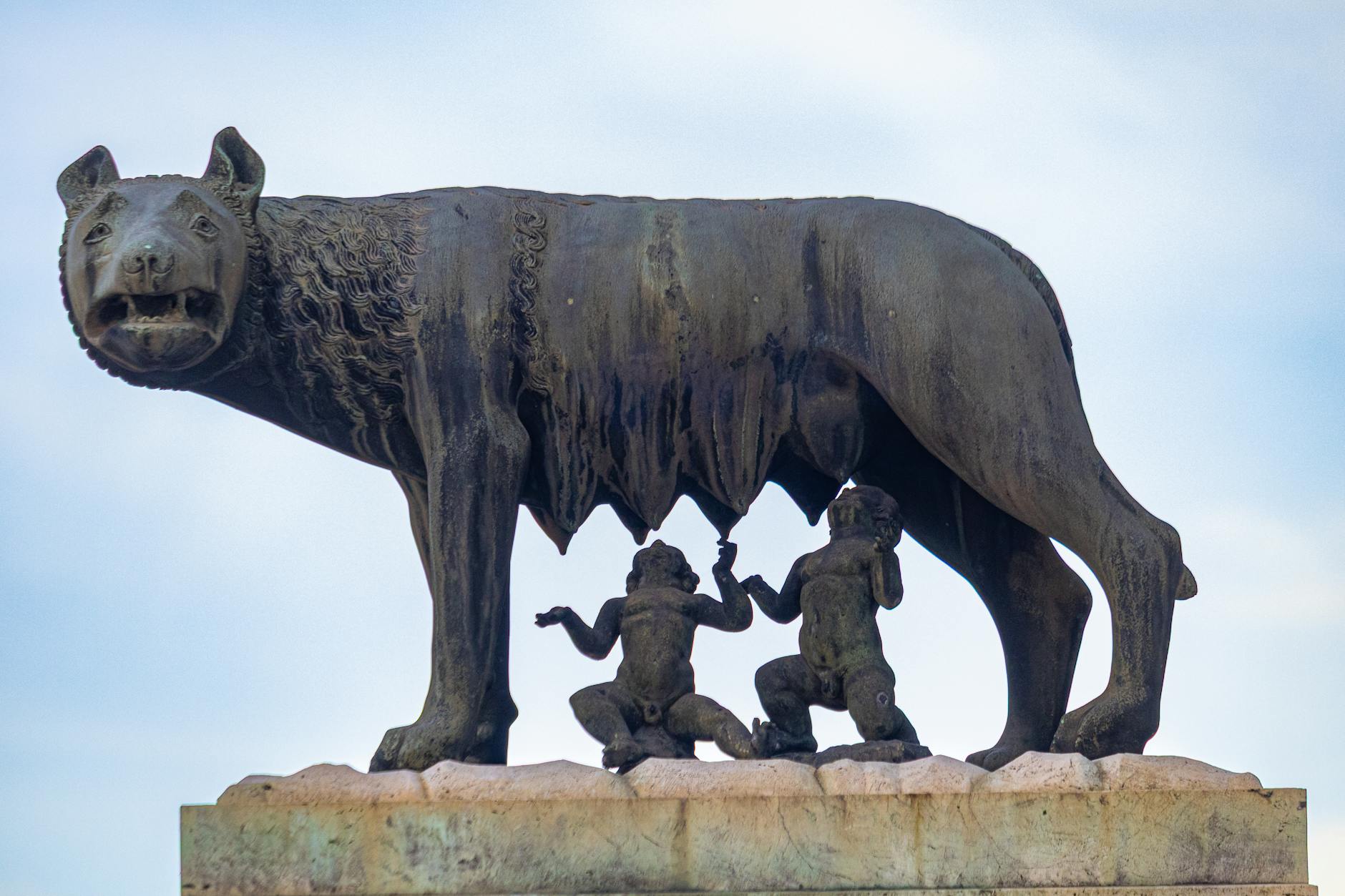
“There came to the abandoned twins, a she-wolf that had just given birth. Who would believe the wild beast didn’t harm the children? Not enough to harm them, she even helps them. Those whom the she-wolf suckles the hands of a kinsman had the will to destroy.
She stood still. With her tail she caresses her tender nurslings, and shapes their two bodies with her tongue. You would know they were sons of Mars, they had no fear. They pull on her teats and are nourished with a supply of milk promised not to them. She made a name for the place, the place itself for the Luperci. Great is the reward the foster-mother has for the milk she gave.”
~ Ovid, Fasti, Book 2, 412 – 423
What is the festival of Lupercalia? Why was it such an important part of the religious calendar, and how did the ancient Romans celebrate it?
What is the festival of Lupercalia?
Lupercalia is an ancient Roman festival that was celebrated on the 15th February and can trace its origins right back to the foundations of Rome itself.
It celebrated and honoured several key players in the foundation story of Rome: Romulus and Remus, Goddess Lupa, the She-Wolf, and the God Faustulus/Faunus. The festival was a way to honour these divine figures, to re-enact the foundation story as both a purification rite, to ensure the prosperity of Rome itself and as an act of Pietas, honouring the dead and the ancestors. It was one of the most important festivals for the ancient Romans, at least in the regal and republic periods, because of its vital contribution to affirming a sense of Roman identity and belonging. It is also thought possible that Janus was honoured in this festival as well, as it was a festival of beginnings, foundations and destiny, and Janus was the god of doorways and thresholds.
It remembered the time when the babies Romulus and Remus were sentenced to death by their great-uncle, a usurper king. Rather than drowning or dying of exposure, they were found by the She-Wolf Goddess Lupa. She rescued them from the banks of the Tiber, they suckled by her and then were taken to her cave on Palatine Hill, where she cared for them, fed them and protected them from danger until they transferred into the hands of a local shepherd (sometimes identified as the God Faustulus, other times as the God Faunus). Romulus went on to establish a settlement on Palatine Hill, in honour of this place where he was rescued and protected and became the first king of Rome. The festival also celebrated and re-enacted a later part of the foundation story in which Romulus set out the boundaries of his settlement by driving a plough around Palatine Hill and came into conflict with his brother Remus, who had established his community on the Aventine Hill.
The festival held the themes, symbology and energy of destiny, the god’s involvement in the foundation of the city and a reaffirmation of the greatness and sacredness of Rome through its godly favour and mythic beginnings.
How was it celebrated?
The festival involved purification rites and ancestor worship that were steeped in symbology and ritual that referenced the foundation of Rome.
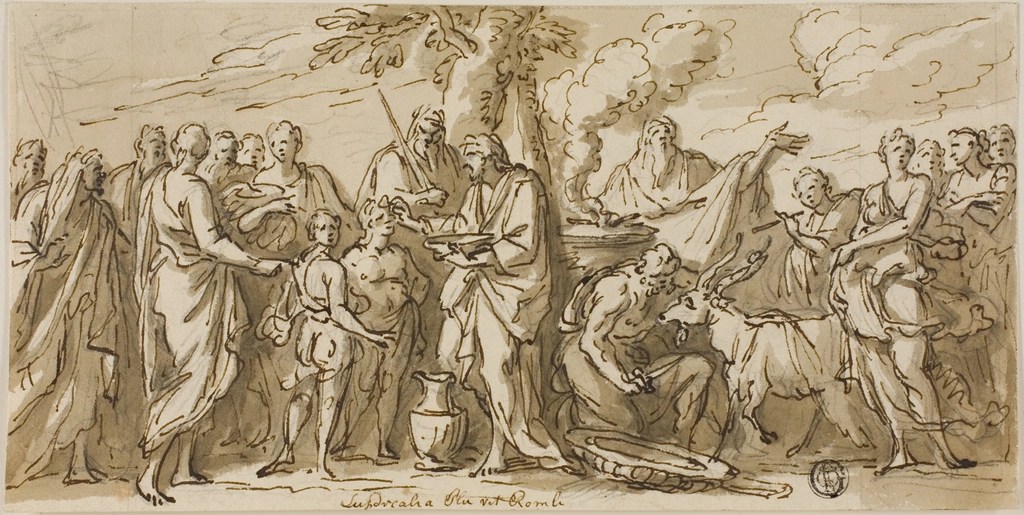
The worshippers would begin by gathering at the Lupercal, the sacred cave of the She-Wolf Lupa (the cave developed into a shrine, where Lupa was honoured). Here in her shrine, the priests of Lupercalia, the Luperci, meaning wolf priests, were divided into the priests of Romulus, the Luperci Quinctiales and the priests of Remus. The Luperci Fabiani sacrificed goats and dogs and made an offering of sacred cakes (sacred cakes and sacrificial animals were regular elements of a Roman ritual). The Luperci would clothe themselves in part of the skins of the sacrificial goats. Then, still in the Lupercal, two chosen male youths of a noble family (representing Romulus and Remus) were ritually smeared with sacrificial blood (symbolising bloodlines, lineage, the past) which was then wiped away with milk (representing the breastmilk of the She-Wolf Goddess, Lupa), just as the time Romulus and Remus spend with Lupa acted as a threshold, wiping away the before (vulnerable, lost) in order to step into the after (powerful, purposeful). The two youths, along with some of the city’s magistrates (it is not clear whether they were there as sponsors, crowd control, or actually participating), then left the cave shrine and ran through the city of Rome, around Palatine Hill, following the ancient boundary stones (Terminii) that marked the supposed route of Romulus’s original boundary. Throughout this run, they would strike everyone they met (not gender specific) with strips of skin from the goats (called februa, ‘to purify’) to bring forth new life (whether literal or metaphorical). Some critics said that the runners ran as naked as babies, and Cicero reports that he was embarrassed by this element (though it does seem appropriate, as in the myth, Romulus and Remus left the Lupercal as young children and again nakedness represented ‘new life’ or rebirth). The race was just as exciting as any national running race today, with the crowds eager and excited about whether the ‘Romulus’ or ‘Remus’ of the year would win this time around.
Its place in the wider calendar
The month of February was one for honouring the ancestors and pacifying the dead. Lupercalia was not a stand-alone event but was bookended by other festivals that also remembered and honoured the origins of Rome and offered an opportunity to display the important belief of Pietas (a sense of moral duty to, and maintenance of good relations with, family and the gods). The two major festivals of February, The Parentalia and the Lupercalia, were both concerned with securing the repose of the dead and promoting future prosperity.
In February was the movable festival of Amburbium, held this month to purify the whole city and make it new again, as well as Terminalia, the feast of the God Terminus, God of boundaries in which boundaries and boundary stones were honoured and affirmed with ritual and offerings and the festival of Carisitis, in which families were encouraged to patch up familial quarrels and grudges and renew family bonds (such as the original argument between Romulus and Remus, that led to the death of Remus).
There was also the Festival of Faunus on the 13th February, a pastoral god who was a promoter of agriculture. He was worshipped in hopes that he would bring fertility to the land and flocks.
13th to 21st February, within which Lupercalia sat and was possibly a part of, was the extremely important Parentalia. Parentalia was the Festival of the Dead, specifically the care of dead parents. The 13th to 20th were for private commemoration of the dead and the visiting of graves, and the 21st was for public ceremonial commemoration. The 21st February was known as the Feralia, the public festival of the dead. On this day, food was carried to the tombs and left there for use by the manes, or spirits of the dead. In the public ceremonies and rituals particular honour was paid to the various tribes of Rome and the house within each family had ancestors, houses (such as the Fabii) which many families traced back to the original founders of Rome, including the fathers of Rome themselves, Romulus, Remus, and the tribes of Sabines, Etruscans and Latins that originally populated the seven hills. During this time, temples were closed, marriage was forbidden, and many refrained from the general pleasures of life.
Right after Lupercalia, on the 17th February, was Quirinalia, the festival of Quirinus, who was connected to Romulus, either as the deified Romulus or the original name of Romulus. Some considered him an ancient Sabine God of war and warriors, and he was particularly worshipped and honoured by the Sabine families.
Lupercalia was far from the romantic and sexy festival it has been made out to be, but part of a sometimes solemn, but always respectful remembrance of the past and the creation of a legacy. We can see within this context of festivals, Lupercalia is a part of a wider honouring of where the Romans had come from, what is meant to be Roman and an opportunity to worship both the gods and the ancestors that had made Rome what it was. Lupercalia was part of a larger scene that was all about belonging, identity and destiny.
February was followed by March, a month governed by Mars, the god of spring, fatherhood and farming. For the ancient Romans, March was the first month of the year and the beginning of the agricultural and military season, and so February was considered the end of the previous year. Perhaps appropriately, then it was considered the month of the dead and the last month to honour the past, the ancestors, and the ‘dead’ of winter before spring began and life returned.
How did Lupercalia evolve? What was its legacy?
The Lupercalia remained connected to ideas of kingship, origin, destiny and legacy. This was affirmed in 44 B.C.E when Marcus Antonious used his participation as one of the two ‘princely’ runners as an opportunity to test the popular opinion of whether it was time for a sort of revival of kingly (sole, rather than collective) leadership. During the Lupercalia race, he offered Julius Ceaser a crown. When the vast crowds responded to this with shock, silence and even horror, Ceaser, quickly reading the crowd, answered with a laugh and refusal.
Ceaser’s successor, Augustus, who did become Emperor, set about a renewal and revival of the religious institutions of Rome. By then, the Romans had lost some understanding of the origins of their religious rites and festivals; even by then, they were considered ancient. One such quandary was to whom exactly Lupercalia was honouring, and they searched for a God to connect it with (its connection to the Goddess Lupa seemingly lost, disregarded or not enough for one of the most important festivals of this patriarchal society). At this time, several suggestions of gods are put forward, such as Faustulus, the Shephard God who raised Romulus and Remus to manhood, or Faunus, a God of flocks and fields, whom Ovid shares liked to run, hence the Lupercalia race. Lupercus was a Roman god who seems to have been invented in the Augustan period to give a male deity for the Lupercalia and so explain its prominence. Lupa, the she-wolf, was at this point given to Lupercus as his partner. As his partner, she was known as the Roman Goddess Luperca and became consort rather than important on her own accord.
The festival of Lupercalia was extremely popular and known for its revelry, and it continued to be celebrated well into the beginning of the Christian era. Despite attempts to abolish it by the early Christian church, the festival remained popular and so instead under the authority of Pope Gelasius I in 494 CE, the church made Lupercalia, February 15th into the festival of the Purification of the Virgin Mary, transferring the role of the mother protector, milk nurse of Rome, and great purifier, from Goddess Lupa to Mother Mary.
On a side note, it is also important to add that Lupercalia has no relation or connection to St Valentine’s day, on the 14th February. No ancient Roman festival was held on this day as it was considered an ill omen day.

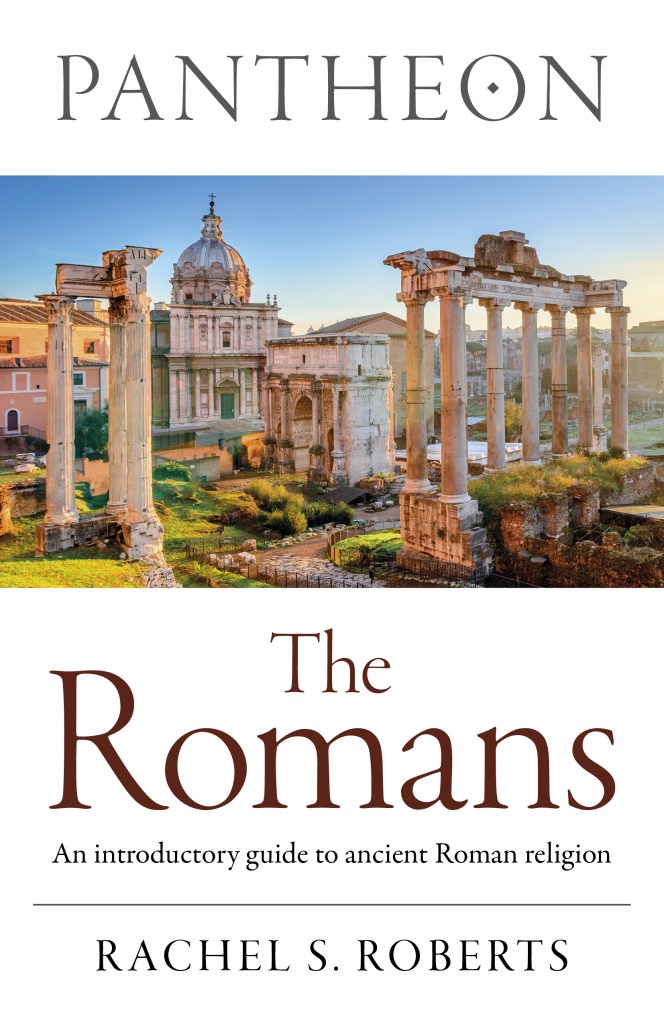
For more details: https://www.collectiveinkbooks.com/moon-books/our-books/pantheon-romans
Rachel is the author of Lupa, Wolf, Pantheon.The Romans and Flora, as well as the creatrix of Wolf Woman Rising, a wisdom school where she empowers you to embody your unique wisdom, reclaim your wild and create a life lived on purpose. Through online community, courses and training, as well as in-person retreats she offers easy and enjoyable access to ancient symbology and mythology, nature alchemy & divine connection.
Her desire has always been to create a bridge between history and spirituality, mythology and well-being, transmuting mythology into embodied wisdom, so that it becomes a tool of healing, empowerment and awakening for all. Rachel read History with Religious Studies at University and then went on to complete post-graduate qualifications in History and Heritage Management. She has also worked in the heritage sector for over a decade, primarily working with children and interpretation and she can claim to have worked in 5 different castles! Running parallel to her love of history she is a sacred dance teacher, storyteller, priestess and empowerment and flower essence coach
and is also the founder and principal teacher of Under the Dancing Tree School of Sacred Dance and Healing. She teaches sacred dances including Belly Dance, Polynesian dance, movement meditation and archetypal dance. Using her own journey and over 18 years’ experience of teaching and training she empowers and inspires students to deeply understand and practice courage, trust and authenticity; the three pillars of her wisdom school.



 The Pagan Collective
Leave a reply to rachelsarahroberts Cancel reply