

Many people, when asked about spirituality and magic, imagine distant lands or sacred sites.
It usually involves travelling somewhere else.
Perhaps to an ancient stone circle standing beneath a wide-open sky. A sacred mountain. A deep forest. A windswept coastline. Somewhere old, wild and far removed from everyday life.
These places can be powerful. They can inspire us, connect us to our ancestors, challenge us, and remind us that the world is larger and stranger than our everyday lives.
But what happens when we come home?
What happens when the pilgrimage ends?
What happens when we are once again standing at the bus stop going to work, walking through the area where we live, passing the same shops, the same roads and the same buildings?
Can those places be sacred too?
And perhaps more importantly, can they be magical?
This is the question at the heart of Magia Loci: Working with Your Magical Square Mile by Kevin Walsh.

Magia Loci can be understood simply as the magic of place.
It is the idea that magical practice does not need to be exotic or disconnected from the landscape in which it is performed. Instead, magic is much more powerful when coming from a place of relationship with the land, its spirits, its stories, its plants, its waters, its history, and the other beings with whom we share it.
The title also draws upon the idea of the spirit of place. The ancient Romans spoke of the genius loci, a protective or spiritual presence associated with a particular location. But the idea itself is much older and much more widespread than Rome.
Across the world and throughout history, human beings have recognised that places have character.
Mountains, rivers, forests, springs and valleys have been treated as more than scenery. They have been understood as places with stories, personalities and presences of their own.
In the modern world, however, we often forget how to relate to the places where we live.
We know how to use them.
We know where to park.
We know which road gets us home quickest.
But knowing a place and truly belonging to a place are very different things.
Magia Loci is an invitation to explore that difference, and then to ask another question:
What would our magic look like if it were rooted in the place where we live?

The Land Beneath the Pavement
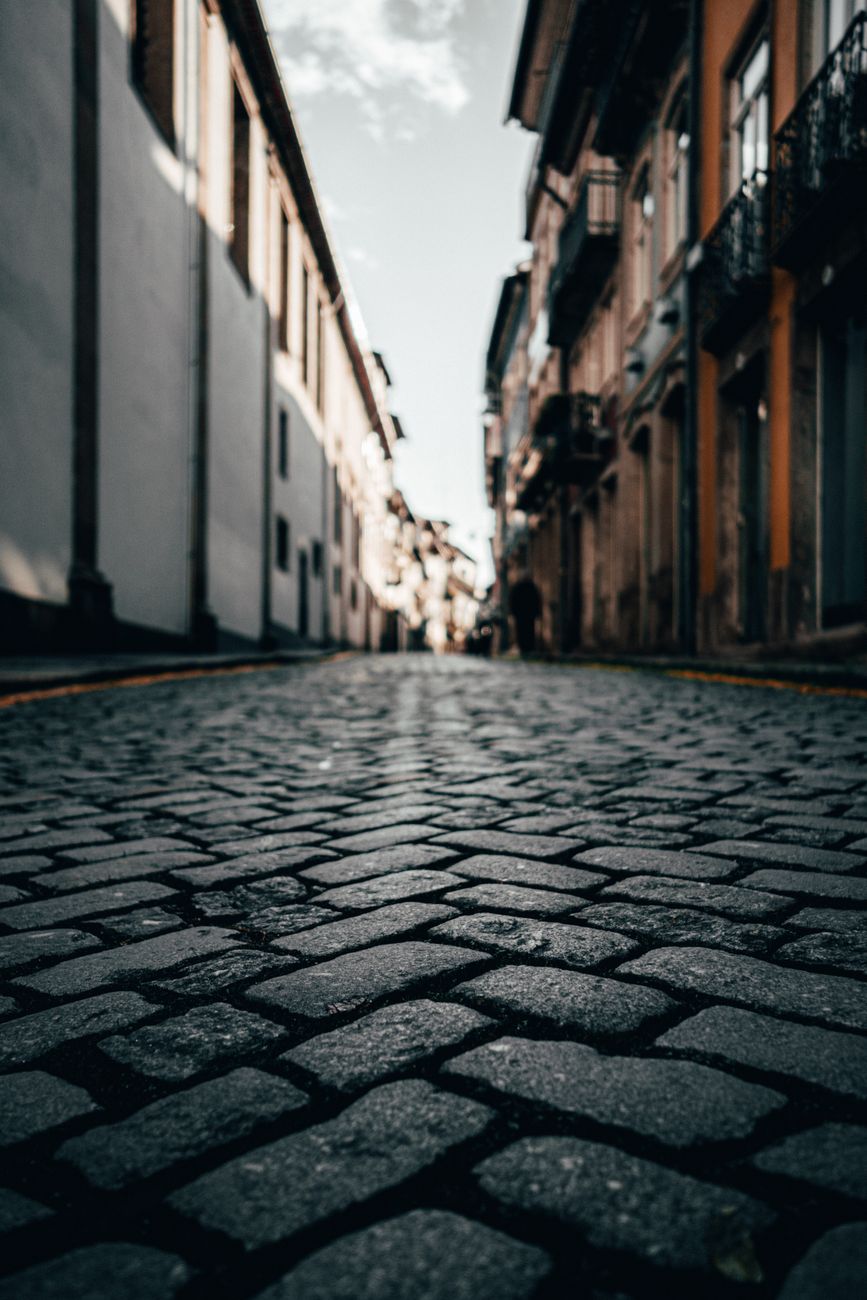
When people think about sacred or magical landscapes, unfortunately, cities are often left out of the picture.
Nature is imagined as being somewhere else.
It is in the mountains.
The forests.
The countryside.
Somewhere beyond the edge of the city.
But cities did not appear from nowhere.
Beneath the streets are older fields, rivers, woods, hills, and pathways. Beneath houses are layers of soil and stone. Roads may follow routes that people have travelled for thousands of years. Old boundaries can survive long after the fields they once marked have been built upon.
Sometimes a place is remembered through its name.
A street may preserve the memory of a stream.
A neighbourhood may remember a farm.
A road may follow the line of an ancient route.
And sometimes the landscape refuses to disappear.
A river may continue to flow beneath the city.
A tree may survive while everything around it changes.
Plants grow through cracks in concrete.
Nature has not left the city.
How can it, when the city is part of nature too?
For Kevin Walsh, this raises an important magical possibility.
If magic can be found in a forest, a river, or a mountain, why should it suddenly disappear when someone builds a road across it?
And if spirits belong to places, why should we assume they leave when humans arrive?
A Relationship, Not a Backdrop
At the heart of Magia Loci is a simple but powerful idea.
The land around us is not merely the backdrop to our lives or our magic.
We live within relationships.
We have relationships with other people, with animals, with places, and with the stories that shape how we understand the world.
A magical relationship with place begins when we stop treating the land as something we simply move across or somewhere convenient to perform a ritual.
Instead, we begin to pay attention.
We return to the same places.
We notice how they change.
We learn their stories.
We listen.
For someone beginning this journey, there is no need to travel to a famous sacred site.
The first step may simply be to explore the area around home.
This is the idea of the magical square mile.
It does not have to be a literal square mile measured on a map. It is a way of deliberately bringing the scale of magical practice closer to home.
Imagine the area immediately surrounding where you live.
Within it are roads, buildings, parks, trees and waterways.
There are people living their lives.
There are animals making their own journeys.
There are plants growing wherever they can.
There are histories, memories and stories.
Some are well known.
Others have been forgotten.
The magical square mile is an invitation to discover what is already there.
What was this place before it became what it is now?
Where does the water come from?
What plants grow here?
What animals still make their homes here?
Who lived here before us?
What stories belong to this land?
What names have survived?
What materials could be incorporated into our magical practice?
And perhaps, for those who approach the world through an animistic perspective, another question can be asked.
Who else is here?
A World Full of Persons
For an animist, the world is not divided neatly into the living and the non-living.
The world is filled with relationships.
Trees are not simply objects.
Rivers are not merely water travelling downhill.
Mountains are not just large arrangements of stone.
Animals are not decorations in the landscape.
They are beings with their own lives.
Their own purposes.
Their own ways of existing in the world.
Different animist traditions understand this idea in different ways, and Kevin does not suggest that there is only one correct answer.
Instead, Magia Loci asks what might change if the world around us were approached as a community rather than a collection of resources.
What would it mean to know a river?
Not simply to know its name or where it begins and ends, but to know its moods?
To notice it in flood.
To walk beside it in summer.
To understand the life that depends upon it.
To learn the stories people have told about it.
To recognise how it has shaped the landscape and the people who live nearby.
And then perhaps to incorporate that relationship into magical practice.
Instead of reaching automatically for water bought from somewhere else, water collected responsibly from the local landscape becomes significant.
Instead of choosing a plant because a correspondence table says it represents protection, someone learns about the protective plants that actually grow around them.
Instead of beginning ritual with generic words addressed to an abstract landscape, perhaps the rivers, hills, winds, trees, or spirits that have become known through experience are acknowledged.
Magic begins to acquire a geography.
The Spirits of Place
Folklore offers another way to approach this relationship.
Kevin’s own landscape is Britain, and Britain is crowded with stories.
There are fairies in hills and woods.
Water spirits in rivers and lakes.
Ghosts attached to old buildings and ancient roads.
Household spirits.
Black dogs.
Giants.
Saints.
Witches.
Hunters and mysterious beings who appear at particular places.
These stories are part of the cultural landscape.
But Magia Loci is not a system of magic that belongs only to Britain.
The British examples in the book come from Kevin’s own landscape because one of the central principles of Magia Loci is to begin with the place a person actually inhabits.
Someone living in Canada should not need to pretend they are living in Wales.
Someone living in Australia does not need to import a British sacred landscape.
Someone living in Brazil, India, Japan, South Africa, or the United States will have different plants, different seasons, different histories, different folklore, and different relationships with the land.
That difference is the central point.
Magia Loci is not about exporting one landscape to another.
It is about discovering the magic of your landscape.
The names change.
The stories change.
The spirits may change.
The climate changes.
The plants change.
Even the seasons may behave very differently.
The method remains the same: begin where you are, learn what is there, approach it respectfully, and allow your magical practice to grow from relationship rather than assumption.
Wherever someone lives, there is a landscape beneath their feet.
And every landscape has its own story.
What stories belong to their river?
What beings appear in their local folklore?
Which plants have histories of magical, medicinal or ritual use?
What did earlier communities call the hills, forests and waterways?
What happened upon that land?
Which places were considered sacred, dangerous, haunted or unusual?
What stories are told by the people who live there now?
Magia Loci does not ask everyone to become Brythonic pagans.
It asks them to become more deeply acquainted with wherever they happen to stand.
Magic With Roots
This is where Magia Loci moves beyond simply appreciating nature or researching local history.
It becomes magical practice.
Magic is often built from correspondences.
Certain plants represent certain qualities.
Certain directions are associated with certain elements.
Certain colours, stones, waters and symbols are used for particular purposes.
There is nothing inherently wrong with this.
But Magia Loci asks practitioners to go one step further.
Why this plant?
Why this water?
Why this direction?
Why this spirit?
Why here?
A plant growing locally may have folklore attached to it that is more meaningful to a practitioner than something imported from thousands of miles away.
A local river may become part of cleansing or blessing work because a relationship has been developed with it.
Soil from a person’s own garden might carry different meaning from earth purchased online.
A stone gathered respectfully from a familiar place may carry the memory of years spent walking there.
Magic becomes less about assembling ingredients and more about relationships.
A ritual performed in an unfamiliar landscape can be powerful.
But a ritual performed in a place that has become deeply known can be extraordinary.
Imagine celebrating the changing seasons beside a river walked throughout the year.
Imagine making an offering beneath a tree watched through winter, spring, summer and autumn.
Imagine performing divination at a place where the behaviour of birds, water, wind and weather has become familiar enough that unusual changes can actually be noticed.
Imagine marking a festival according to what the land is actually doing rather than following an image of the seasons borrowed from somewhere else.
Magic begins to develop roots.
It becomes connected to weather.
To geography.
To local wildlife.
To folklore.
To history.
To spirits.
To the actual turning of the year where the practitioner lives.
To the land beneath their feet.
And importantly, this does not require living in a rural landscape.
A practitioner in the middle of a city can develop relationships with urban trees, parks, canals, buried waterways, street plants, cemeteries, railway edges, old boundaries, and the spirits and stories of the city itself.
Magic does not require wilderness.
It requires attention.
Magic as Conversation
Magia Loci also changes the way someone might think about magical power.
Magic can easily become something that is done to the world.
A practitioner wants something, performs a spell, and directs their will towards achieving it.
Magia Loci suggests another possibility.
Magic can also be a conversation.
Before asking something of a place, a practitioner might spend time getting to know it.
Before taking something, they might ask whether taking is appropriate.
Before leaving an offering, they might consider whether that offering is actually beneficial to the place rather than simply symbolically meaningful to the practitioner.
Sometimes the magical act might not involve taking anything at all.
It could involve removing litter.
Cleaning a stream.
Planting something appropriate.
Learning the history of a forgotten place.
Remembering a story.
Protecting a habitat.
Or simply returning regularly enough that a relationship begins to form.
Magic does not always need fireworks.
Sometimes the most important magical act is reciprocity.
Becoming a Good Neighbour
Perhaps one of the most important questions raised by Magia Loci is this:
What does it mean to be a good neighbour?
Not simply to the people living nearby, although that matters.
But to everything else.
If a river is sacred, how do we treat it?
If a tree is important to us, how do we respond when it is threatened?
If we believe that we have relationships with spirits of place, what responsibilities come with those relationships?
For Kevin, magic is not simply about what can be received from the land.
It is also about what can be given.
A relationship cannot exist in only one direction.
It is difficult to claim a spiritual relationship with a river while treating that river as a dumping ground.
It is difficult to honour the spirits of a woodland while leaving behind offerings that damage the woodland.
And it is difficult to speak about loving the land while remaining completely uninterested in what happens to it.
A magical practice rooted in place asks people to become participants.
To learn.
To care.
To defend.
To remember.
To reciprocate.
And sometimes simply to pay attention.
The more deeply someone knows a place, the more difficult it becomes to see it as disposable.
They become part of the story of our lives.
And we become part of theirs.
Finding the Magic in the Ordinary
Ultimately, Magia Loci is not about claiming that every street corner contains a hidden ancient mystery.
Sometimes a street is simply a street.
Sometimes a building has no dramatic secret.
Sometimes the most interesting thing about a place is what is happening there now.
But magic does not always need to be hidden.
Sometimes it is simply unnoticed.
A blackbird singing at dawn.
A tree changing with the seasons.
The first flowers appearing after winter.
A plant growing unexpectedly from an old wall.
The discovery that a place passed a hundred times has a story that was never known.
The magical square mile is an invitation to become curious about where we are.
To become explorers without needing to travel anywhere.
To discover that the world does not have to become unfamiliar before it can become mysterious.
Sometimes mystery begins with familiarity.
Sometimes magic grows through returning.
And sometimes, after walking the same paths enough, a place begins to feel less like a resource and more like a relationship.
Coming Home
Magia Loci: Working with Your Magical Square Mile is ultimately an invitation to come home to the land beneath our feet.
Wherever those feet happen to be.
Britain is Kevin Walsh’s landscape, so naturally its rivers, stories, folklore and spirits run through his own practice and through the book.
But Magia Loci does not belong to Britain.
It belongs wherever someone is willing to stop, pay attention and begin building a relationship with place.
It might develop beside the Mersey, the Mississippi, the Ganges or the Yarra.
It might begin in Welsh hills, an American suburb, an Australian city, a Canadian forest or an apartment surrounded by concrete.
The details should be different.
Because the places are different.
That is what gives the magic its roots.
Magia Loci does not ask practitioners to abandon the modern world.
It does not ask them to pretend they live in an imagined ancient past.
And it does not ask them to borrow somebody else’s sacred landscape.
Instead, it asks them to discover their own.
Our streets have histories.
Our rivers have stories.
Our trees have witnessed lives we will never know.
Our neighbourhoods are filled with human and other-than-human communities.
And the materials of magic may already be growing, flowing, flying, crawling and whispering around us.
Kevin Walsh invites readers to begin where they are.
To walk.
To explore.
To research.
To listen.
To practise.
To build relationships.
To make magic.
And perhaps, eventually, to discover that the magical world is not always waiting at the end of a pilgrimage.
Sometimes it has been patiently waiting for us to notice it all along.
Right where we stand.



Leave a Reply