

Who is Flora?
Flora is the Roman Goddess of flowers, new growth and the spring. She is the energy of the emerging and blooming flowers and plants, and the associated themes of fertilisation, fertility, sensuality, sexuality and union. She embodies the vitality and beauty of nature. She was a Goddess of real significance to ancient Rome and can claim a place in the list of deities that saw Rome grow right from its earliest foundations. She was considered one of the ‘old gods’ and a goddess of the people who interacted with humans, rather than one of the lofty gods that were deemed detached or above human concerns and daily life. There was even the popular belief that Flora gave her name to Rome. Rome was considered to have a secret name that was only spoken by those who knew it and used in ritual and ceremony by the priests and priestesses. This name was considered by many to be Flora, in honour of the goddess and the myth that she was involved in the foundation and development of the settlement that became that great city. To speak her name was to invoke the divine element of Rome.
Her name literally means ‘blossoming ’, and she was known as the ‘flourishing one’. She was said to bring forth roses from her mouth and for flowers to fall at the movement of her hair. Generally, in Ancient Roman statuary and art, Flora was depicted holding a bouquet, garland or cluster of flowers in her hand. She was considered the primary goddess of spring, but it is important to note that she oversaw and ensured the flowering of all plant life, whenever or however it flowered.
Her origins are as a Goddess of the Sabines, a tribe of central Italy, where she was a Goddess connected to agriculture, specifically governing the blossoming and fertilisation of fruit trees, vetches and legumes and could prevent or inflict disease on these vital crops. Her powers of fertilisation carried over to the idea of conception. In her mythology, it was Flora that impregnated the Great Goddess Juno through a magic flower, and it was believed that she could offer her blessing similarly to the wombs of human women. She was also said to have blessed the earth with roses, with roses being her great gift to humanity. As the Goddess of beauty and sensuality, she was also the patron of prostitutes, the arts, dancers, gardens, women and even barbers and many of these groups of people offered roses in her honour!
She is therefore a practical goddess, present in the working agricultural fields and gardens and also a goddess of the senses, joy, pleasure and aesthetics.

Her Temple
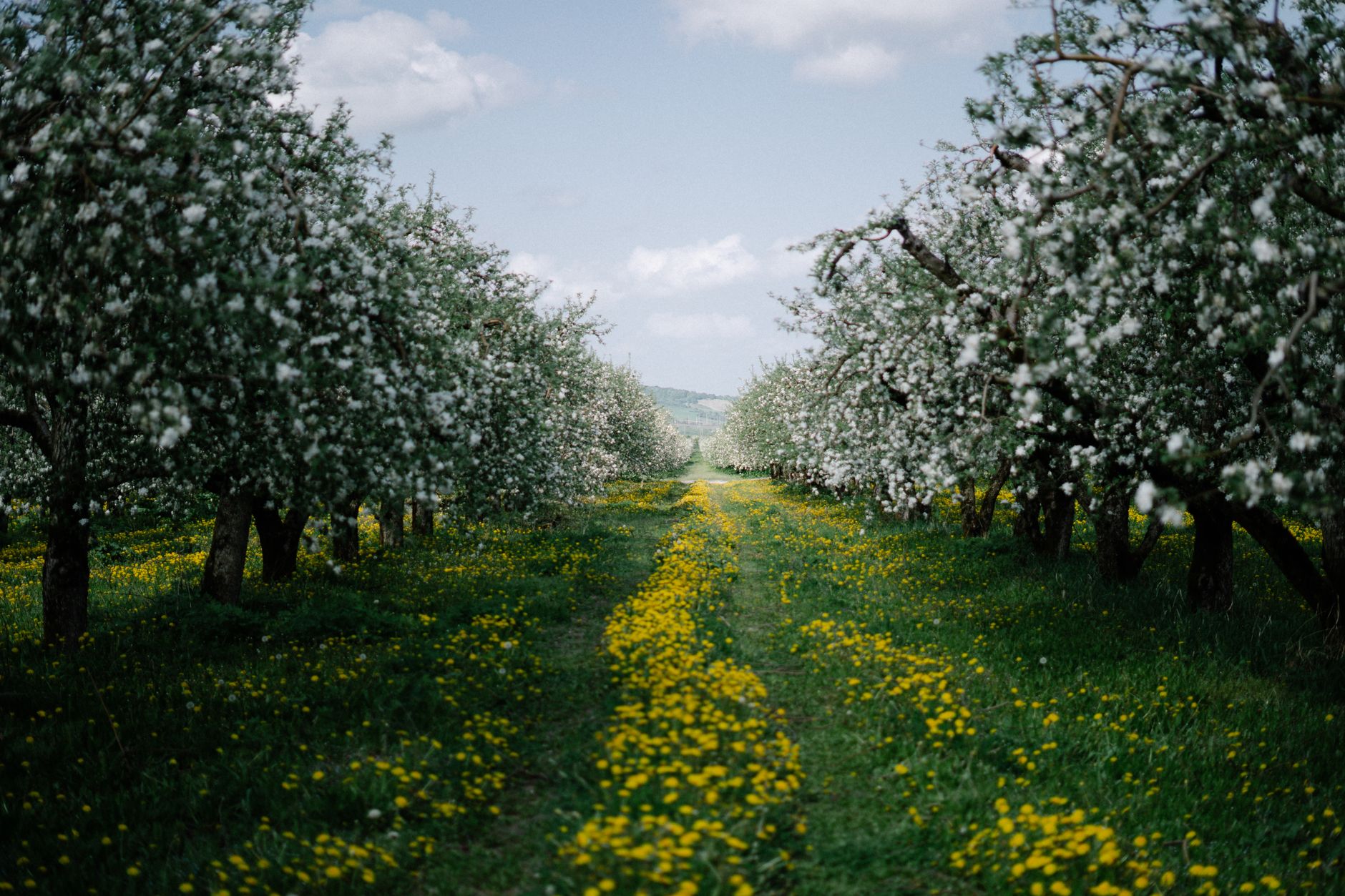
Flora’s early worship would have been in natural settings such as the orchards, forests or fields where her favour was needed. Many shrines to Flora would have been in horti, the vegetable gardens and groves of trees within villas, farms and smaller household gardens. Her temples began as offerings laid upon the trees, incense burnt within the apple orchard and garlands hung in the vegetable plots.
According to legend, the first shrines of Flora in Rome were believed to have been built by Titus Tatius, the king of the Sabines, who, by tradition, jointly ruled with Romulus, Rome’s founder, in the 8th century BCE. He was credited with creating two shrines to her, the first on Quirinal Hill and the second on the Aventine Hill. A version of her games was also believed to have been established at this time.
Her primary temple came to be that on the Aventine Hill, and this temple, dedicated to Flora, and the nearby Circus Maximus, were the locations for the annual celebrations of the festival of Flora, ‘Floralia’, that took place in the spring season. This temple was located on the lower slopes of the Aventine Hill near the temples of the goddesses Ceres and Luna, in a complex that marked the three goddesses as the divine triad of agricultural fertility. Flora’s temple and the surrounding part of the Aventine Hill were opened to citizens and made public land by the Roman Senate.
Her Festival
The Floralia was a six-day agricultural flower festival and marked the turning of the seasons. It was intended as a public festival to appeal to Flora to ensure that the plants that year blossomed and grew, so that the harvest would be good. The festival did, of course, have other connotations; held in the spring to celebrate the blossoming of flowers, it was an opportunity to not only honour the flowering and fertilisation of plants, but the flowering and unions of humans. It was then generally a festival of sensuality, sexuality and sex. The festival was from 28th April to 3rd May and involved five days of ludi scaenici (stage games), involving drama shows, mimes and performances in the theatres, followed by ludi circenses (circus games) for one day, as well as other religious activities such as sacrifices, rites and rituals throughout this time period. Various public rituals and performances would have taken place at Quirinal Hill shrine and around the area of Flora’s temple at the base of Aventine Hill, as well as the theatres throughout Rome, though the bulk of the public festivities took place in the Circus Maximus, which sat at the base of her temple. More personal and intimate rituals and offerings would also have been made in this period at her shrines and altars in farms, agricultural land, gardens and in domestic settings (though these were not confined to the festival time period).
The last day of her festival, May 3rd, was called the Florae. On this day, the Ludi Florales (the games) were organised by the Plebian Aediles, and it was customary for participants and spectators to wear multi-coloured clothes, reflecting the multi-coloured nature of flowers. Colour was a way for her worshippers to connect to her, from clothes dye, to makeup and cosmetics, floral garlands and decorative food. Her flowers, in markets, gardens, farms and temples alike, brought vibrancy to a life that otherwise may have felt a bit grey and sometimes hard.
During the festival, people would also gather bouquets of flowers that symbolised spring and new life coming into the world and festival participants would wear garlands of flowers. As well as the games, on the last day of the festival there would have been a ceremony or ritual at her temple of Aventine Hill and at her shrine on Quirinal Hill, where her temples and shrines were decorated with garlands of flowers and scented with perfumed flower oils. Pliny records that it was also common to dress the cult statue in a chaplet of flowers. Buildings throughout Rome were also decorated with plants and flowers. Lesser periwinkle is noted as forming the base of her decorative wreaths and garlands, with roses of every colour woven through the stems. Roses are also noted as being used as the primary offering and decoration of banquet tables during this festival.
Why connect to Flora now?
There is a drop of Flora’s divine essence in every single flower. Her codes of healing and magic awaken every time a flower blooms, and as there are blossoming flowers all year round, so her companionship is always available. She is with you, in every flower you meet, see, smell, hold, consume or use.
Flora is a Goddess of grace, beauty and compassion, and her flowers bring this into our lives as sources of joy and pleasure. She reminds us to pay attention to the pleasure of being, to claim our right to it, to embrace it as a god- given gift and work through any wounds, trauma and obstacles we may have that have caused us to reject, disdain or deem pleasure or joy as wrong, or deem ourselves as unworthy of it. As with flowers, there are poisons, and there are healers, and she teaches us in the same way that pleasure can be a tool for good and an opportunity for communion, connection, surrender and the expression of love and hope, but also a propagator for self-indulgence and harm if not approached with presence, clarity, respect and honesty.
Flora is a fertile energy and is a Goddess of women’s health, particularly the feminine reproductive system. She can support you with the healing or maintenance of the ovaries, womb and menstrual cycles. She can also be an ally when it comes to conception and pregnancy, both physical and metaphorical. Flora teaches us to honour growing things, both inside and outside us. She can support you in the conceiving of babies and their birth and growth, as well as the conceiving and blossoming of ideas, projects and relationships, especially those that are connected to nature, or seek to involve, support or celebrate it.
Goddess Flora is also a guide and ally for all those who use flowers as a pathway for healing and empowerment. She is the guardian goddess for all practitioners of plant medicine and offers her alliance in protecting your work and in maintaining the sanctity of any relationship between humans and the plant world or energies. She can also act as an intermediary, if needed, between you and flower essences, or numen of any natural place. She can also offer advice if you seek further, or specific, plant allies (for example, if you feel you need a particular plant healing remedy but don’t know which or who, ask her advice and she will offer her suggestions).
You do not, however have to be a practitioner or teacher of plant medicine to connect to her; she welcomes all who wish for, or have a connection, to flowers for the holistic wellness of mind, body, heart and soul, from beginner gardeners, artists, poets and those who love walks in nature, to kitchen witches and beauticians.
For simple ways of inviting Flora into your everyday life and routine, enjoy herbal tea in the morning, add a few drops of flower essences or essential oils to your water, pillow or bath at night and pair it with a body-positive or self-love affirmation. Have a pot plant or container which is your place of peace, connection and reflection, or even a vase of flowers if that is all you have room for. Add flowers to your crafting, cooking or artwork and really appreciate and give thanks for the beauty, colour, texture, smell and taste. Begin to notice the flowers in every location you are present. Speak to her as an old friend who has brought you delight and consolation your whole life, through the blush from the flowers of a lover’s bouquet, the hope-filled remembrance of a funeral display, the herbal remedy that helped heal an ailment or the dandelion in your lawn that reminded you that every part of nature is valuable, including you.
I hope that you have enjoyed learning about Flora. You can find out more in my book ‘Flora. Goddess of flowers, spring and sensuality’ where I share more about her history, mythology, symbology as well as tips, tools and activities on how to connect to her now in your everyday life to cultivate fulfilment, delight and hope.
For more details: https://www.collectiveinkbooks.com/moon-books/authors/rachel-walker





Leave a Reply