

To An Dagda, An Morrigan and Aengus óg
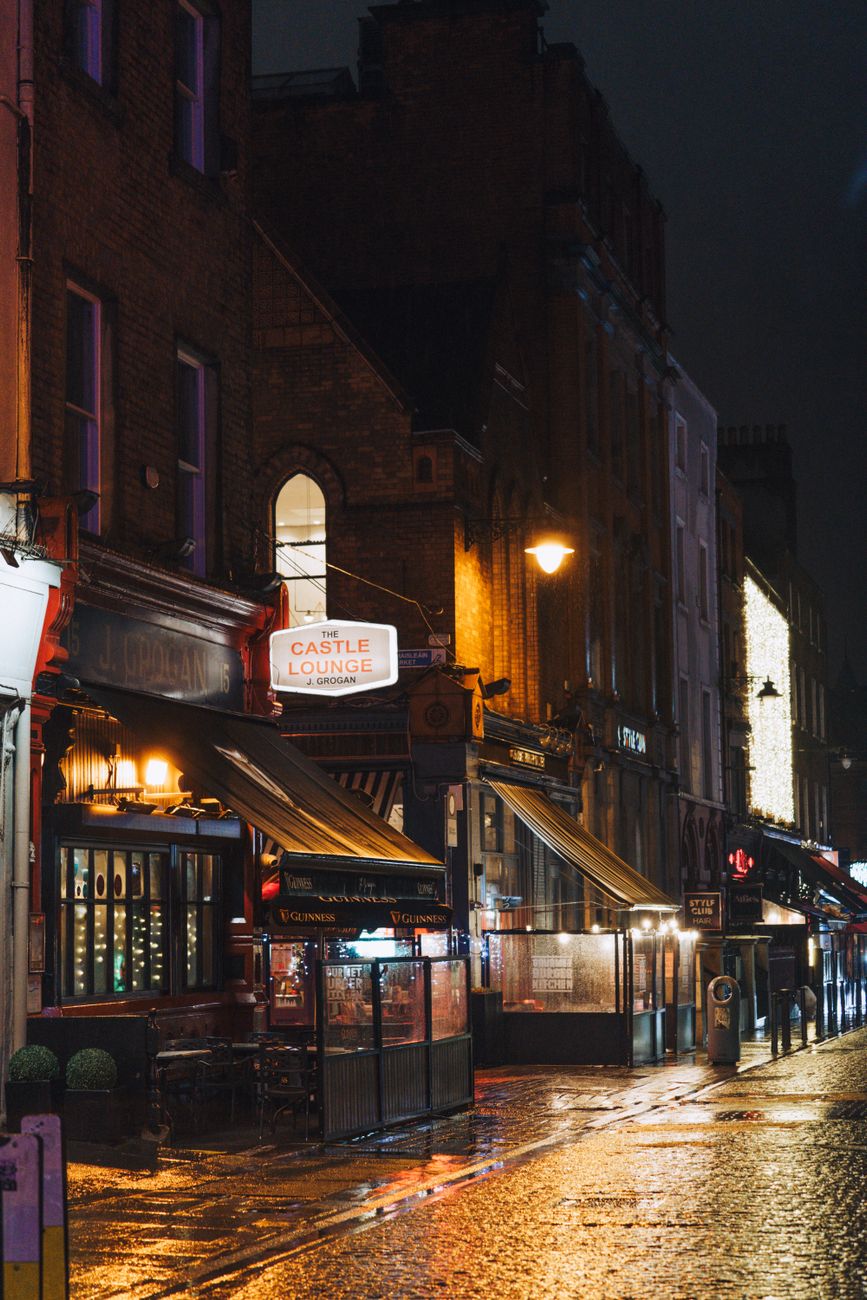
I went for a walk the other day, through the city centre as the light dimmed and the early twilight met the rising darkness of the night. Autumn danced in on a whirling breeze, shaking russet and orange leaves from her hair, her eyes shining with raindrops. Summer is hanging around still, loath to leave us this year but knowing it’s time to depart. I caught glimpses of her in the park, playing with the kids in the playground who chased her rays around the swings and roundabout. But I didn’t say hello; we have already parted ways, and there are only so many times I can ask her to come back.

Without a plan, I wander. I don’t want to be by myself, but the streets are quiet and the traffic light. In a few hours, revellers will pour out of pubs and clubs, jostling for taxis and shout-laughing insults, groups moving like packs up and down from venue to venue, lone drinkers weaving their way towards food or bed. But I find myself in the in-between, the last moments of the commercial day when the middle-aged and serious are fixed on the route home, and the frivolous have spent their last pennies. The city is peaceful, but melancholic.
But it is still my city, my one dear heart. It is good to stand where I stand, to remind my soul who I am and how I grew like a weed between the slabs of pavement, popped up despite the cobblestones and dust. I smile, and my reflection in a shop window smiles back at me. As I turn, I catch a movement out of the corner of my eye, and the lilt of a voice that whispers in my ear. What he says is a secret, so don’t ask me. I follow his lead, let the wind push me where it will, follow the sounds of music only we can hear, dancing up a street that closes down in our wake. Light after light extinguished, doors clipping shut, the whirr of shutters descending, but still there are streetlamps and neon signs; my city never allows the darkness to swallow it whole.
And onwards we go. If you were to be brutal, to bring the sledgehammer of rationality crashing down, what must I look like? Plump and middle-aged, humming a song with no words, trudging gamely over cobblestones, a phantom for a friend? But the truth is a mirror shattered into smithereens, and in one of those slivers, would you see him? He is the Good God, the storyteller, the Harpist and the warrior. He is the lover of Anna Livia, the father of the one hundred and thirty rivers, the poet on street corners, and my friend.
When I was young, when life was a polished surface that shone under moonlight, he walked me home at night, guided sore feet over rough pavement and glowered at men whose hungry eyes followed our passing-by. When I was lonely, he told me tales of love and loss, of fights and furies, passed the time of day with me, never staying too long because he is a busy god, but always long enough to see me right. When he strummed that harp, the music always matched my mood, never chiding me out of it. He is the kind of friend that lets you be, the kind of god that has seen it all before. There’s a desperate comfort in that.
When I married, he danced at our wedding. When I gave birth, he sent flowers on the next wind, feathers and shells, and a song that made motherhood less fearful. When I worked, he sent custom my way. But now I am grown up and fully formed, and my pen works from home, and a trip into the heart of this city is a rare treat, I dared not hope. I feared he would have newer faces, better prospects. The city itself has changed its robes; new shop fronts replaced the old, offices where houses stood, even traffic rerouted in new patterns.
But he walks beside me, still the bluff and gruff and handsome giant, and although I am rounder and softer and slower, he makes no bones about it; we still know the words to the same song.
We part company at the corner where we first met, and I am surprised when another takes his place. She is the one I have always followed, who never leads. She is crow and carrion, life and rebirth. Her footsteps are firm and steady. You’d never catch her preening in shop windows or fussing in the polished surfaces of counters and pillars. She has no reflection, because nothing is as real as she is. She is all depth and no surface. Her bony fingers feel real enough, though. She takes a grip of my shoulder and turns my steps away from the familiar. I listen for her voice, but she isn’t in a singing mood. Still, it is enough just to be with her. She can’t stay long, but when she takes to the sky, her dark wings unfurled, her sisters waiting, we part on good terms.
As she often does, she has left me in a place I didn’t recognise. But by now, I have regained faith. I wait for a while and watch the amber light spill from the streetlamps. They come arm in arm, a wink and a grin. I recognise her from bonfires and dancing, and there is no mistaking him. The handsome face, the clothes on his back, the swagger of him, my own Young and Shining one, who rules over heartache and joy alike. Hearts split in two, mended and broken again, and mended until they’re as strong as obsidian but still as bright as gold. Every tale has him, unless it’s a boring one. He always roots for lovers, even as he sets them on a path to destruction.
We have often fallen out. The man who cheated, the one who left, the lies they told. I once swore, publicly, on my own oath as a Filí, that I would never again sing his praises. But then he sent a messenger, laden with toast and Belgian chocolates, and I had to eat humble pie. I am still half annoyed that he was right, and the only one that counts is the last one. I should have known he would turn up today; the weekend beckons and he has work to do. I just caught them early, before the dance began.
I look him full in the eye. She opens her mouth and then, thinking the better of it, smiles. He shrugs, amused. Usually at this point, he’d make some jest, some reminder that in the end he won and I won too, and he knows that is the worst kind of winning for a woman like me. He also knows I wouldn’t change a thing, and if he offered me back the shining dance of youth, the chase and the pursuit, I’d laugh in his face and draw a sword. I have my happy ending, and I’ll fight for it. But he doesn’t say an unkind word. Instead, he touches my face with one gentle sweep of his elegant hand.
“Have you no home to go to?” His eyes are soft. “Go and be happy.”
So I did.
For more details: https://www.collectiveinkbooks.com/moon-books/authors/geraldine-moorkens-byrne

Geraldine Moorkens Byrne is a well-known poet and writer, as well as an educator in Irish Folk Magic Traditions and Ceremony writer; she was a founding editor of the Pagan Poetry Pages. She has facilitated workshops and creative writing groups. Her work has been published in a variety of media from print anthologies to Ezines, including Poems from a Lockdown, and her poem “Where Once Were Warriors “was the title-piece of Asia Geographic Tribes edition. Several poems have been performed as theatre in Ireland, the UK and USA. She was a prizewinner in the Inaugural John Creedon Listowel Writers Festival Competition. Her short story “A Stranger Among Friends,” was a winner in the Cunningham Short Story Competition. She is also the author of a popular series of mystery novels. Her collection of poetry “Dreams of Reality” is available now.
She was the fourth generation of Byrnes to run the famous Charles Byrne Music Shop, in Stephen Street Dublin Ireland. This was a landmark business in the city of Dublin and an integral part of Irish classical and traditional music for 150 years.



Leave a Reply